
Landscaping
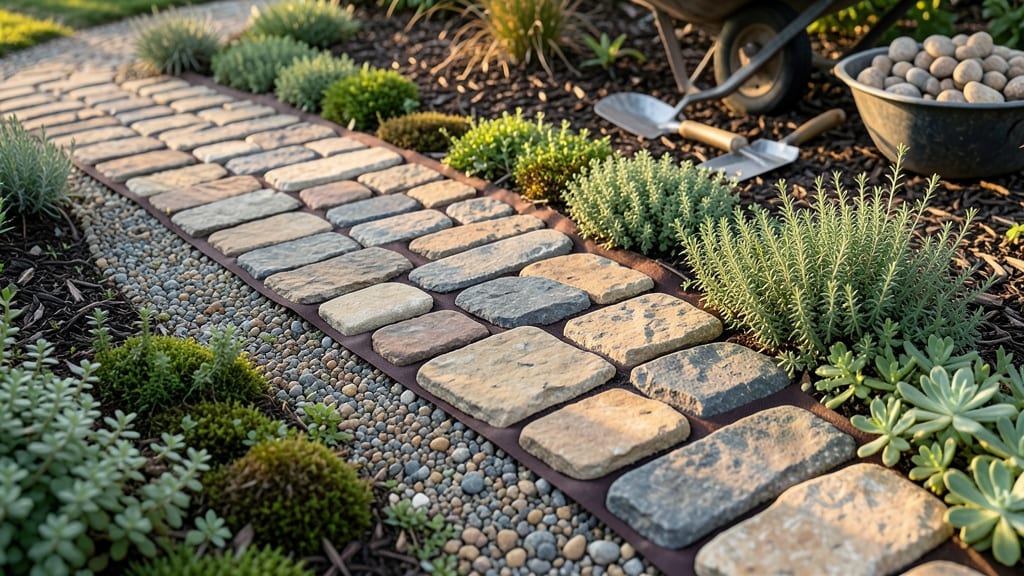
Cobble garden edging creates defined garden beds using natural stones that resist weathering while preventing soil erosion and adding timeless rustic appeal. Use smooth, flat stones (1-3 inches) for stability, securing them with landscape fabric or sand for lasting borders.
This classic landscaping technique isn't just about looks—it solves real problems like soil spillage and weed growth while boosting curb appeal. 🌿 The key lies in the stone selection: heavier materials like bluestone stay put better, while lighter options like river rocks offer easier installation.
I've seen gardeners extend their edging life by 30% just by adding a sand cushion beneath the stones, which prevents shifting during freeze-thaw cycles.
For a budget-friendly approach, consider river rocks or limestone, though they may require more frequent maintenance. Granite and slate offer premium durability but come at a higher cost.
The installation process itself takes about 4-6 hours for a 10-foot border, depending on your experience level and the stone weight you choose.
💡 In This Article
- Best Cobble Materials for Garden Edging
- Step-by-Step Cobble Edging Installation Guide
Best cobble materials for garden edging
When selecting cobble materials, the choice directly impacts both durability and visual appeal. Granite tops the list for longevity, with its 17-25 hardness on the Mohs scale making it nearly impervious to weathering. The stones' natural variation in gray, pink, or black tones adds organic texture to any garden.
For a more affordable option, limestone offers a softer 3-4 hardness but requires sealing every 2-3 years to prevent staining from acidic soils.
Color plays a crucial role in design cohesion. Bluestone delivers a deep, slate-blue hue that contrasts beautifully with green foliage, while river rocks provide earthy browns and tans that blend seamlessly with natural landscapes.
The weight varies dramatically—granite cobblestones average 10-15 pounds each, while river rocks typically weigh 1-3 pounds, making them easier to install by hand. This weight difference affects both labor requirements and long-term stability against erosion.
For gardeners prioritizing low maintenance, slate emerges as a standout choice with its 6-7 hardness and natural split edges that interlock beautifully. The stone's layered structure creates a textured, almost mosaic-like appearance when installed.
However, slate's $3-$6 per square foot price point is nearly double that of river rocks ($1-$2 per square foot), so budget becomes a key decision factor. 🌟 What most people overlook is how the stone's porosity affects moisture absorption—unsealed limestone can develop moss growth within 1-2 years in humid climates.
Consider these key factors when choosing:
- Durability: Granite and slate resist cracking better than limestone or river rocks
- Installation ease: River rocks require minimal tools but may shift more over time
- Budget: Bluestone costs 30-50% more than standard limestone
- Color harmony: Blue/gray tones complement modern designs; earthy tones suit cottage gardens
The stone's shape matters too—flat, irregular cobblestones (like those found in bluestone) create more stable edges than rounded river rocks. This geometric difference affects how well the stones interlock and resist shifting during seasonal ground movement.
For maximum stability, look for stones with at least 3 flat surfaces that can nest against each other.
One often-ignored consideration is how stone color affects heat absorption. Darker stones like bluestone can reach 120-140°F in direct sunlight, potentially damaging nearby plants. Lighter limestone stays 20-30°F cooler, making it safer for heat-sensitive vegetation.
This thermal difference becomes particularly important in southern climates where afternoon temperatures often exceed 90°F. 🔥