
Advice
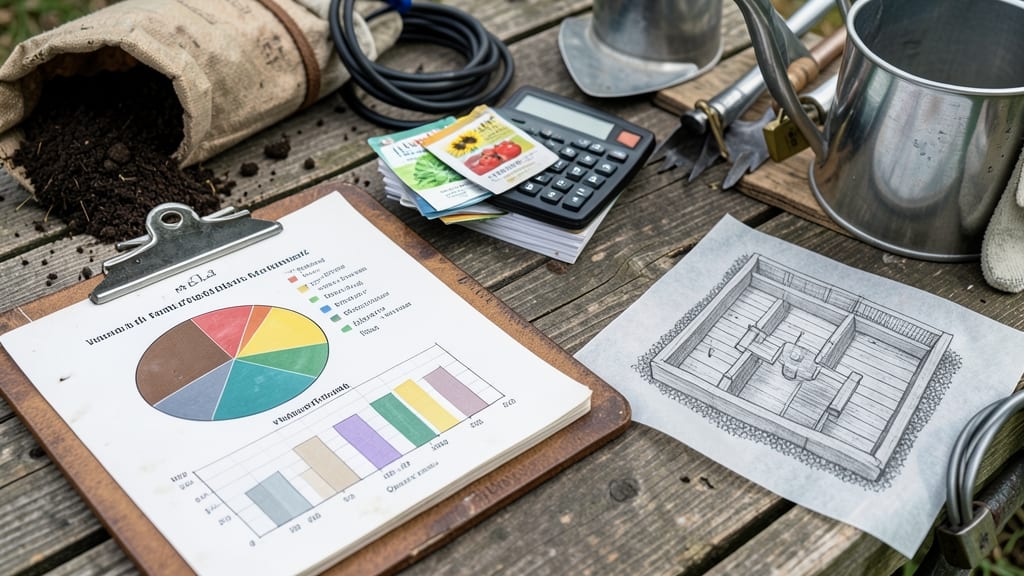
Planning a community garden startup budget and operating costs feasibility study reveals initial investments typically range from $5,000–$25,000+, with annual expenses averaging $3,000–$15,000. Success depends on securing funding, managing volunteer resources, and creating sustainable revenue streams.
A community garden's financial health starts with realistic cost projections.
The initial $5,000–$25,000 range accounts for land leases, soil amendments, irrigation systems, and essential tools—costs that can balloon if you underestimate labor or permit requirements. 💰 What often trips up new organizers is overlooking hidden expenses like insurance or unexpected maintenance.
I've seen gardens with modest startup budgets struggle when annual costs climb due to unplanned irrigation repairs or volunteer turnover. The key is building a 3-year financial model that accounts for both best-case scenarios and potential setbacks.
Operating costs become more predictable once the garden is established, but they rarely drop below $3,000/year for basic maintenance. The upper range reflects gardens offering paid workshops, selling produce, or maintaining specialty features like greenhouses. What separates thriving gardens from struggling ones?
It's not just the numbers—it's how you structure funding. Many successful gardens combine grants with local business sponsorships and membership fees, creating multiple revenue streams that reduce dependency on any single source.
💡 In This Article
- Breaking Down Community Garden Startup Costs by Category
- Sustainable Funding Strategies for Low-Budget Community Gardens
Breaking down community garden startup costs by category
Land acquisition represents the single largest expense, accounting for 30-50% of your startup budget. Urban gardens often benefit from city-owned vacant lots (sometimes free or low-cost), while rural plots may require $1,000–$10,000+ for leases or purchase.
The soil preparation phase—critical for productivity—can cost $500–$3,000 depending on whether you need to bring in topsoil or amend existing dirt with compost. I've seen gardens skip this step only to face poor yields and higher long-term costs from chemical fertilizers.
Irrigation systems create another significant line item, with drip irrigation running $500–$2,000 for basic setups but potentially $5,000+ for automated systems with timers and sensors. Tools like shovels, rakes, and wheelbarrows may seem inexpensive ($200–$500), but high-quality equipment that lasts years pays off.
Seeds and plants typically cost $300–$1,500 annually, though organic or heirloom varieties can push costs higher. Permits often get overlooked—city fees for land use or zoning can range from $100–$2,000, depending on local regulations.
The real cost multiplier comes from labor. Even volunteer-heavy gardens need 50–100 hours/week of maintenance during growing seasons. If you hire part-time help for $15–$25/hour, that quickly adds up. Insurance—another hidden cost—can run $500–$1,500/year for liability coverage.
What most feasibility studies miss is the 3-year maintenance buffer needed for irrigation repairs, tool replacements, and unexpected soil issues. Without this, gardens often face cash flow crises in their second or third year.
Consider this breakdown for a 1-acre urban garden:
- Land lease: $2,000–$5,000/year (negotiable with city partnerships)
- Soil amendments: $1,500–$3,000 (compost + testing)
- Irrigation: $2,500–$5,000 (drip system with filters)
- Tools/equipment: $1,000–$2,500 (initial purchase)
- Permits/insurance: $1,500–$3,000 (first-year costs)
What separates feasible gardens from pipe dreams? It's the scalability factor. A 0.5-acre plot might start at $8,000, but expanding to 1 acre doesn't double costs linearly—it often triples due to labor and irrigation scaling. The sweet spot for most community gardens is 0.25–0.75 acres, where costs remain manageable while still serving 20–50 families. 🌱
Pro tip: Prioritize modular systems—like movable raised beds—that allow you to start small and expand incrementally. This approach lets you test feasibility without overcommitting to large upfront expenses. Many successful gardens begin with just 5–10 beds and gradually add infrastructure as funding becomes available.