
Pests
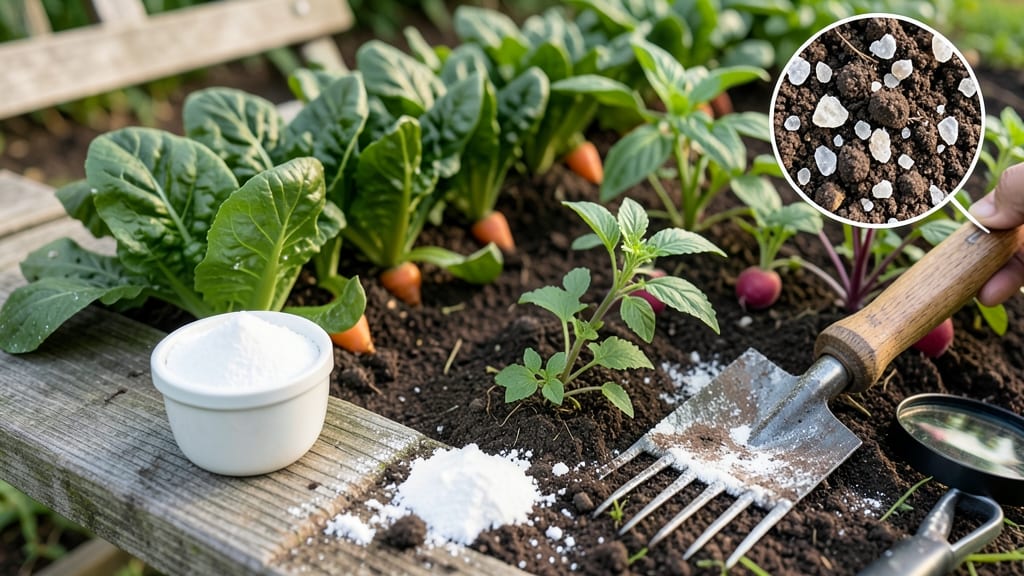
Diatomaceous earth in garden beds eliminates soil-dwelling pests like slugs, ants, and grubs by dehydrating their exoskeletons while remaining non-toxic to plants and beneficial insects like bees and earthworms when applied correctly.
This natural powder works by creating microscopic cuts in pests' protective outer layers, causing them to lose moisture and die within 48 hours. 🔥 The key is using food-grade diatomaceous earth—it's safe for your garden ecosystem as long as you keep it dry, since moisture reduces its effectiveness.
I've seen it work wonders against cutworms and earwigs without harming my tomato plants or the ladybugs that patrol my garden.
For best results, apply a thin layer (1–2 pounds per 100 square feet) around plants or mix lightly into the top inch of soil. Reapply after rain or every few weeks during peak pest seasons.
The beauty of this method is its dual action: it kills pests on contact while improving soil structure over time.
💡 In This Article
- How Diatomaceous Earth Works Against Garden Pests
- Best Application Methods for Diatomaceous Earth in Soil
How diatomaceous earth works against garden pests
Diatomaceous earth (DE) functions as a natural insecticide through a two-pronged attack at the microscopic level. When applied as a fine powder, its particles—composed of fossilized algae with razor-sharp edges—physically cut through the waxy exoskeletons of pests like ants, slugs, and grubs.
These tiny cuts disrupt the pests' protective barrier, causing rapid moisture loss through a process called osmotic dehydration. Within 48 hours, the pests typically succumb to dehydration, unable to retain the water essential for survival.
The magic lies in DE's particle size: typically 10–100 microns (about 1/10th the width of a human hair), these particles are small enough to penetrate exoskeletons but too large to harm plants or beneficial insects. Unlike chemical pesticides, DE doesn't poison pests—it simply removes their ability to retain moisture.
This is why it's particularly effective against soft-bodied insects like slugs and grubs, whose delicate exoskeletons can't withstand the abrasive action. 🔥 For hard-shelled pests like beetles, DE still works but may require more frequent reapplication.
Plants and beneficial insects remain unharmed because their bodies lack the vulnerable exoskeletons that DE targets. Earthworms, bees, and ladybugs have thick, moisture-retaining skin or hard shells that DE can't penetrate.
However, the powder must be food-grade—industrial-grade DE contains crystalline silica, which is toxic. Always check the label for the CE (Certified Edible) designation to ensure safety for your garden ecosystem.
DE's effectiveness hinges on dry conditions. When moisture is present, the particles clump together, losing their ability to cut through exoskeletons. This is why gardeners often apply DE in the evening or after rain has dried—it needs to stay dry to work.
The powder also breaks down over time due to weather exposure, which is why reapplication is necessary, especially during rainy seasons or after heavy irrigation.
Here's what happens at the cellular level: once DE particles breach the exoskeleton, they create microscopic tears that disrupt the pest's cuticle layer, the waxy outer coating that prevents water loss. Without this barrier, the pest's body fluids evaporate rapidly, leading to death.
This method is particularly brutal for pests like cutworms, which have thin, permeable skin that DE can easily penetrate. 💫 The process is swift but not instantaneous—pests may take 24–72 hours to die, depending on their size and species.
One often-overlooked benefit is DE's secondary role in improving soil structure. As it breaks down, it releases silica, a nutrient that strengthens plant cell walls and enhances resistance to diseases like powdery mildew. This dual action—pest control plus soil enrichment—makes DE a standout choice for organic gardeners.
Just remember: while it's safe for plants, it's not safe for pets or children to inhale, so always wear a mask when applying.