
Tools
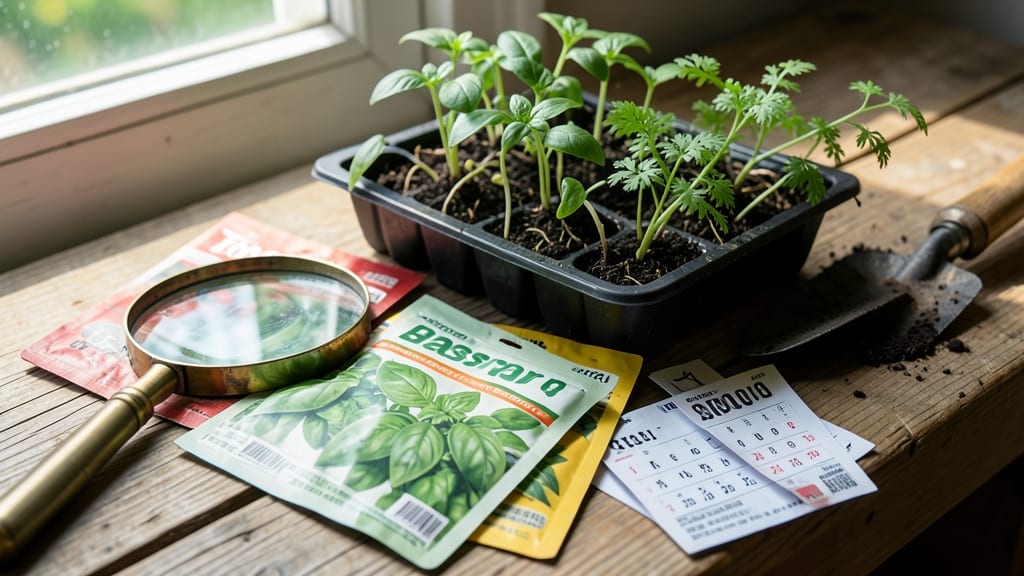
Garden seeds do expire, with viability ranging from 1 to 10 years depending on seed type and storage conditions—most lose potency after 2–5 years if kept in warm, humid environments. Properly stored seeds in cool, dry places retain germination rates longer.
Seed viability isn't just about age—it's a delicate balance between genetics and environment. 🌱 For instance, delicate seeds like lettuce or onions may only stay fresh for 1-2 years, while hardy varieties like beans or peas can last a decade or more.
The key is controlling moisture (too much causes mold) and temperature (heat speeds up deterioration). Even properly stored seeds eventually weaken, so testing germination before planting saves time and money.
I always recommend storing seeds in airtight containers with silica gel packets in a dark, cool pantry or refrigerator. For long-term preservation, consider vacuum sealing or freezing.
The paper towel germination test is my go-to method for checking seed freshness—just place a few seeds between damp paper towels and wait 5-7 days to see if they sprout.
💡 In This Article
- Seed Longevity Factors: How Storage Conditions Affect Germination Rates
- Best Practices for Extending Seed Freshness and Testing Viability
Seed longevity factors: how storage conditions affect germination rates
The lifespan of garden seeds is determined by their biological makeup and environmental stressors. Inside every seed lies an embryonic plant surrounded by a protective coat that regulates moisture and oxygen flow. When stored properly, this coat slows down metabolic processes that would otherwise deplete the seed's energy reserves.
For example, lettuce seeds have thin coats that allow moisture to penetrate quickly, making them highly sensitive to humidity and typically viable for only 1-2 years. In contrast, bean seeds have thicker, waxier coats that resist moisture loss, extending their viability to 5-10 years under ideal conditions.
Temperature is the most critical factor in seed deterioration. Seeds stored above 70°F experience accelerated aging as enzymes inside the seed break down its stored nutrients. At room temperature, the germination rate of most seeds drops by 5-10% per year.
However, when stored at 32-41°F (the ideal range for seed banks), deterioration slows dramatically. Oxygen exposure also plays a role—excessive air circulation can dry out seeds, while complete oxygen deprivation (like in vacuum-sealed bags) creates anaerobic conditions that preserve viability longer.
Even the tiniest cracks in storage containers can introduce enough moisture to trigger mold growth within weeks.
Seed dormancy mechanisms further complicate longevity. Some seeds, like tomato seeds, enter a natural dormancy state that can last years if stored dry.
Others, such as pepper seeds, require specific conditions to break dormancy, which means they may appear "expired" when they're actually just waiting for the right trigger.
The science here involves complex biochemical pathways where hormones like abscisic acid (which inhibits germination) and gibberellins (which promote it) must reach precise balances. When these hormones degrade over time, the seed loses its ability to germinate—even if the physical structure remains intact.
Humidity is the silent killer of seed viability. Seeds contain 5-15% moisture at optimal storage levels, but exposure to 60% humidity or higher can cause them to absorb moisture and swell, triggering premature metabolic activity.
This is why storing seeds in areas like basements (often 70-80% humidity) is a recipe for failure. The solution? Use desiccant packets or rice grains in storage containers to maintain 30-50% humidity.
Even a single damp seed in a container can spread mold to its neighbors through airborne spores, ruining an entire batch.
Light exposure also affects longevity, though its impact varies by seed type. Photoblastic seeds (like lettuce) require light to germinate, so storing them in opaque containers prevents accidental sprouting.
Non-photoblastic seeds (like beans) are less affected by light, but prolonged exposure to UV rays can degrade their outer coatings over time. For maximum protection, keep seeds in light-blocking containers like glass jars wrapped in aluminum foil or opaque plastic bins.
The combination of darkness, cool temperatures (40°F), and low humidity creates the perfect preservation trifecta for extending seed life.
Here's what happens when conditions go wrong: A 1-year-old packet of onion seeds stored in a warm, humid kitchen may have only a 20% germination rate, while the same seeds kept in a 35°F refrigerator could still sprout at 80% efficiency.
The difference comes down to molecular damage—heat and moisture accelerate the breakdown of cell membranes and DNA within the seed embryo. This is why seed catalogs often list "best by" dates that assume average storage conditions: they're not arbitrary numbers but based on real-world deterioration rates.