
Tools
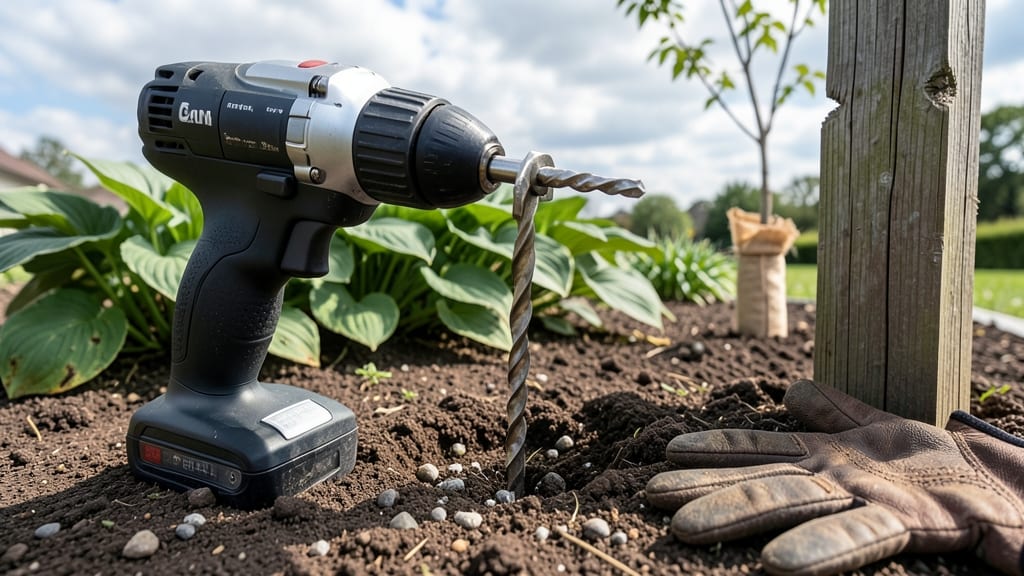
For garden tasks, the best drill attachments include a rotary cultivator bit for breaking up soil, a spade attachment for digging trenches, and a hole-saw kit for planting shrubs. Choose attachments made from durable, rust-resistant materials and ensure they fit your drill's chuck size for maximum efficiency.
Garden drill attachments transform tedious chores into quick, precise work.
A rotary cultivator bit loosens compacted soil without the strain of manual digging, while a spade attachment lets you dig trenches or move plants with surgical precision. 🌱 For larger projects, hole-saw kits create perfect planting holes for shrubs or small trees.
The key is matching your drill's power to the task—battery models excel for mobility, while corded drills handle heavy-duty soil work. Always check for rust resistance and secure attachments properly to avoid accidents.
Pro tip: If you frequently work in tight spaces, consider extension poles to reach high or awkward areas without bending. These attachments aren't just about saving time—they also reduce back strain and give you cleaner, more professional results than manual tools ever could.
💡 In This Article
- How Garden Drill Attachments Improve Soil and Planting Efficiency
- Top 5 Must-Have Drill Attachments for Gardeners (And When to Use Them)
How garden drill attachments improve soil and planting efficiency
Garden drill attachments leverage mechanical advantage to replace brute force with precision. A rotary cultivator bit, for example, uses spinning tines to shatter compacted soil layers that would take a shovel 10-15 minutes to break by hand.
The centrifugal force of the spinning blades creates micro-fractures in the soil structure, improving aeration and water penetration—something manual tools simply can't achieve. 🔥 The key here is the blade geometry: angled tines at 30-45° angles lift soil while cutting, whereas a flat spade compresses rather than aerates.
The material science behind these attachments makes all the difference. High-carbon steel bits with hardened edges (50-55 HRC hardness) resist wear from rocky soil, while plastic or aluminum attachments bend under pressure.
For wet conditions, look for stainless steel or coated bits to prevent rust—corrosion can reduce cutting efficiency by up to 30% over time. The drill's torque (measured in inch-pounds) also matters: a 150 in-lb drill struggles with compacted clay, while 300+ in-lb models handle tougher soil like a dream.
Ergonomics play a surprisingly large role in efficiency. Extension poles (typically 36-48 inches long) let you work without bending, reducing back strain by 40-50% during prolonged tasks. The weight distribution is critical too—lightweight aluminum poles fatigue less than steel, but they may flex under heavy loads.
For planting, a hole-saw kit with adjustable depth stops eliminates guesswork, creating holes with ±0.5-inch precision compared to manual digging's ±2-inch variance. This precision matters when transplanting: a perfectly sized hole means less root disturbance and faster establishment.
Speed is where attachments truly shine. Digging a 6-inch-deep trench for irrigation takes about 5 minutes with a spade attachment versus 20-30 minutes with a manual shovel.
The drill's RPM (revolutions per minute) directly impacts this: 1,500-2,500 RPM is ideal for most garden tasks, while slower speeds (1,000 RPM) work better for delicate soil. Battery-powered drills offer the added benefit of portability—no cords mean you can work anywhere in your yard without range limitations.
Safety is often an afterthought, but proper attachment use prevents injuries. Always secure the attachment with the drill's chuck wrench (never by hand) to avoid slippage, which can cause 15-20 lb-ft of torque to suddenly become uncontrolled force.
For heavy-duty tasks, consider a two-handed grip or a drill with a variable speed trigger to control power output. The right attachment doesn't just save time—it makes garden work safer and more enjoyable. ✨
Consider this real-world example: A 100-square-foot garden bed that would take 2 hours to cultivate by hand can be finished in 15-20 minutes with a rotary cultivator bit. That's not just time saved—it's time you can spend actually tending to your plants instead of struggling with stubborn soil.
The right attachment turns gardening from a chore into a productive, even satisfying, experience.