
Tools
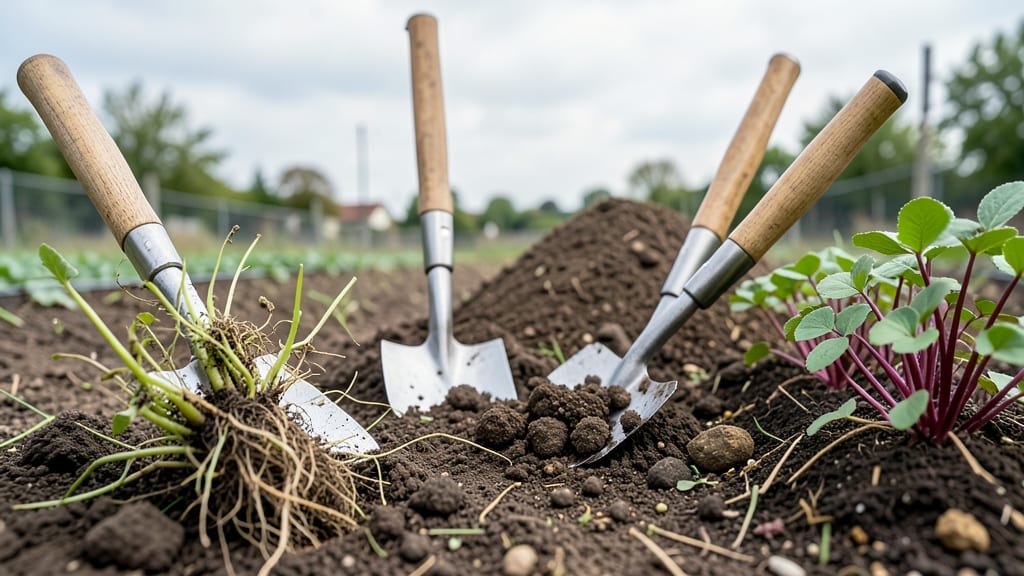
A garden hoe has surprisingly diverse uses beyond weeding, including cultivating soil, breaking up hard ground, and managing weeds, while also chopping mulch, leveling garden beds, and harvesting root crops like carrots and potatoes.
A garden hoe isn't just for pulling weeds—it's a secret weapon for transforming your garden's health and efficiency. 🌱 The shallow cuts it makes aerate soil without disturbing roots, which boosts water absorption and nutrient flow to plants.
I've seen how a well-timed pass with the right hoe can turn compacted clay into loose, workable soil in minutes, making it easier for seeds to sprout and roots to grow deeper.
What's even more surprising is how a hoe can replace multiple tools. Need to create planting rows? A hoe does it faster than a rake. Chopping up old mulch for compost? That's another job where a hoe shines.
Even in winter, I've used mine to clear light snow from garden paths—its flat blade works like a mini snow shovel when angled right.
The key is choosing the right hoe for the job: a standard draw hoe for weeding, a stirrup hoe for mulch chopping, or a Dutch hoe for precision tasks.
💡 In This Article
- How a Garden Hoe Improves Soil and Plant Health
- 12 Unexpected Ways to Maximize Your Hoe’s Efficiency
How a garden hoe improves soil and plant health
A garden hoe works its magic primarily through soil aeration, a process that creates tiny air pockets in compacted earth. When you drag the hoe's sharp edge through the top 1-2 inches of soil, it slices through dense layers without disturbing deeper roots.
This breaks up the soil's natural compaction caused by foot traffic, rain, or machinery, which can reduce water absorption by up to 30% in clay-heavy soils. The result? Roots get better access to oxygen, which is crucial for microbial activity that decomposes organic matter into plant nutrients.
The shallow cultivation technique also promotes what gardeners call "root zone development."
When you make 1/4-inch deep cuts in rows between plants, you encourage roots to grow horizontally rather than vertically—this creates a more extensive network that stabilizes plants and improves their ability to uptake water during droughts. 🌱 The hoe's design (especially stirrup or draw hoes) lets you work just below the soil surface, where most weed seeds germinate, while leaving established plants unharmed.
This precision prevents the soil disturbance that can expose delicate seedlings to wind or erosion.
One often-overlooked benefit is how hoeing disrupts the "capillary action" that keeps weeds growing. When you cut through the soil surface, you break the thin water films that transport moisture to weed seeds.
Studies show that consistent shallow hoeing can reduce weed competition by 50-70% in vegetable gardens, giving your crops more space to thrive. The key is timing—hoeing when the soil is slightly damp (not muddy) ensures cleaner cuts and less clumping.
For organic gardeners, the hoe's ability to incorporate surface mulch is a game-changer. When you chop up straw or leaves with the hoe's blade, you're creating a fine mulch that decomposes faster while protecting the soil from crusting.
This process mimics natural forest floor conditions where fallen leaves gradually enrich the topsoil. The hoe's flat blade lets you distribute this mulch evenly, unlike a rake which can create uneven piles that trap moisture against plant stems.
Advanced gardeners use hoeing techniques like "skimming" to remove thatch layers without turning the soil. By making shallow passes at a 45-degree angle, you can lift and remove the dense organic matter that blocks water and air from reaching plant roots.
This method preserves soil structure while improving drainage—critical for plants like tomatoes that hate soggy roots. The secret lies in the hoe's angle: too steep and you'll dig too deep; too shallow and you won't break through compaction.
What most people don't realize is how hoeing affects soil temperature. The aeration from shallow cuts allows heat to penetrate deeper in spring, accelerating seed germination by 2-3 days compared to untouched soil.
In summer, the same process helps cool the root zone, preventing heat stress in heat-sensitive crops like lettuce. The hoe essentially acts as a soil thermoregulator when used consistently. 🌡️