
Vegetables
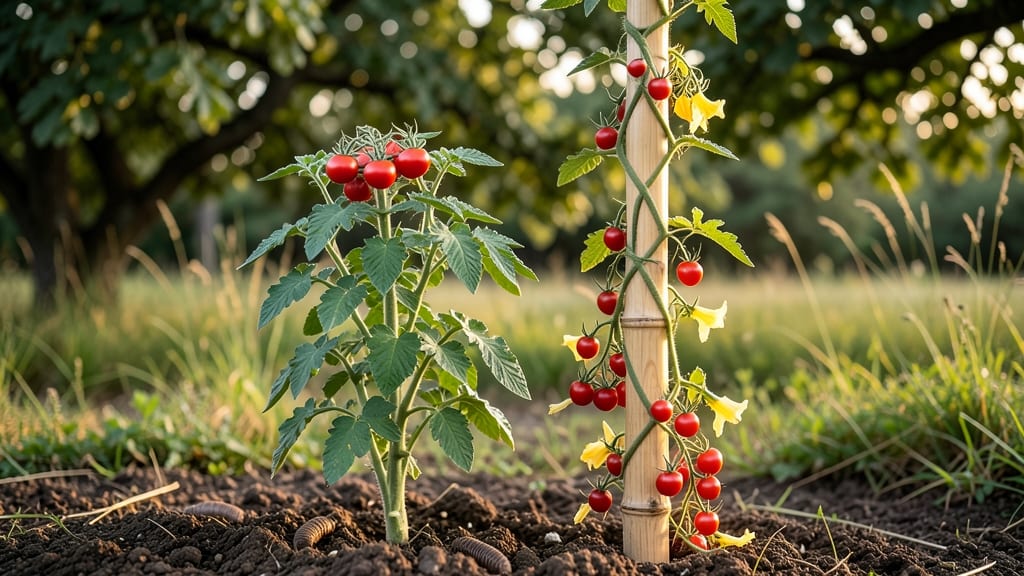
The Gardeners Delight tomato is an indeterminate variety, meaning it grows continuously taller and produces fruit along its vines until frost stops growth, unlike determinate types that stop at a fixed height and set fruit all at once.
The Gardeners Delight tomato's sprawling, vine-heavy growth pattern is what sets it apart from its determinate cousins. 🌱 Unlike tomatoes that produce all their fruit in one go, this variety keeps blossoming and fruiting throughout the season, delivering a steady harvest from early summer until frost.
This makes it perfect for gardeners who want a prolonged supply of ripe tomatoes rather than a single big bounty. The trade-off? You'll need to invest in sturdy supports like cages or trellises to keep those vines from sprawling everywhere.
What makes this growth habit so rewarding is how it adapts to your garden's rhythm. Instead of getting overwhelmed with a single massive harvest, you enjoy fresh tomatoes over months, with each vine potentially producing hundreds of pounds of fruit if given proper care.
The key is regular pruning to direct energy toward fruit production rather than excessive foliage, and consistent watering to prevent blossom-end rot in those extended heatwaves.
💡 In This Article
- How Indeterminate Tomatoes Like Gardeners Delight Grow and Fruit
- Best Growing Practices for Indeterminate Gardeners Delight Tomatoes
How indeterminate tomatoes like Gardeners Delight grow and fruit
Indeterminate tomatoes like Gardeners Delight grow using an open, sprawling vine system that continues elongating throughout the growing season.
Unlike determinate varieties that stop growing at 3-5 feet and produce fruit all at once, these vines can reach 6-12 feet or more, with new growth and blossoms forming continuously at the tips.
This growth pattern is driven by their apical dominance—the main stem's terminal bud produces hormones that suppress side shoots while pushing upward.
The botanical magic happens through a process called sympodial growth, where each vine segment produces a cluster of fruit before the main stem dies back slightly, allowing lateral shoots to take over.
This creates a cascading effect where you get multiple flushes of blossoms every 2-3 weeks throughout the season. Gardeners Delight typically produces 10-20 fruit clusters per vine, each containing 3-6 tomatoes, compared to determinate varieties that might produce just 1-2 clusters at their peak.
This continuous fruiting means Gardeners Delight tomatoes ripen over 6-8 weeks rather than all at once. The trade-off is that each vine requires more space and support, as the sprawling habit can produce 100+ pounds of fruit if properly managed.
The vine's ability to keep producing depends on proper care—removing suckers (side shoots) helps direct energy to fruit production rather than excessive foliage, while consistent watering prevents stress that could halt flowering.
What makes this growth pattern so rewarding is how it adapts to your local climate. In warmer regions with longer growing seasons, Gardeners Delight can keep producing until frost, while in cooler areas, it may slow down in late summer but resume with proper protection.
The key difference from determinate varieties is their plasticity—they'll keep growing as long as conditions are favorable, unlike their fixed-height cousins that shut down after their main harvest.
Visually, you can spot the difference easily: determinate tomatoes grow like bushes with a compact shape, while Gardeners Delight vines sprawl like ivy, needing trellises or cages to keep them off the ground.
The fruit production also differs—determinate varieties give you a single massive harvest (often all at once), while Gardeners Delight delivers a steady trickle of ripe tomatoes over months, making it ideal for fresh eating and sauces throughout the season. 🌿
Understanding this growth pattern helps explain why Gardeners Delight tomatoes often produce 2-3 times more fruit per plant than determinate varieties, given the same care.
The secret lies in their ability to keep flowering and fruiting as long as conditions are right, rather than putting all their energy into one big harvest. This makes them perfect for gardeners who want a prolonged supply rather than a single feast.