
Planting
Gardening in Zone 9A lets you grow year-round with minimal frost risk, giving you a frost-free window from mid-December through early February. Warm-season crops like tomatoes and peppers thrive from late February to October, while cool-season plants excel in fall and winter. Summer heat requires extra care for heat-sensitive varieties.
Zone 9A's unique advantage is its extended growing season, where you can even plant some crops in winter months like January and February. 🌱 The key is understanding how to work with the climate's natural rhythms—like starting heat-loving plants early to beat the summer heat or choosing shade-tolerant varieties for peak season.
I've found that succession planting every 2-3 weeks keeps my garden productive year-round, especially for fast-growing crops like lettuce and basil.
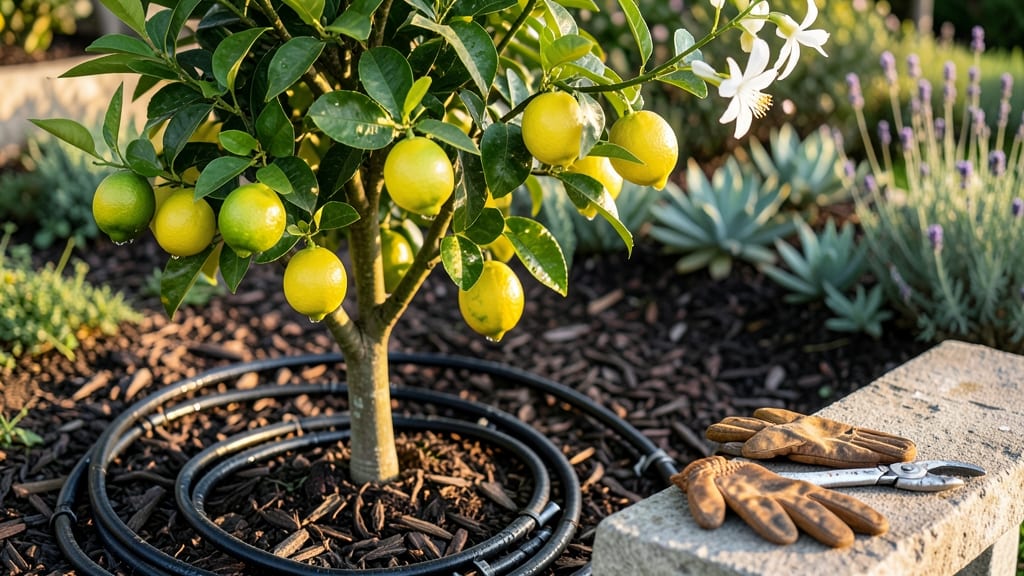
What really sets Zone 9A apart is how microclimates play a role—urban areas might experience slightly cooler nights than rural spots, affecting when you can safely plant frost-sensitive crops. For example, I've had success growing citrus trees in sheltered microclimates that wouldn't survive in open areas.
The trick is paying attention to your specific location's patterns over several seasons.
💡 In This Article
- Understanding Zone 9A’s Climate and Frost-Free Window
- Best Plants and Planting Calendar for Zone 9A Gardens
Understanding zone 9A’s climate and frost-free window
The defining characteristic of Zone 9A is its average minimum winter temperature range of 25-30°F, which creates that coveted frost-free window. Unlike colder zones, Zone 9A rarely experiences hard freezes below 25°F, allowing gardeners to push the limits of traditional growing seasons.
This means you can plant heat-loving crops like eggplants and okra as early as late February, while cool-season crops like kale and spinach can thrive through winter months when temperatures stay above 40°F at night.
Here's how the frost-free window actually works: The last frost typically occurs around mid-December, and the first frost arrives in early February, giving you a 10-12 week frost-free period in winter. During this time, sensitive tropical plants like hibiscus or banana trees can survive outdoors with proper protection.
The key mechanism is how cold air settles in low-lying areas, creating microclimates where frost forms first in valleys but leaves urban rooftops and hilltops frost-free for weeks longer.
Microclimates create significant variations within Zone 9A. Urban areas with concrete and buildings can be 5-10°F warmer than rural fields at night, while coastal regions benefit from moderating ocean breezes.
I've noticed that my urban garden stays 3°F warmer than my rural plot during winter nights, allowing me to plant frost-sensitive crops like tomatoes 2-3 weeks earlier in the city.
This urban heat island effect means your specific location could shift your planting window by up to 4 weeks compared to official zone averages.
Comparing Zone 9A to its neighbors shows clear growing limitations. Zone 9B (30-35°F minimum) can handle slightly more tropical plants like mango trees, while Zone 8A (20-25°F minimum) requires more frost protection.
The 5°F difference between 9A and 8A means crops like citrus are borderline in 9A but thrive in 9B. I've seen lemon trees survive winters in sheltered 9A microclimates, while they require winter protection in most 9A locations.
What most gardeners don't realize is how temperature fluctuations matter more than absolute minimums. A sudden drop to 22°F can damage even Zone 9A plants, which is why monitoring your local weather patterns becomes crucial.
Advanced gardeners use degree day accumulations to predict when to plant - counting how many days temperatures stay above certain thresholds. For example, tomatoes need 1,200 growing degree days above 50°F to mature, which Zone 9A typically reaches by early April.
To maximize your garden's potential, consider these climate factors: Your frost-free window might actually be 2 weeks longer than average if you're near water or in an urban heat pocket.
The trade-off is summer heat - Zone 9A can reach 100°F+ for weeks, requiring shade cloth for sensitive plants. This heat also means irrigation needs increase dramatically during peak season.
One pro tip I've learned is to use low-lying containers for frost-sensitive plants during winter - they warm up faster in sunlight and cool slower at night. This simple technique can extend your growing season by 3-4 weeks in marginal microclimates. 🌡️