
Blooming
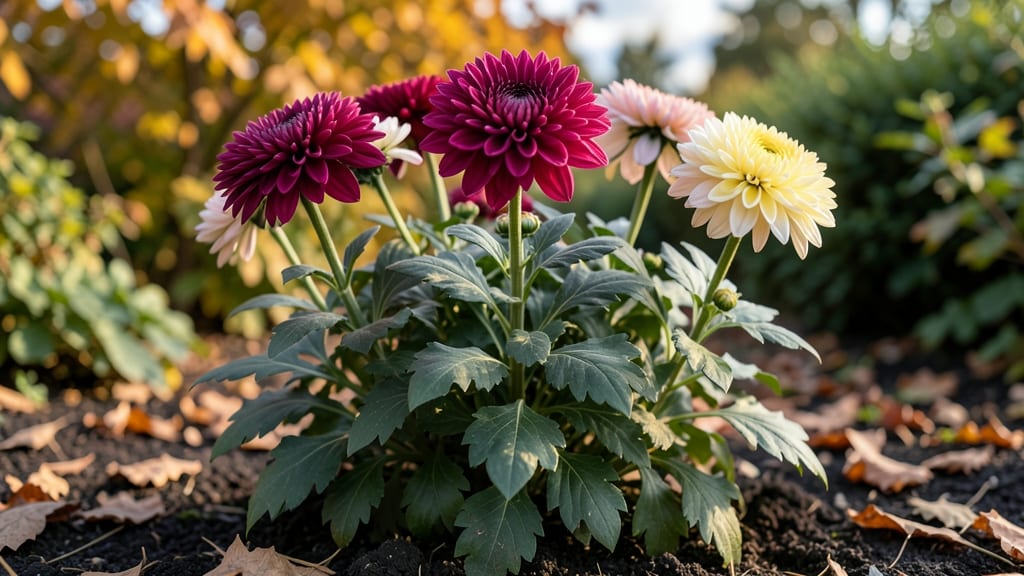
Garden mums typically last 4 to 6 weeks in full bloom during fall, with proper care extending their lifespan into early winter. Deadheading spent blooms and providing consistent moisture preserves their vibrant colors longer.
Garden mums thrive in fall's cooler temperatures, which naturally trigger their blooming cycle—but their beauty fades faster in hotter climates or when exposed to direct afternoon sun. 🌼 The 4 to 6 week window reflects their seasonal nature, though early varieties may bloom slightly sooner in northern regions.
What really makes the difference is consistent watering (about 1 inch per week) and well-draining soil, which prevents stress that shortens their lifespan.
Many gardeners overlook how deadheading (removing spent blooms) redirects energy to new flowers, potentially adding another 2-3 weeks of vibrant color. I’ve seen mums last well into November with this simple trick—just pinch off faded blooms at the base with clean fingers or pruners.
The key is balance: too much water or fertilizer can actually reduce bloom time, so moderation is everything.
💡 In This Article
- Factors Affecting Mums’ Seasonal Longevity
- Pro Tips to Prolong Garden Mum Blooms
Factors affecting mums’ seasonal longevity
Garden mums follow a natural fall-blooming cycle triggered by shorter daylight hours and cooler temperatures. Their 4-6 week bloom window stems from this seasonal adaptation—once triggered, their flowering mechanism is hardwired to complete within this timeframe.
The process begins when days grow shorter than 14 hours, signaling the plant to shift from vegetative growth to flower production. This photoperiod sensitivity explains why mums planted in late summer (around mid-August) bloom earlier than those planted in early fall.
Temperature plays a crucial role too. Mums thrive in 60-70°F daytime temps but struggle when nights dip below 50°F or days exceed 80°F. Heat stress accelerates bloom decline by causing flower buds to open too quickly, while cold snaps can shock the plants into dormancy.
In northern climates (USDA zones 3-5), early varieties may bloom as early as September, lasting through October-November, while southern varieties (zones 7+) often bloom later but fade faster due to lingering summer heat. 🌼
The light spectrum matters just as much as duration. Mums need 6-8 hours of direct sunlight daily, but afternoon shade prevents heat stress in hotter regions. Too much sun bleaches petals faster, while insufficient light weakens stems and reduces bloom count.
This is why mums planted in partial shade (like under deciduous trees) often last longer than those in full sun gardens. The ideal balance creates a sweet spot where flowers develop vibrant colors without premature wilting.
Climate zone also dictates bloom timing. In Zone 4, where summers are short, mums planted in early August may bloom by late September and last until first frost (typically mid-October).
Meanwhile, in Zone 8, where winters are mild, late-planted mums might bloom in November but fade by December due to shorter days. This geographic variation explains why some gardeners swear by early varieties in cooler regions, while others prefer heat-tolerant types in southern climates.
Soil quality acts as the foundation for longevity. Mums prefer well-draining, slightly acidic soil (pH 6.0-6.5) with organic matter. Compacted or waterlogged soil starves roots, causing flowers to drop prematurely.
A simple soil test reveals whether your garden meets these needs—amending with compost or peat moss can extend bloom time by 10-15% by improving nutrient uptake and drainage. The right soil ensures roots stay hydrated without becoming waterlogged, a critical balance for fall blooms.
Finally, genetic factors influence duration. Disbudded varieties (sold with multiple buds per stem) often bloom longer because they produce more flowers sequentially, while spray varieties (dense clusters) may exhaust their energy faster.
Choosing disease-resistant hybrids (like 'Autumn Beauty' or 'Puppy') can also add 1-2 extra weeks of vibrant color by reducing stress from pests or pathogens. 💫