
Light Requirements
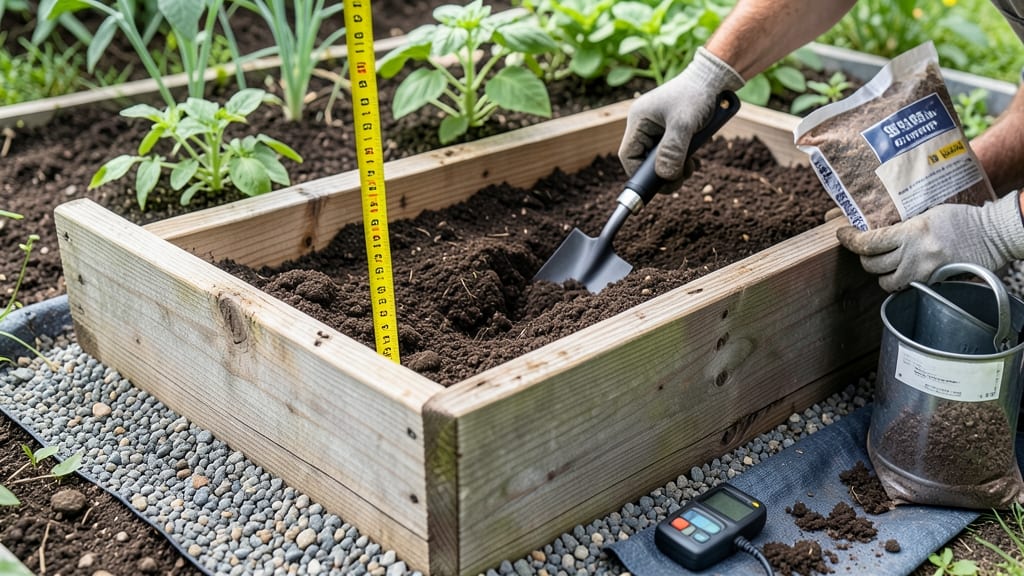
To determine how much soil for a raised garden bed, multiply length × width × depth (in feet) to find cubic feet. A standard 4×8-foot bed with 12-inch soil depth requires 32 cubic feet of soil, while custom sizes need adjusted calculations based on specific dimensions.
This simple formula works because garden beds are rectangular prisms—just like measuring a box. 🔥 For example, a 3×6-foot bed with 18-inch depth needs 27 cubic feet, while deeper beds (like 18 inches) for root crops may require 48 cubic feet for the same footprint.
Always account for compaction: loose compost mixes settle 20-30% more than dense topsoil, so buy extra if using blends with high organic content.
Pro tip: Check your soil supplier's coverage rates—many topsoil bags list square-foot coverage, not cubic feet. A 1 cubic yard (27 cubic feet) typically covers a 4×8-foot bed at 12 inches deep, but bagged soil often requires 2-3 bags per cubic foot due to air gaps when filling.
For heavy clay soils, consider adding 1/3 compost to improve drainage and fertility.
💡 In This Article
- Raised Garden Bed Soil Volume Formula Explained
- Best Soil Mixes and Where to Buy Bulk Soil
Raised garden bed soil volume formula explained
At its core, calculating soil volume for raised beds follows the same principle as measuring any rectangular container: length × width × depth. But here's what most gardeners overlook—the depth measurement must be converted to feet. A 12-inch depth equals 1 foot, while 18 inches becomes 1.5 feet.
This conversion is critical because even small depth differences dramatically affect total volume. For instance, a 4×8-foot bed jumps from 32 cubic feet at 12 inches to 48 cubic feet at 18 inches—a 50% increase for the same footprint.
The science behind depth matters too. Shallow beds (6-12 inches) work for herbs and lettuce but struggle with root crops like carrots or potatoes.
Deep beds (18-24 inches) improve drainage and accommodate deeper roots, but they also require significantly more soil. 🌱 Another factor is soil compaction: loose compost mixes settle 20-30% more than dense topsoil, meaning you'll need 10-15% extra volume when using blends with high organic content.
This is why professional gardeners always recommend buying 10-20% more than your calculation suggests.
Soil type dramatically impacts volume needs. Pure topsoil has a bulk density of about 80-100 pounds per cubic foot, while compost mixes can be as light as 30-50 pounds per cubic foot.
This means a 1 cubic yard of topsoil (27 cubic feet) weighs roughly 2,200 pounds, while the same volume of compost might weigh only 800 pounds. The lighter weight of compost blends also means they'll settle more over time, requiring periodic top-ups to maintain depth.
For heavy clay soils, adding 1/3 compost improves aeration and reduces compaction by 30-40%.
Here's a practical example: A 3×6-foot bed at 18 inches depth needs 27 cubic feet of soil. If you're using a 60/30/10 mix of topsoil, compost, and peat moss, you'd need about 30 cubic feet to account for settling.
For comparison, a 1 cubic yard (27 cubic feet) of bagged soil typically covers 4×8-foot beds at 12 inches depth, but you'll often need 2-3 bags per cubic foot due to air gaps when filling. Always verify supplier coverage rates—they're rarely exact.
Depth also affects plant health. Shallow beds (6-12 inches) can lead to root competition and poor drainage, while deeper beds (18-24 inches) allow for better moisture retention and microbial activity.
The ideal depth depends on what you're growing: 12 inches for most vegetables, 18 inches for root crops, and 24 inches for trees or shrubs. For heavy clay soils, consider adding 1/3 compost to improve drainage and fertility, which can reduce the need for additional depth by 20-30%.
One final tip: Always measure your bed's interior dimensions—not the outer frame—since the wood itself takes up space. For example, a 4×8-foot frame might have only 3.5×7.5 feet of usable planting space.
This small difference can mean the difference between 32 cubic feet and 25 cubic feet of soil needed. Double-check your measurements before purchasing to avoid running short.