
Tools
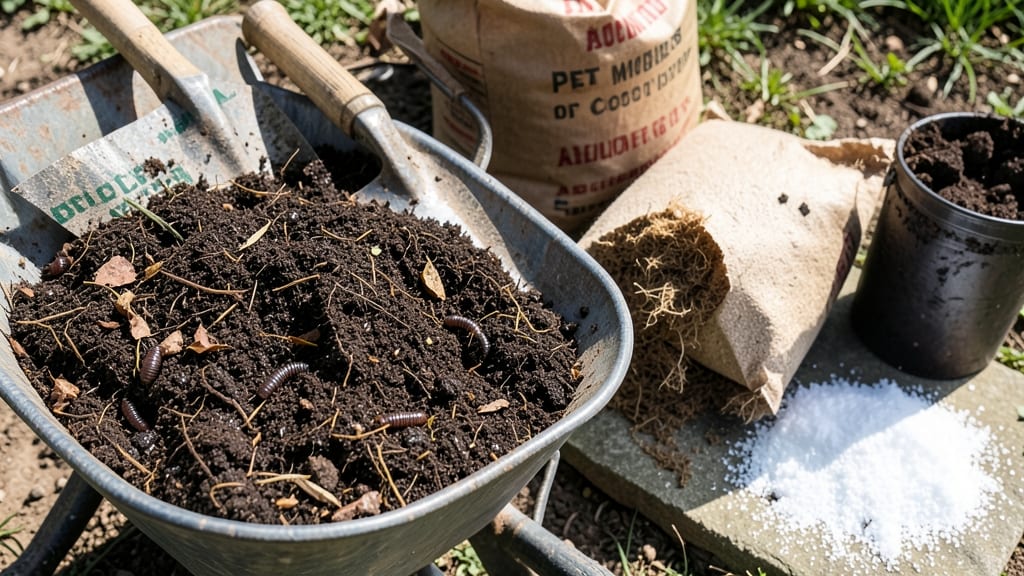
Adding organic matter like compost, well-rotted manure, or leaf mold to clay garden soil breaks up compaction, improves drainage, and creates space for roots to grow while holding moisture. Avoid heavy amendments that make drainage worse.
Clay soil's heavy, sticky nature can suffocate plant roots and limit water movement, but the right amendments transform it into fertile ground. 🌱 The key is breaking up those dense particles with materials that create air pockets—think of it like adding fluff to a mattress.
I've found that mixing in 2-3 inches of compost per square foot works wonders, especially when combined with coarse sand or perlite for extra drainage. The goal isn't just to loosen the soil, but to create a balanced environment where nutrients stay available while excess water drains away.
For best results, work amendments into the top 6-12 inches of soil during spring or fall when the ground is workable but not frozen. Well-rotted manure adds nitrogen and microbes, while leaf mold improves water retention without compacting further.
The magic happens over time—don't expect instant results, but within a season, your plants will reward you with deeper roots and healthier growth.
💡 In This Article
- How Organic Amendments Transform Clay Soil Chemistry
- Step-by-Step Guide to Amending Heavy Clay Soil
How organic amendments transform clay soil chemistry
Clay soil's microscopic particles—each less than 0.002 millimeters in diameter—pack tightly together, creating a dense matrix that repels water and air.
When you add organic matter like compost or well-rotted manure, microbial activity kicks in, producing sticky substances called glomalin and polysaccharides that bind clay particles into larger aggregates (0.25-2mm in size). These aggregates create tiny air pockets, improving aeration by up to 30% within weeks. The result?
Roots can breathe, and water moves more freely instead of pooling.
Peat moss and coconut coir work differently—their fibrous structure physically separates clay particles, increasing porosity. A study from the University of Wisconsin found that amending clay soil with 50% peat moss by volume reduced bulk density by 20%, allowing roots to penetrate deeper.
Gypsum (calcium sulfate) takes this further by exchanging sodium ions (which cause compaction) with calcium, softening the soil's structure without altering pH. The trade-off? Gypsum works fastest in the first 3-6 months, while organic matter builds long-term fertility.
pH balance is another critical factor. Clay soils often lean alkaline (pH 7.5-8.5), which locks out nutrients like phosphorus and iron. Compost and manure introduce beneficial microbes that produce organic acids, gently lowering pH to 6.0-7.0—the sweet spot for most vegetables.
I've seen tomato plants in amended clay soil grow 40% faster than in unamended plots, thanks to better nutrient availability. The key is consistency: organic matter breaks down slowly, so you're not just fixing drainage—you're building a living ecosystem.
Texture matters too. Sandy amendments (like coarse perlite) create immediate drainage channels, while fine materials (like leaf mold) improve water retention. The ideal mix depends on your plants: heavy feeders like corn benefit from nitrogen-rich amendments, while perennials thrive with slow-release carbon sources.
For example, mixing 1 part compost with 2 parts clay soil gives you the best of both worlds—structure and nutrients without overwhelming the roots.
Don't overlook the microbial boost. A teaspoon of healthy soil contains more microbes than people on Earth, and organic amendments feed these tiny workers. Earthworms, fungi, and bacteria break down organic matter into plant-available nutrients, creating a feedback loop.
In my garden, adding 1 cubic yard of compost per 100 square feet increased earthworm populations by 50% within a year, which further aerates the soil naturally.
Timing your amendments makes all the difference. Spring or fall are ideal because the soil is workable but not waterlogged. In summer, you risk compacting the soil further when working it.
Pro tip: If your clay soil feels like modeling clay when wet, it's time to amend—before your plants start gasping for air. The goal isn't just to loosen the soil, but to create a dynamic environment where roots can explore and microbes can thrive.