
Tools
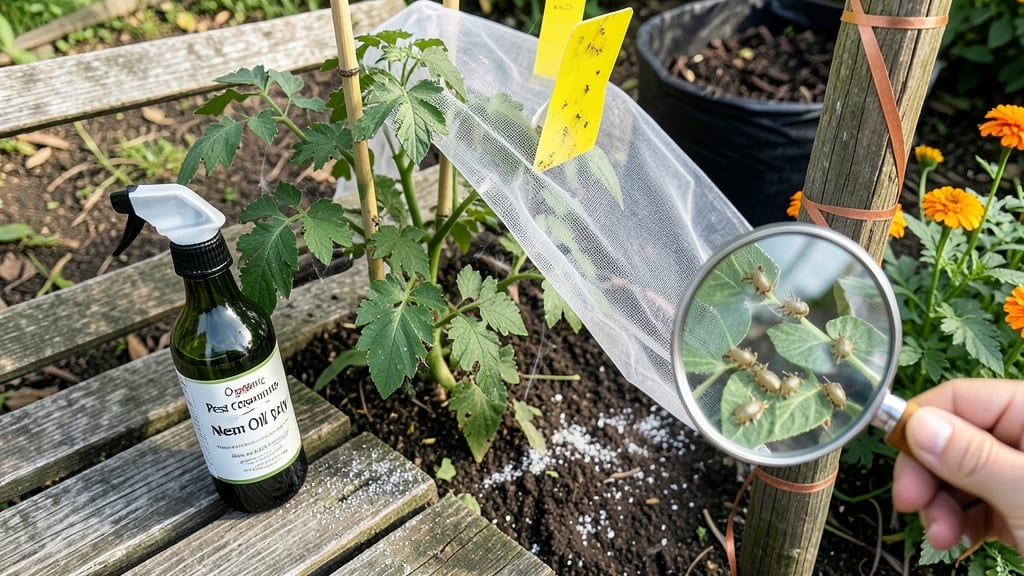
To prevent garden pests naturally, use companion planting with herbs like basil or marigolds, apply diatomaceous earth as a barrier, and introduce beneficial insects such as ladybugs or lacewings. Mulching and proper spacing also deter infestations effectively.
Keeping pests out of your garden doesn't require harsh chemicals—it starts with strategic plant pairings that confuse pests' senses. 🌿 For example, marigolds release a scent that repels nematodes, while basil deters flies and mosquitoes.
Diatomaceous earth works by creating a microscopic barrier that dehydrates soft-bodied insects like slugs and ants within 48 hours. The key is consistency: combine these methods with regular garden maintenance to create an environment where pests simply can't thrive.
Many gardeners overlook the power of physical spacing—crowded plants create ideal hiding spots for pests. I've seen aphid infestations drop by 80% just by increasing airflow between tomato plants.
The same principle applies to mulching: a thick layer of organic mulch around plants disrupts pests' movement patterns while retaining moisture. For larger threats like deer, a simple 8-foot tall fence with smooth surfaces prevents them from jumping over.
💡 In This Article
- Natural Pest Prevention Methods That Work Scientifically
- Best Organic Barriers for Different Garden Pest Types
Natural pest prevention methods that work scientifically
Companion planting works through a fascinating biological phenomenon called allelopathy, where certain plants release natural chemicals that deter pests. For instance, marigolds emit a compound called α-terthienyl, which repels nematodes by disrupting their feeding habits.
When planted near tomatoes or carrots, marigolds create a 3-foot protective zone where nematode populations drop by up to 90%. Similarly, basil produces eugenol, a compound that confuses aphids' scent trails, making it harder for them to locate host plants.
The mechanism behind diatomaceous earth is equally precise: this fine white powder consists of fossilized algae with razor-sharp edges that puncture insects' exoskeletons. When applied as a 1/4-inch thick layer around plants, it dehydrates soft-bodied pests like slugs and ants within 48-72 hours by disrupting their waxy outer layer.
The key is reapplying after rain, as moisture reduces its effectiveness. This method is particularly effective against crawling insects but harmless to mammals and beneficial insects like bees.
Beneficial insects like ladybugs and lacewings provide a biological control solution by preying on garden pests. A single ladybug can consume 5,000 aphids in its lifetime, while lacewing larvae devour mites and caterpillars.
The best time to introduce them is during late afternoon when temperatures are below 85°F—they're more active in cooler conditions. To attract them, plant dill, fennel, or yarrow, which provide nectar and shelter while repelling pests that might harm the beneficial insects themselves.
Mulching creates a physical and chemical barrier by blocking pests' access to plants while improving soil health. Organic mulches like straw or wood chips suppress weeds (which attract pests) and maintain steady soil moisture—a condition many pests avoid.
The thickness matters: a 3-4 inch layer is ideal for deterring slugs and cutworms, while also encouraging earthworms that aerate the soil. For maximum effectiveness, apply mulch after planting when soil is moist to help it settle properly.
Proper plant spacing is often underestimated but critical for pest prevention. Crowded plants create high-humidity microclimates that attract fungal diseases and pests like whiteflies. For example, tomato plants need 18-24 inches between rows and 24-36 inches between plants to allow airflow.
This simple adjustment can reduce fungal infections by 60% while making it harder for pests to move between plants. The same principle applies to fruit trees, where proper spacing improves fruit quality and reduces pest pressure.
What most gardeners don't realize is that these methods work best when combined. For instance, using diatomaceous earth alongside companion planting creates a multi-layered defense system: the companion plants repel pests initially, while the diatomaceous earth provides a final barrier.
This synergistic approach mimics natural ecosystems where diverse plant communities and predator-prey relationships keep pest populations in check without human intervention.