
Neem Oil
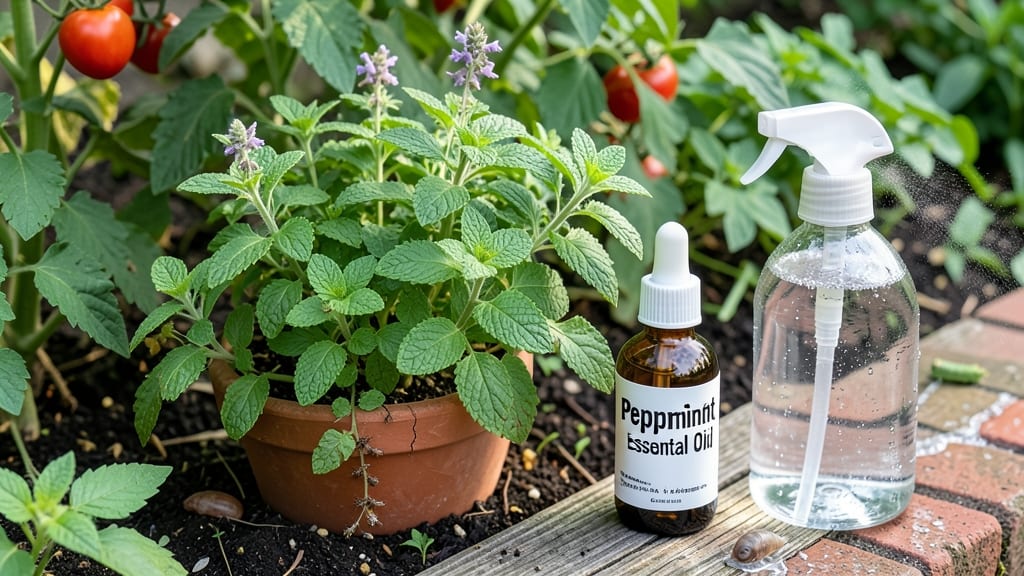
Using peppermint oil for garden pests effectively repels common insects like ants, aphids, and spider mites by overwhelming their sensory systems with menthol, which disrupts their ability to detect plant scents and navigate to food sources. Always dilute it first to prevent harming your plants.
Peppermint oil works as a natural insect deterrent because its strong menthol compounds confuse pests' olfactory systems—think of it like wearing noise-canceling headphones when you're trying to find food. 🌿 The oil masks the volatile organic compounds (VOCs) that plants release to attract pollinators, making your garden less appealing to unwanted visitors.
I've found it particularly effective against ants and aphids, which rely heavily on scent trails and plant signals to locate meals.
For best results, mix 10-15 drops of peppermint oil per quart of water with a teaspoon of dish soap to help it adhere to plant surfaces. Spray the solution on foliage during early morning or late evening when temperatures are cooler, as direct sunlight can degrade the oil's effectiveness.
Always test a small area first—some plants, like mint and lavender, may react poorly to concentrated oils.
💡 In This Article
- How Peppermint Oil Disrupts Insect Behavior
- Best Application Methods for Peppermint Oil in Gardens
How peppermint oil disrupts insect behavior
The real magic of peppermint oil lies in its menthol content, which acts like a chemical disruptor for insects. Menthol molecules bind to the same olfactory receptors that pests use to detect plant scents—specifically targeting their antennal chemoreceptors.
These receptors are incredibly sensitive, and when overwhelmed by menthol's strong aroma, insects experience sensory confusion similar to how humans might feel with overwhelming scents in a crowded room. 🌿 For ants, this means their pheromone trails become unusable, while aphids lose their ability to locate host plants.
Peppermint oil works on a second front by masking the volatile organic compounds (VOCs) that plants naturally emit to attract pollinators. These VOCs act like dinner bells for pests, signaling "food available!" When peppermint oil coats plant surfaces, it creates a scent barrier that blocks these signals.
Studies show that 1-2% peppermint oil solutions can reduce aphid infestations by up to 70% within 48 hours by making plants appear less appetizing. The key is consistency—reapplication every 7-10 days maintains this protective barrier.
Not all insects are equally affected, though. Ants and aphids are particularly vulnerable because their survival depends heavily on scent-based navigation. Spider mites, which rely more on physical contact than scent, are also repelled by the oil's texture when it coats leaves.
However, beetles with harder exoskeletons may show less sensitivity, making peppermint oil most effective as part of an integrated pest management approach rather than a standalone solution. 🔍
The menthol in peppermint oil also triggers a physiological response in pests. When ants encounter it, they experience what researchers call "chemical avoidance behavior"—their legs become less coordinated, making movement difficult.
This effect is dose-dependent: concentrated oils (10% solution) work faster but require careful dilution, while weaker solutions (1-2%) provide longer-lasting protection without plant damage. The oil's volatility means it evaporates quickly, which is why frequent reapplication is crucial during active pest seasons.
What makes peppermint oil particularly effective against garden pests is its dual action: it disrupts both communication (pheromone trails) and navigation (plant scent detection). For example, when applied to soil, it interferes with ant foraging patterns by altering the chemical composition of the soil's surface layer.
This creates an invisible barrier that forces ants to seek alternative routes—often leading them away from your garden entirely. The same principle applies to aphids, which become disoriented when they can't detect the specific VOCs their host plants emit. 🌱
Interestingly, peppermint oil's effectiveness varies by plant type. Delicate foliage like basil or lettuce may show signs of stress with concentrated applications, while tougher plants like rosemary or thyme can handle stronger solutions.
Always perform a patch test on a small leaf area first, observing for any discoloration or wilting within 24 hours. The oil's high menthol content makes it particularly potent—what works for repelling pests can sometimes be too much for sensitive plant varieties.