
Tools
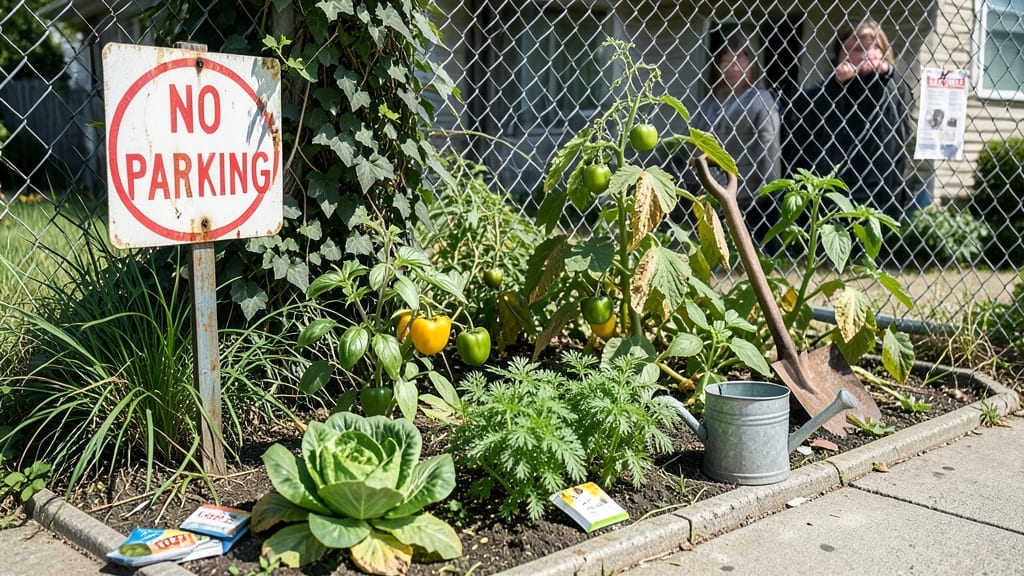
An illegal front yard vegetable garden violates most local zoning laws unless classified as ornamental or accessory, but some states permit them through agricultural exemptions or HOA approvals. Always verify county regulations before planting.
Most zoning ordinances treat front yard vegetable plots as commercial or agricultural use, which typically requires special permits or isn't allowed at all in residential zones like R-1 or R-2. 🌱 The key distinction lies in whether your garden is classified as "ornamental" (allowed in many areas) or "productive" (often restricted).
For example, growing herbs or flowers for decoration usually passes inspection, while corn or tomato plants might trigger violations. I've seen cases where homeowners faced fines after neighbors complained—even when they thought their garden was legal.
Always check your county's land use codes, as setback requirements and lot size can make the difference between approval and rejection.
Some states offer workarounds, like California's urban farming permits or Texas' agricultural exemptions, but these vary widely by county. 📜 If you're determined to grow vegetables in your front yard, consider container gardening or raised beds—these often fly under the radar while still producing a harvest.
The safest bet? Start with a small, ornamental garden and expand only after confirming local rules with your zoning office.
💡 In This Article
- How Zoning Laws Define Legal vs Illegal Home Gardens
- State-Specific Permit Exceptions for Front Yard Vegetables
How zoning laws define legal vs illegal home gardens
Zoning laws categorize gardens based on their intended use, and this distinction determines legality. Residential zones like R-1 (single-family) or R-2 (multi-family) typically allow ornamental plants—those grown for aesthetic value—but restrict productive gardens that yield food.
The key mechanism here is the land use classification: if your garden produces edible crops, it may be reclassified as agricultural or commercial use, which often requires permits or isn't permitted at all in front yards. 🌿 For example, a front yard filled with marigolds (ornamental) might pass inspection, while a row of tomato plants (productive) could trigger a violation.
Setback requirements further complicate matters. Many ordinances mandate minimum distances between garden edges and property lines—often 5-10 feet for front yards—to maintain curb appeal and prevent obstruction of sidewalks or streets.
Lot size also plays a role: larger properties may have more flexibility, while urban lots with under 5,000 square feet often face stricter rules.
For instance, a 2,000-square-foot lot in a suburban neighborhood might allow a small ornamental garden but ban a vegetable plot, even if it’s only 100 square feet. Always verify your county’s exact measurements, as these can vary dramatically.
Homeowner associations (HOAs) add another layer of complexity. Even if local zoning allows a front yard garden, your HOA’s covenants might prohibit it. HOAs often prioritize uniformity and may classify vegetable gardens as "non-conforming" uses, regardless of zoning laws.
I’ve seen cases where homeowners received fines or had to remove gardens after neighbors filed complaints—even when the garden was technically legal under county codes. 📜 The safest approach? Review both your county’s zoning ordinances and your HOA’s rules before planting a single seed.
Another critical factor is the visible footprint of your garden. Zoning officers often judge legality by how the garden appears from the street.
A neatly arranged bed of herbs or flowers might be approved, while a sprawling vine like cucumbers or a tall stalk of corn could be flagged as "commercial" or "industrial" in appearance.
This is why many urban gardeners opt for container gardening or raised beds—these can mimic ornamental gardens while still producing food, making them less likely to attract attention from inspectors.
State laws also influence local enforcement. Some states, like California and Oregon, have progressive urban farming policies that encourage small-scale agriculture, while others, like Florida or Texas, lean toward stricter residential zoning.
For example, California’s Urban Agriculture Incentive Zones program provides permits for front yard gardens in certain cities, but these exceptions don’t apply everywhere. Always check your state’s Department of Agriculture or local planning commission for exceptions that might apply to your area. 🌱
If you’re unsure where to start, begin by contacting your county zoning office or city planning department. Many offer free consultations or online resources where you can look up your property’s specific rules.
Bring photos of similar gardens in your neighborhood—these can help demonstrate that your garden aligns with local standards. Pro tip: Frame your garden as a "sustainability project" or "pollinator-friendly space"—these narratives often resonate better with zoning boards than outright food production.