
Tools
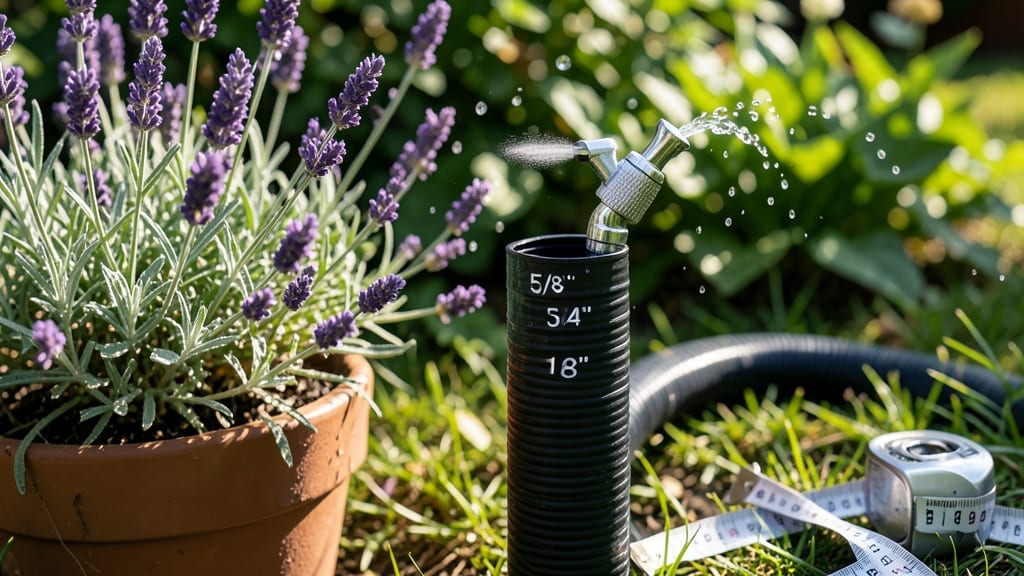
The inside diameter of a garden hose directly affects water flow rates and pressure: a 5/8-inch hose works well for most gardening tasks, while 3/4-inch or 1-inch hoses deliver stronger flow for irrigation systems or pressure washers. Thicker hoses minimize pressure loss over long runs.
The inside diameter of your hose isn't just about thickness—it's about how efficiently water moves through it.
Think of it like a straw: a wider straw lets you drink faster without sucking as hard. 💧 A 5/8-inch hose strikes a balance for everyday tasks like watering flower beds or filling buckets, while 1-inch hoses are the heavy lifters for filling pools or running sprinkler systems.
The bigger the diameter, the less pressure you lose over 100 feet or more of hose length, which is why pros swear by them for large properties.
Here's the science: water flows faster through wider hoses with less resistance, thanks to reduced friction against the hose walls. This means you'll get consistent pressure whether you're watering your vegetable garden or cleaning your driveway.
For delicate plants, a smaller diameter actually helps—it creates gentler water flow that won't damage stems.
💡 In This Article
- How Inside Diameter Impacts Water Pressure and Flow Rates
- Choosing the Right Garden Hose Size for Your Needs
How inside diameter impacts water pressure and flow rates
The inside diameter of a garden hose creates what engineers call a "flow cross-section"—the larger this opening, the more water your hose can move per second.
Imagine two hoses: a 5/8-inch (16mm) hose moves about 15 gallons per minute (GPM) at 40 PSI, while a 1-inch (25mm) hose handles 25 GPM at the same pressure.
This difference comes from the pipe's cross-sectional area, which increases with the square of the diameter (a 1-inch hose has 2.25x the capacity of a 5/8-inch hose). 💧
Physics explains why this matters: water flowing through a hose experiences friction against the walls, creating pressure loss. The Bernoulli principle tells us that as water speeds up through narrower sections, pressure drops.
A 100-foot run of 5/8-inch hose can lose 20-30 PSI due to friction, while a 1-inch hose loses only 10-15 PSI over the same distance. This is why professional irrigation systems use larger hoses—they maintain consistent pressure even at the farthest points of your yard.
Flow type also changes with diameter. Smaller hoses (3/8-inch) create turbulent flow, where water swirls chaotically, causing more energy loss. Larger hoses produce smoother, laminar flow—water moves in parallel layers with minimal resistance.
This is why a 3/4-inch hose delivers 20% more water than a 5/8-inch model while using less energy from your water source. For delicate tasks like watering seedlings, smaller diameters create gentler spray patterns that won't disturb soil.
Real-world example: When filling a 5-gallon bucket from a 5/8-inch hose, you'll need 20 seconds of steady flow. With a 1-inch hose, that same bucket fills in 12 seconds—nearly twice as fast.
The pressure drop over 50 feet of hose is also halved, meaning your sprinkler system at the back of the yard gets just as strong a stream as the front. This efficiency becomes critical when watering large vegetable gardens or maintaining lawns during dry spells.
Material matters too: Flexible rubber hoses have slightly rougher inner walls than reinforced vinyl, increasing friction. A 5/8-inch rubber hose might deliver 10% less flow than a smooth vinyl hose of the same diameter.
For high-pressure tasks like pressure washing, this difference becomes significant—you might need a 3/4-inch rubber hose where a 5/8-inch vinyl would suffice for regular gardening.
Here's what to watch for: If you notice your hose pressure dropping dramatically after 30 feet, your diameter might be too small. For tasks requiring 30 GPM or more (like filling a kiddie pool), a 1-inch hose is non-negotiable.
The right diameter ensures you're not wasting water—or your time—waiting for containers to fill. 💦