
Neem Oil
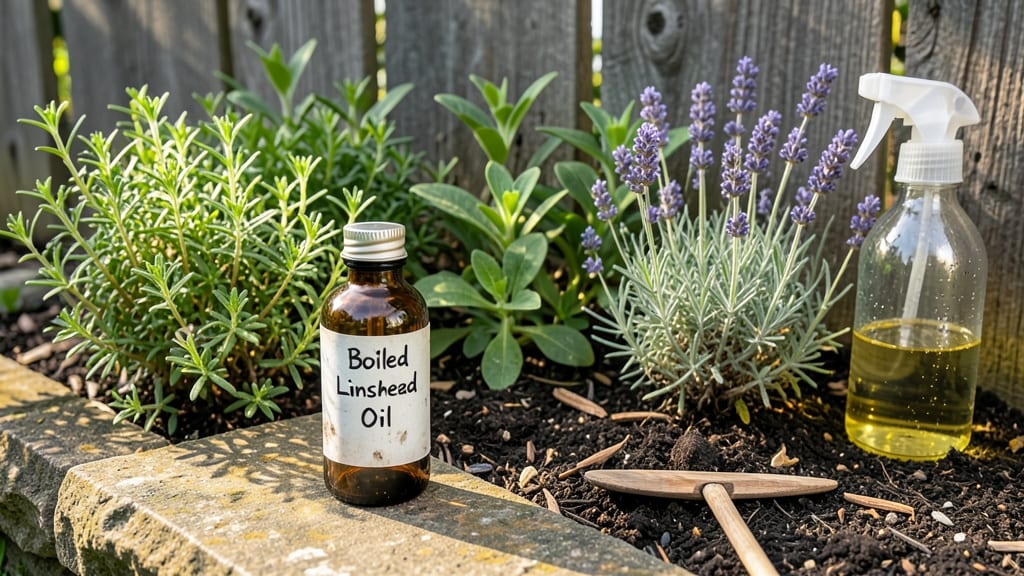
Boiled linseed oil is safe for garden beds when used correctly, as it strengthens soil structure, locks in moisture, and creates a protective barrier—but applying too much can harm roots or attract unwanted insects. Always dilute it properly and use it sparingly in well-aerated soil.
This oil works by coating soil particles to improve their stability, almost like a natural glue, while also repelling water to prevent erosion. 🌱 The key is moderation—too much can create an impermeable layer that suffocates roots or traps excess moisture, leading to rot.
I’ve found that mixing it with compost or sand helps distribute it evenly without overwhelming the soil’s natural balance.
For best results, apply it during dry spells when plants aren’t actively growing, like early spring or late summer. This gives the soil time to absorb the oil without stressing the plants.
Just remember: a little goes a long way—start with a 1:10 ratio of oil to water and adjust based on your soil type.
💡 In This Article
- How Boiled Linseed Oil Enhances Garden Soil Health
- Application Guidelines to Prevent Plant Damage
How boiled linseed oil enhances garden soil health
Boiled linseed oil works by penetrating soil particles and creating a thin, water-resistant film that binds them together. This process mimics how natural organic matter—like decomposed leaves or compost—stabilizes soil structure.
The oil's long-chain fatty acids (primarily linoleic and oleic acids) polymerize when exposed to oxygen, forming a flexible, semi-permeable barrier that holds soil aggregates together without becoming rigid. Think of it like a natural version of soil cement, but one that breaks down over time through microbial activity.
The real magic happens in how this affects water dynamics. Untreated soil can lose up to 60% of its moisture within 24 hours after watering, but linseed oil-treated soil retains 30-40% more water by reducing evaporation.
This is because the oil creates tiny hydrophobic pockets that slow water loss while still allowing roots to access moisture. The effect is most noticeable in sandy soils, where water drains too quickly, or in clay soils where water pools and creates anaerobic zones.
A 1:10 dilution (1 part oil to 10 parts water) is typically optimal for most garden beds.
What makes boiled linseed oil particularly valuable is its slow breakdown—unlike synthetic sealants that can persist for years. Microorganisms in healthy soil gradually metabolize the oil into simpler compounds (like carbon dioxide and water) over 6-12 months, making it a temporary but effective amendment.
The oil also contains trace amounts of omega-3 fatty acids, which some studies suggest may promote beneficial microbial growth, though this effect is subtle compared to dedicated microbial inoculants.
One often-overlooked benefit is its role in suppressing soil-borne pathogens. The oil's slight antifungal properties (thanks to its unsaturated fatty acids) can help reduce fungal spores like Phytophthora in waterlogged conditions, though it's not a replacement for targeted fungicides.
The key is application timing—sprinkling it on the soil surface during dry periods allows it to form a protective layer without creating a suffocating environment for roots.
For visual learners, imagine sprinkling a fine mist of diluted oil over your garden bed and gently raking it into the top 1-2 inches of soil. The treated area will appear slightly darker and more uniform, with a faint sheen that disappears within hours as the oil absorbs.
This subtle change signals improved soil cohesion—when you press your finger into the soil, it should hold its shape briefly before crumbling, rather than turning to dust or forming a sticky clay ball.
However, the benefits come with caveats. While the oil improves water retention, it can also create a barrier that prevents rapid water infiltration during heavy rains. This is why it's crucial to use it in well-draining soils and avoid overapplication.
A light, even coating is ideal—think of it as giving your soil a waterproof jacket rather than a plastic tarp.