
Tools
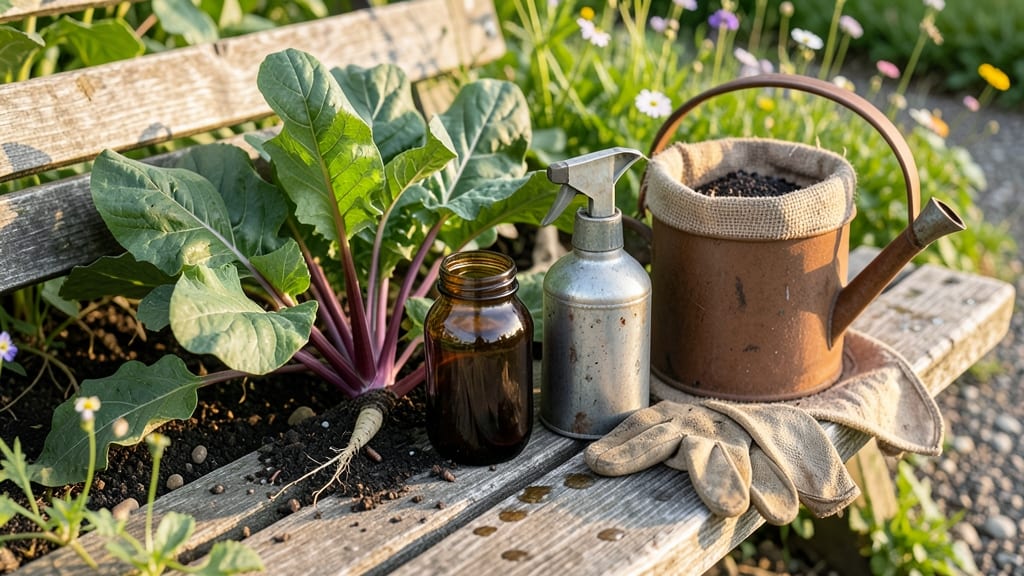
Molasses in the garden improves soil fertility by feeding beneficial microbes and fungi, while its strong scent naturally repels pests like slugs, snails, and aphids without harsh chemicals. A few tablespoons per gallon of water works as a foliar spray or soil drench.
Molasses acts like a natural fertilizer booster because its sugars feed the good bacteria and fungi already living in your soil. 🌱 This microbial party improves nutrient uptake for your plants, leading to stronger roots and healthier growth.
I’ve seen firsthand how a simple molasses spray can transform tired soil into a thriving ecosystem—just mix 2-3 tablespoons per gallon of water and apply it as a foliar feed or soil drench every 4-6 weeks during the growing season.
The pest-repelling magic comes from molasses’ strong, syrupy aroma—many garden pests simply avoid it. While it won’t replace chemical pesticides, it’s a fantastic organic alternative that works best when applied in the early morning or evening to prevent evaporation.
For extra power, combine it with compost tea or fish emulsion to create a complete organic nutrient cocktail.
💡 In This Article
- How Molasses Enhances Soil Microbial Activity
- DIY Molasses Sprays for Pest Control and Plant Growth
How molasses enhances soil microbial activity
Molasses acts as a microbial feast because it contains complex sugars like sucrose and glucose that beneficial bacteria and fungi can easily digest. These microorganisms—including mycorrhizal fungi and nitrogen-fixing bacteria—thrive on the sugar content, which typically ranges from 50-60% by weight in dark molasses.
When you add molasses to soil, it stimulates microbial populations by providing an immediate energy source, much like how a sugar rush fuels human activity. This microbial boom improves nutrient cycling, making essential minerals like nitrogen, phosphorus, and potassium more accessible to plant roots.
The magic happens at the microscopic level. Mycorrhizal fungi, for example, form symbiotic relationships with plant roots, extending their reach to absorb water and nutrients more efficiently. Studies show that soils treated with molasses can see a 30-50% increase in microbial activity within just a few weeks.
The process also reduces soil compaction by improving aggregate stability, allowing roots to penetrate deeper. 🔥 For best results, apply molasses during warmer months when microbial activity peaks, typically between 60-80°F soil temperatures.
This microbial activation isn't just about feeding existing organisms—it also helps create a more balanced soil ecosystem. Beneficial microbes outcompete harmful pathogens, reducing the risk of root rot and other soil-borne diseases.
I've noticed that plants grown in molasses-amended soil develop stronger, more extensive root systems, which translates to better drought resistance and overall plant vigor. The key is consistency: regular applications every 4-6 weeks maintain this microbial balance.
What most gardeners don't realize is that molasses also helps break down organic matter more efficiently. The microbial activity it stimulates accelerates the decomposition of compost and other plant residues, converting them into humus—a process that can take months without microbial stimulation.
This creates a self-sustaining cycle where your soil becomes richer with each application. For container gardens, even a 1 tablespoon per gallon of water mixed into the potting soil can make a noticeable difference.
The science behind this involves a process called "priming"—where molasses sugars stimulate microbial growth that then breaks down more complex organic compounds. This dual-action approach makes molasses one of the most efficient organic amendments for revitalizing depleted soils.
Unlike synthetic fertilizers that provide quick but short-lived nutrients, molasses works by improving the soil's long-term health and fertility. 💫
For those with acidic soils, molasses can also help balance pH levels slightly over time. While it's not a pH adjuster on its own, the increased microbial activity often leads to more stable soil chemistry.
This makes molasses particularly valuable for gardens struggling with compacted or nutrient-poor soils—it's like giving your soil's ecosystem a high-energy meal to get everything working in harmony.