
Tools
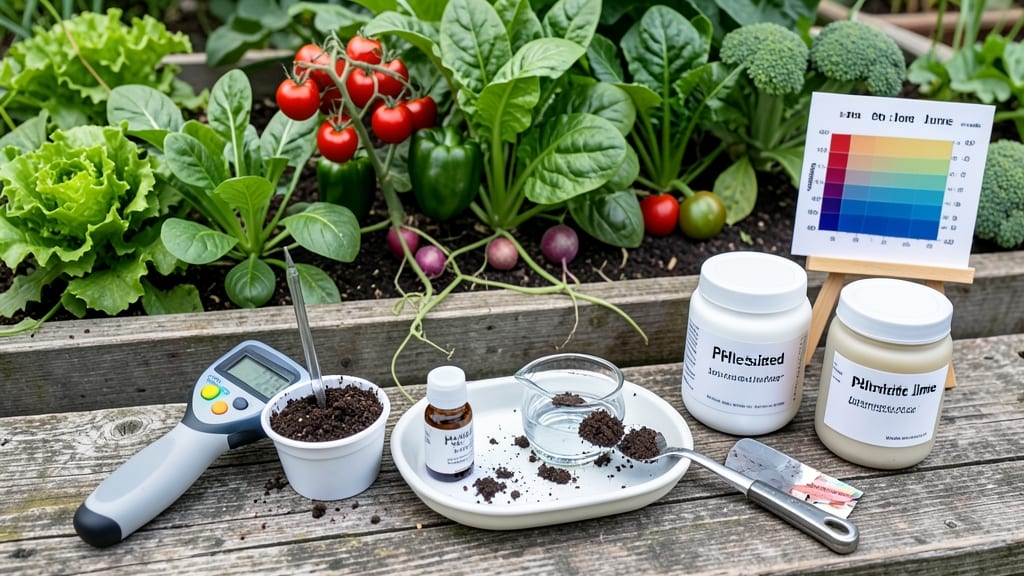
The ideal pH level for garden vegetables typically ranges between 6.0 and 7.0, with most plants thriving in slightly acidic to neutral soil conditions. Leafy greens like spinach and kale perform best at 6.0–7.0, while tomatoes and peppers prefer a slightly more acidic range of 6.0–6.8. Regular soil testing is essential to ensure proper nutrient absorption and healthy growth.
The pH level for garden vegetables directly impacts how well your plants absorb critical nutrients like nitrogen, phosphorus, and potassium. 🌱 When soil becomes too acidic (below 5.5) or alkaline (above 7.5), essential minerals like iron, manganese, and zinc become locked away, leading to stunted growth or yellowing leaves—a condition called iron chlorosis.
For example, blueberries need much more acidic soil (around 4.5–5.5), while most common garden vegetables struggle outside the 6.0–7.0 range. Testing your soil every spring ensures you can make adjustments with organic amendments like lime (to raise pH) or sulfur (to lower it) before planting season begins.
Even small pH shifts can drastically alter plant health.
A soil pH of 5.0 might make phosphorus unavailable to your tomatoes, while a pH of 8.0 could prevent your peppers from absorbing calcium properly. 💡 That's why I always recommend using a simple pH test kit (like the ones with liquid indicators) to check your garden soil before planting.
The results will tell you exactly what amendments you need to create the perfect growing environment for your vegetables.
💡 In This Article
- How Soil pH Affects Vegetable Nutrient Absorption
- Step-by-Step Guide to Testing and Adjusting Garden Soil pH
How soil pH affects vegetable nutrient absorption
Soil pH acts like a gatekeeper for nutrients, determining which minerals your vegetable plants can access. At the ideal range of 6.0–7.0, essential elements like nitrogen, phosphorus, and potassium exist in forms that plant roots can absorb efficiently.
For instance, nitrogen—critical for leafy green growth—becomes locked in organic matter at pH levels below 5.5, while phosphorus binds tightly to soil particles when pH rises above 7.5.
This is why spinach and lettuce, which thrive in 6.0–7.0 soil, show stunted growth when pH drifts too far from this sweet spot.
The chemistry gets even more interesting when you consider micronutrients.
Iron, manganese, and zinc—necessary for chlorophyll production—become unavailable to plants when soil becomes alkaline (pH > 7.0). 🌱 This explains why you might see yellowing leaves (iron chlorosis) on tomatoes growing in slightly alkaline soil, even when the plant appears healthy otherwise.
The roots simply can't access the iron they need. Conversely, in highly acidic soil (pH < 5.5), aluminum and manganese can become toxic, damaging root systems and preventing proper water uptake.
Root health suffers most when pH strays from optimal ranges. In acidic conditions, hydrogen ions dominate, making it harder for roots to expand and take up water.
In alkaline soils, calcium and magnesium bind to phosphorus, creating a double whammy where both nutrients become scarce. 💡 This is why peppers and eggplants—both preferring 6.0–6.8—often show blossom-end rot (a calcium deficiency) when growing in soil with pH above 7.2.
The plant can't access enough calcium from the soil, even if you're adding compost.
Different vegetables have unique tolerances, which is why understanding their preferred pH ranges matters. For example, carrots and beets prefer slightly acidic soil (6.0–6.5) to prevent forking and improve sugar content, while cucumbers and squash are more flexible, thriving in 6.0–7.0.
The key is testing your soil before planting—most home test kits provide results within 24 hours and cost under $20, making them an essential tool for any vegetable gardener.
What most gardeners don't realize is how quickly soil pH can change. Rainwater, organic matter decomposition, and even irrigation water can shift pH by 0.5–1.0 points in a single season. 🌿 That's why I recommend retesting soil every 2–3 years or after major amendments.
The goal isn't perfection—it's creating an environment where nutrients are available when your plants need them most.
Consider this: a soil pH of 5.8 might seem close enough to 6.0, but it can reduce phosphorus availability by up to 30%. That small difference could mean the difference between a bumper crop of tomatoes and plants struggling to set fruit.
The solution? Adjusting with organic amendments like pelletized lime (to raise pH) or elemental sulfur (to lower it) gives you precise control over your garden's chemistry.