
Tools
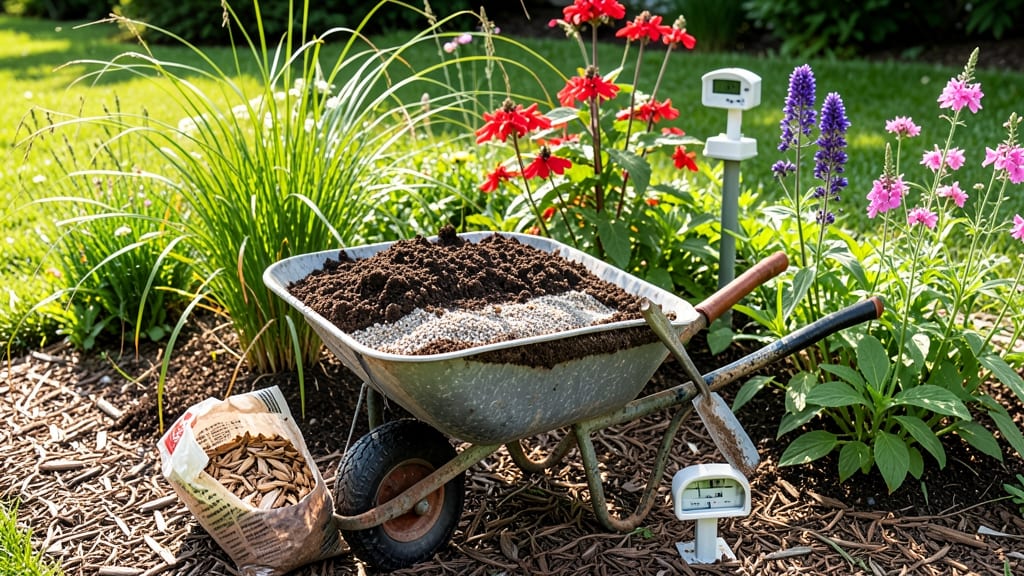
Creating an effective rain garden soil mix means using a 60-30-10 blend of native topsoil, organic compost, and coarse sand or perlite to balance drainage and nutrient support for healthy plant roots.
A rain garden thrives on this mix because each component plays a critical role. The native topsoil provides essential microbes and structure, while organic compost boosts nutrient availability without compacting the soil.
Adding 10% coarse sand or perlite prevents waterlogging, which is crucial for root health in areas with heavy rainfall. 🌱 This combination mimics natural wetland conditions while adapting to your local climate and plant needs.
For example, if you're planting moisture-loving species like irises or asters, you might increase the compost ratio slightly to 35% for extra fertility. Conversely, drought-tolerant plants like coneflowers benefit from a slightly higher sand content (15%) to improve aeration.
Always test your mix by digging a small hole, filling it with water, and checking how quickly it drains—ideal is about 30 minutes.
💡 In This Article
- Why the 60-30-10 Ratio Works for Rain Garden Soil
- Customizing Your Rain Garden Soil Mix for Different Plants
Why the 60-30-10 ratio works for rain garden soil
The 60% native topsoil foundation creates the perfect balance between structure and microbial activity. Native soil contains essential fungi and bacteria that break down organic matter, creating a self-sustaining ecosystem. These microbes improve nutrient availability for plants while preventing soil-borne diseases.
The texture of native soil—often a mix of clay, silt, and sand—provides natural drainage channels that move water through the profile without eroding away. 🌱 For instance, a 1-inch layer of native soil can hold 20-30% of its weight in water while still allowing oxygen to reach roots.
The 30% organic compost component transforms the soil into a nutrient powerhouse. Compost introduces humus, which improves water retention by 50% compared to pure mineral soil while preventing compaction. The decomposition process also generates heat, sterilizing pathogens and creating ideal conditions for beneficial microbes.
For rain gardens, I recommend using well-aged compost (fully decomposed) to avoid drawing nitrogen from plant roots during the initial breakdown phase. A 1-cubic-yard batch of compost can provide enough nutrients for 100 square feet of garden space.
Finally, the 10% coarse sand or perlite acts as the soil's circulatory system. These materials create air pockets that prevent waterlogging—a critical factor in rain gardens where excess moisture can suffocate roots. Perlite, in particular, has a 90% air-filled porosity when dry, while coarse sand provides immediate drainage.
The combination prevents both erosion and compaction, maintaining the soil's loose, crumbly structure. This is especially important in heavy clay soils where water can pool, creating anaerobic conditions that stunt root growth.
What most people don't realize is how these components work together to control erosion. The native soil provides the structural integrity, while the sand/perlite creates pathways for water to move laterally through the profile rather than running off the surface.
This mimics natural wetland conditions where water filters through plant roots rather than pooling. The compost then captures and slowly releases this water, maintaining moisture levels for plants during dry spells. This three-part system ensures your rain garden can handle 1-2 inches of rainfall per hour without becoming waterlogged.
For visual learners, imagine this mix as a layered cake: the native soil forms the sturdy base, compost adds the rich, moist middle layer, and sand/perlite creates tiny air pockets throughout. This structure allows roots to explore freely while preventing the soil from turning into a dense, waterproof block.
The result is a soil environment where plants can thrive even with fluctuating moisture levels. 💫
One common mistake is using fine sand instead of coarse sand or perlite. Fine sand (like beach sand) compacts easily, defeating the purpose of improving drainage. Always choose sand with particles larger than 0.5mm or opt for perlite, which remains stable even when wet.
This small detail makes a huge difference in how effectively your rain garden manages stormwater.