
Tools
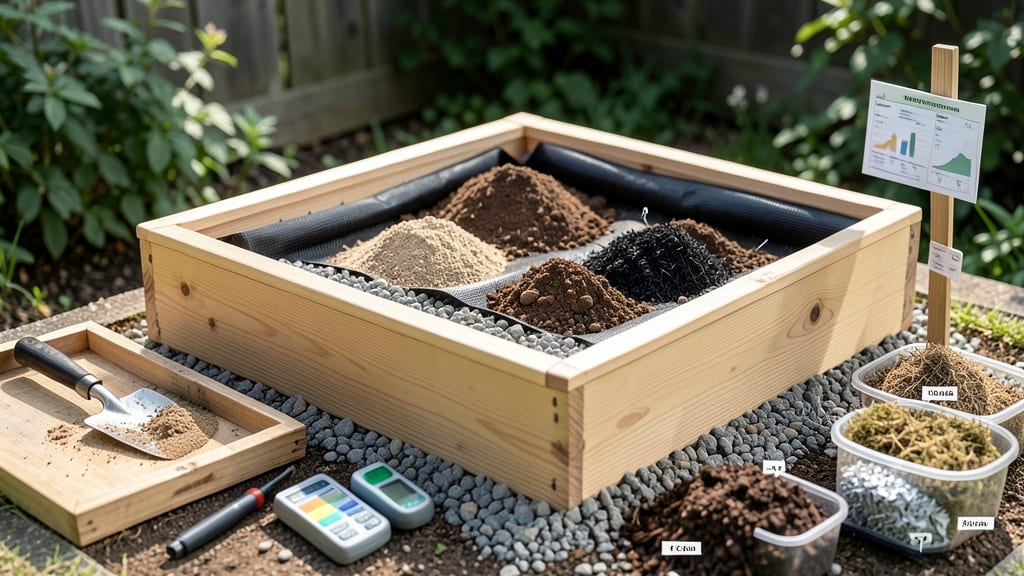
For a raised vegetable garden, the ideal soil composition blends 60% topsoil, 30% compost, and 10% perlite or coarse sand to maximize drainage, nutrient availability, and root aeration for healthy plant development.
A well-balanced soil mix is the foundation of any thriving raised garden.
The 60% topsoil provides the structural framework that plants need to establish strong roots, while the 30% compost introduces essential nutrients and beneficial microbes that support vigorous growth. 🌱 The remaining 10% perlite or coarse sand prevents compaction and ensures excess water drains away, preventing root rot.
This ratio creates an environment where vegetables can flourish without competing for resources in dense, heavy soil.
What's interesting is how this mix adapts to different crops. Leafy greens like spinach or lettuce thrive with slightly more compost (up to 40%) for rapid growth, while root vegetables such as carrots or potatoes benefit from a touch more sand (15%) to prevent forked roots.
Testing your soil's pH before planting can also reveal if amendments like lime or sulfur are needed to fine-tune the growing conditions for your specific vegetables.
💡 In This Article
- Why Balanced Soil Composition Boosts Raised Garden Growth
- Step-by-Step Guide to Mixing Soil for Raised Vegetable Beds
Why balanced soil composition boosts raised garden growth
The foundation of thriving vegetables in raised beds lies in how each soil component works together at a microscopic level. Topsoil provides the essential mineral structure plants need for root anchorage, containing roughly 5-10% organic matter that binds soil particles.
This organic matter acts like a sponge, holding onto nutrients while allowing water to move through the soil matrix.
When you mix in 30% compost, you're introducing a powerhouse of microbial activity—compost contains millions of beneficial bacteria and fungi per gram that break down organic matter into plant-available nutrients like nitrogen, phosphorus, and potassium.
Here's where the science gets fascinating: compost also improves soil aggregation, creating stable crumbs that prevent compaction. Without this structure, roots would struggle to penetrate dense soil, leading to stunted growth.
The 10% perlite or coarse sand plays a critical role in maintaining pore space—these materials create air pockets that allow oxygen to reach root zones, a process called aeration. Without proper aeration, roots suffocate and can't absorb nutrients efficiently.
Think of it like the difference between breathing fresh air versus being submerged in water: plants need that oxygen just as much as we do. 🌱
This balanced mix also creates the perfect environment for pH regulation. Most vegetables prefer a slightly acidic to neutral pH range of 6.0-7.0, where nutrients like iron and manganese become most available.
The compost helps buffer pH fluctuations, while the perlite prevents salt buildup that can occur with excessive organic matter. For example, tomatoes—one of the most popular raised bed crops—thrive in this pH range and will show signs of nutrient deficiencies if the soil becomes too acidic or alkaline.
What many gardeners overlook is how texture affects water retention. The ideal raised bed mix should hold moisture like a well-wrung sponge—enough to keep roots hydrated but with ample drainage to prevent waterlogging. The perlite/sand component creates these drainage channels while the compost holds onto moisture through capillary action.
This is why you'll often see raised beds with 1-2 inches of mulch on top: it slows evaporation while maintaining that perfect moisture balance at the root zone.
Consider how different crops interact with this soil structure. Root vegetables like carrots need loose, well-aerated soil to grow straight and avoid forking—hence why they benefit from slightly more sand in the mix. Meanwhile, leafy greens like kale thrive with extra compost to fuel their rapid growth.
The key is customizing this base ratio to match your specific planting needs while maintaining the overall balance that supports microbial diversity and nutrient cycling. 💫
The result? Plants that grow faster, produce higher yields, and resist diseases better because their root systems are healthy and well-supported.
This isn't just theory—studies show that raised beds with this soil composition can produce 20-30% more vegetables than in-ground gardens with comparable soil quality, thanks to the controlled environment and optimal growing conditions.