
Tools
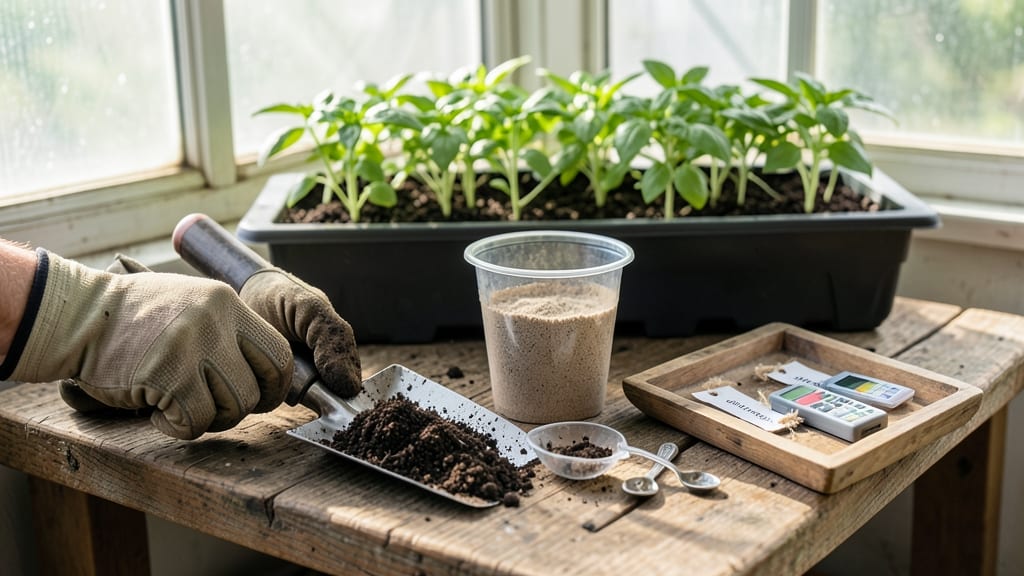
A soil mixture for vegetable gardens should combine 60% topsoil, 30% compost, and 10% coarse sand or perlite to balance fertility, drainage, and root aeration while preventing compaction. Adjust ratios based on clay-heavy or sandy native soil types.
A well-balanced garden soil blend isn't just about throwing dirt in a pile—it's about creating a living ecosystem where roots can breathe and nutrients flow. 🌱 The 60% topsoil base provides essential minerals, while 30% compost feeds beneficial microbes that break down organic matter into plant-available nutrients.
That final 10% sand or perlite acts like tiny drainage tunnels, preventing waterlogging that can drown roots or invite fungal diseases.
For example, leafy greens like spinach thrive with slightly more compost (up to 40%) for rapid growth, while root crops like carrots need that extra sand to prevent forking as they develop.
Your native soil type matters more than you might think. Clay soils hold moisture but suffocate roots, while sandy soils drain too quickly, starving plants of nutrients. Testing your soil's pH and texture before mixing is the first step—most vegetables prefer a slightly acidic to neutral range (6.0-7.0).
I always recommend testing after your first mix to see how amendments like lime (for acidity) or peat moss (for moisture retention) might need to be adjusted. The goal is to mimic nature's own layered soil profiles, where each component plays a specific role in supporting plant health.
💡 In This Article
- How to Layer Soil for Optimal Vegetable Root Development
- Customizing Soil Mixes for Specific Vegetable Needs
How to layer soil for optimal vegetable root development
The science behind layering soil for vegetables starts with understanding how roots interact with different textures. Topsoil provides the mineral backbone—it contains essential nutrients like nitrogen, phosphorus, and potassium that plants need for growth. However, pure topsoil can compact easily, especially when wet, creating air pockets that suffocate roots.
That's where the 30% compost comes in: it introduces organic matter that improves soil structure by binding particles together while also feeding the millions of microbes responsible for breaking down nutrients into forms plants can absorb.
These microbes thrive in the spaces between soil particles, creating a dynamic ecosystem where roots can access both water and oxygen simultaneously.
Texture plays a critical role in how water moves through the soil. Coarse sand or perlite acts like a skeletal system, preventing compaction while creating channels for excess water to drain away. For example, carrots and radishes—vegetables with long, delicate roots—require loose, well-drained soil to grow straight and avoid forking.
In contrast, tomatoes and peppers, which develop deep but sturdy root systems, benefit from slightly more moisture retention, so you might reduce the sand to 5% in their beds.
The ideal mix creates a porosity rate of 40-60%, meaning about half the soil volume consists of air and water-filled spaces rather than solid particles.
Layering also mimics natural soil profiles found in forests, where leaf litter decomposes into humus before mixing with mineral-rich subsoil.
When you add compost on top of topsoil, you create a gradient where nutrients are most concentrated near the surface—perfect for leafy greens like lettuce or kale that develop most of their biomass above ground.
Meanwhile, root crops like potatoes and beets need deeper layers of loose soil to prevent stunting. The key is to work amendments into the top 12 inches of soil, where most vegetable roots will establish themselves during their growing season.
Don't overlook the role of microbial activity in this layered system. Compost introduces beneficial bacteria and fungi that form symbiotic relationships with plant roots.
Mycorrhizal fungi, for instance, extend the root system's reach by up to 100 times, allowing plants to access nutrients in soil volumes they couldn't reach alone.
This biological activity also generates heat during decomposition—a process called "thermophilic composting"—which can temporarily raise soil temperatures by 10-15°F, accelerating seed germination in early spring plantings.
For heavy clay soils, which can hold water like a sponge but suffocate roots, the sand component becomes even more critical. Adding 15-20% coarse sand (like builder's sand with particles 0.5-1mm in diameter) creates macropores that improve drainage while maintaining some moisture retention.
In sandy soils, where water drains too quickly, you might increase the compost to 40% and add 5% peat moss to help retain moisture without compacting.
The goal is to create a soil texture that feels like a well-aerated sponge—firm enough to support roots but loose enough to allow both water and air to move freely.
One common mistake gardeners make is mixing everything together without considering the sequence. Instead, I recommend building layers: start with a 4-inch base of coarse sand or perlite at the bottom of your planting bed, followed by 6 inches of topsoil, then 2-3 inches of compost on top.
This stratification prevents the compost from sinking into the denser layers below while keeping the sand at the bottom where it can do the most good for drainage.
For container gardening, this same principle applies—just use a 1:3 ratio of compost to topsoil with 10% perlite to prevent compaction in the limited space.