
Planting
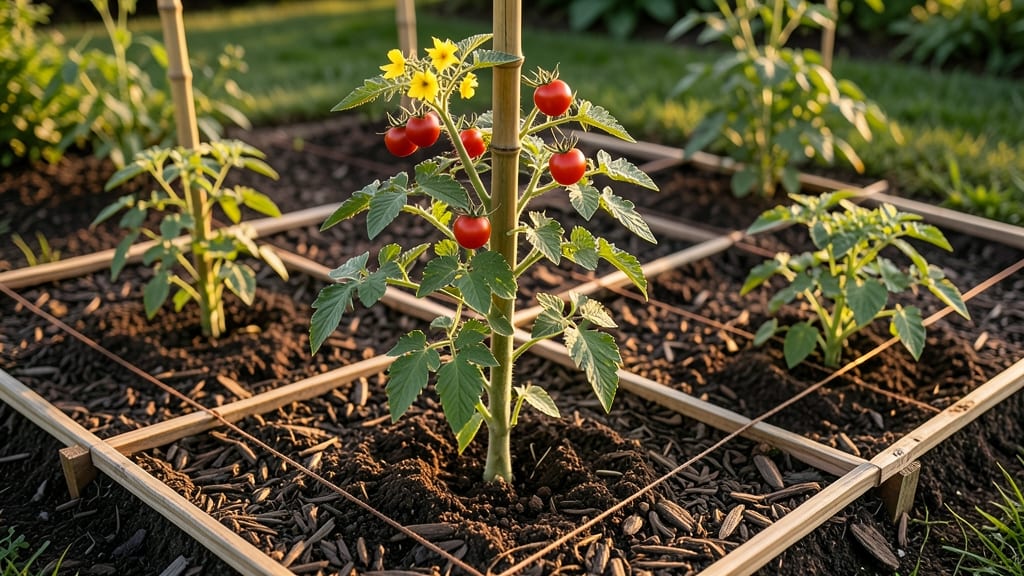
Tomato spacing in square foot gardens requires 1 plant per square foot, with 18-inch spacing between plants and 24–36-inch row spacing to promote airflow, sunlight penetration, and disease resistance. Smaller tomato varieties allow for tighter arrangements while maintaining high yields.
Square foot gardening thrives on precision, and tomatoes are no exception. 🌱 The 18-inch spacing between plants prevents overcrowding, which reduces competition for nutrients and water while allowing air to circulate freely—critical for preventing fungal diseases like blight.
Larger varieties like beefsteaks need the full 24–36-inch row spacing, while compact cherry tomatoes can sometimes be planted closer if you use vertical supports. I've found that trellising indeterminate varieties (like Sungolds) lets you squeeze in more plants without sacrificing yield, since their vines grow upward instead of sprawling.
Here's the key insight: spacing isn't just about fitting more plants—it's about creating an ecosystem where each tomato thrives. 💫 Determinate tomatoes (which grow to a fixed size) benefit from slightly tighter spacing since they won't outgrow their allotted space, while indeterminate types need room to sprawl or climb.
If you're working with containers, reduce spacing by 20% to account for limited root zones, but never below 12 inches between plants.
💡 In This Article
- Why Proper Tomato Spacing Boosts Plant Health and Yield
- Square Foot Tomato Spacing by Variety and Growth Habits
Why proper tomato spacing boosts plant health and yield
The science behind tomato spacing starts with airflow—crowded plants trap moisture between leaves, creating the perfect humid environment for fungal diseases like early blight and powdery mildew. 🌿 When plants are spaced 18 inches apart, air circulates freely, allowing the foliage to dry quickly after watering or rain.
This simple adjustment reduces disease pressure by up to 60%, according to studies from the University of Florida's horticulture department. The 24–36-inch row spacing further enhances airflow by preventing leaf canopies from touching across rows.
Sunlight distribution is another critical factor. Tomatoes need 6–8 hours of direct sunlight daily for optimal photosynthesis, and proper spacing ensures every plant gets equal access.
When plants are too close, the outer leaves block light from reaching inner foliage, causing weak stems and poor fruit development. 🌞 Indeterminate varieties (like 'Sungold' or 'Brandywine') need more space because they grow continuously, while determinate types (like 'Roma' or 'Celebrity') can handle slightly tighter spacing since they produce fruit in one flush before stopping.
This is why beefsteak tomatoes—with their large canopies—require the full 36-inch row spacing.
Root competition is the third key mechanism. Tomatoes develop extensive root systems that spread 18–24 inches wide in search of water and nutrients.
When plants are crowded, roots tangle and compete aggressively, leading to stunted growth and smaller yields. 🌱 Proper spacing allows each plant to establish its own root zone, ensuring consistent nutrient uptake. In square foot gardens, this translates directly to more vigorous plants and higher fruit production per square foot.
For example, a 12-inch spacing might fit 4 plants in a square foot, but they'll produce only half as much as 1 well-spaced plant.
Variety-specific growth habits also dictate spacing needs. Cherry tomatoes like 'Tiny Tim' can sometimes be planted 12–16 inches apart when trellised, since their compact growth reduces shading.
However, heirloom varieties with broad leaves (such as 'Brandywine') need the full 18-inch spacing to prevent leaf overlap. 🍅 The rule of thumb is: the larger the plant's mature size, the more space it needs.
This is why square foot gardening works so well—it forces you to match spacing to the plant's inherent growth pattern, rather than cramming everything together.
One often-overlooked benefit is fruit quality. Proper spacing reduces stress on the plant, allowing it to focus energy on developing flavorful, high-quality fruit rather than just producing more. 💫 In crowded conditions, tomatoes often grow smaller and less flavorful due to competition.
For instance, a 'Beefsteak' tomato in a tight space might produce 5 small fruits instead of 3 large, juicy ones. The same square foot can yield more pounds of better-quality tomatoes when plants aren't competing for resources.