
Planting
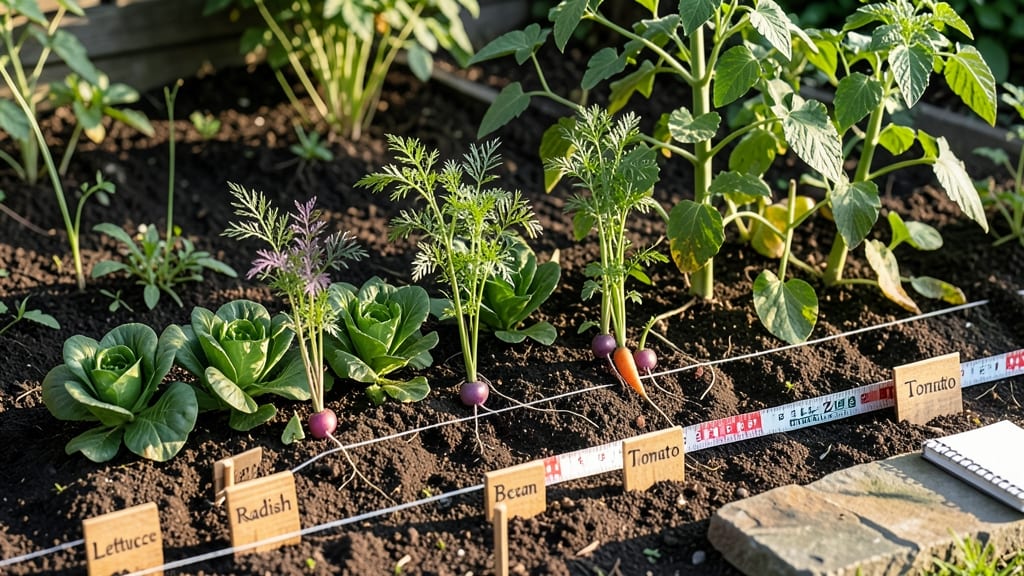
Determining garden row spacing for vegetables requires balancing plant size and growth patterns, with typical distances ranging from 12 to 36 inches to maximize sunlight exposure, airflow, and overall harvest potential.
This spacing isn't arbitrary—it directly impacts your garden's productivity. 🌱 Plants with shallow roots like lettuce thrive in tight 12-inch rows, while sprawling vining crops such as cucumbers need 36-inch spacing to prevent competition for nutrients.
The key is understanding each plant's mature size: overcrowding stunts growth, while excessive spacing wastes space. For instance, bush beans only need 18 inches between rows, but pole beans require 36 inches to support their vertical growth.
Even within the same species, dwarf varieties can be planted closer than standard types.
What many gardeners overlook is how spacing affects pest control and disease prevention. Tight rows create humid microclimates that encourage fungal growth, while proper airflow keeps leaves dry.
I've found that adjusting spacing based on your climate—adding extra inches in humid regions—can make the difference between a thriving garden and one plagued by mildew. The right spacing isn't just about fit; it's about creating an ecosystem where every plant has room to flourish.
💡 In This Article
- How Plant Size and Growth Habits Determine Row Spacing
- Optimal Row Spacing for 10 High-Yield Vegetables
How plant size and growth habits determine row spacing
Row spacing isn't just about fitting plants together—it's about creating an ideal environment for each plant's unique biology. The science behind proper spacing revolves around three key factors: root zone competition, canopy spread, and photosynthesis efficiency.
Plants with shallow root systems like lettuce (roots typically reach only 6-12 inches deep) can tolerate close 12-inch rows because they compete minimally for soil nutrients.
In contrast, deep-rooted crops like carrots (which need 12-18 inches of soil depth) require wider 18-inch rows to prevent root entanglement and stunted growth. 🌱
The canopy spread plays an equally critical role—this is the horizontal area a plant occupies as it matures. Vining plants like cucumbers develop sprawling foliage that can reach 6 feet wide, while bush varieties like tomatoes stay contained within 2-3 feet.
When plants shade each other prematurely, their photosynthesis slows dramatically (studies show light reduction by 50% in crowded rows), leading to smaller fruits and weaker stems.
For example, a tomato plant's leaves can block up to 90% of sunlight at ground level when spaced too closely, turning the lower stems woody and reducing fruit production by 30-40%.
Airflow is the often-overlooked hero of proper spacing. Tight rows create stagnant air pockets that trap moisture, creating perfect conditions for fungal diseases like powdery mildew (which thrives in humidities above 75%).
I've seen gardens where beans planted in 12-inch rows instead of the recommended 18 inches developed mildew within weeks, while properly spaced plants remained disease-free. The airflow gap also affects temperature regulation—plants in wide rows experience more consistent temperatures, preventing heat stress during summer afternoons.
This is why 36-inch spacing for corn isn't just about the plants' size, but about creating a microclimate where each stalk gets adequate air circulation. ✨
Even within the same species, growth habits create dramatic spacing differences. Take beans as an example: bush varieties like 'Blue Lake' stay compact at 18-24 inches tall, while pole varieties like 'Kentucky Wonder' climb to 8 feet or more.
Planting pole beans in 18-inch rows (designed for bush types) would result in tangled vines, broken stems, and poor yields—whereas proper 36-inch spacing lets them develop strong trellises and produce 2-3 times more pods.
The same principle applies to squash: compact 'Eight Ball' varieties can be planted in 36-inch rows, while vining 'Butternut' squash need 54-inch spacing to prevent blight from spreading through crowded foliage.
Soil type also influences optimal spacing. In heavy clay soils where roots grow slower, plants naturally compete more for nutrients, requiring wider rows (up to 20% more spacing than in loose, well-draining soils).
Conversely, in raised beds where soil is nutrient-rich and well-aerated, you can sometimes reduce spacing by 10-15% without sacrificing yield. The key is observing your plants' early growth patterns—if you notice leaves turning yellow or stems becoming leggy before flowering, it's a sign they're competing too much for resources.
This visual feedback is your garden's way of telling you the spacing needs adjustment. 💫
What most gardeners don't realize is how spacing affects harvest timing and quality. Properly spaced plants mature more uniformly because they're not competing for light or water, leading to synchronized harvests.
For instance, carrots in 12-inch rows might take 2-3 weeks longer to reach maturity than those in 18-inch rows, with smaller, forked roots as a result.
The same goes for tomatoes: plants in 24-inch rows produce fruit over a 4-week period, while those in 36-inch rows can continue producing for 6-8 weeks. This extended harvest window means more tomatoes per plant and less waste from overripe fruit.
The right spacing turns your garden from a competition for resources into a cooperative system where every plant thrives. 🌿