
Tools
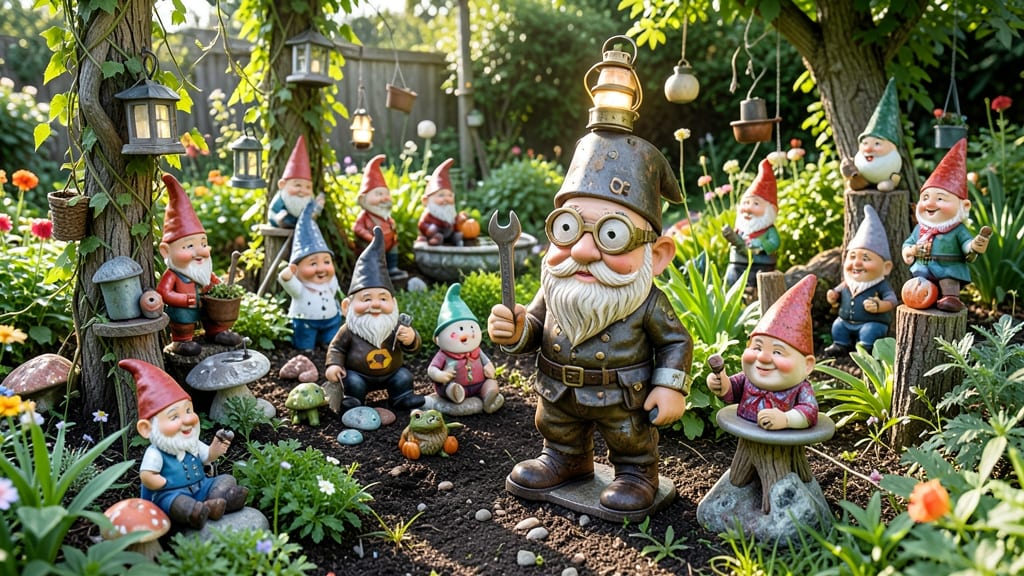
Unique garden gnomes reveal their authenticity through distinctive handcrafted elements like uneven paint finishes, textured glazes, and elaborate hand-painted details—features that differentiate genuine antique pieces from mass-produced imitations. Authentic gnomes often display subtle imperfections, asymmetrical proportions, and signs of aging that mass-market versions carefully avoid.
These craftsmanship clues serve as a visual roadmap for collectors. 🌟 Authentic garden gnomes frequently showcase irregularities in their ceramic bodies—like uneven glazing or hand-carved facial features—that prove their age and artisanal origins.
The paintwork on vintage pieces often appears weathered with subtle color variations, while modern replicas use uniform, factory-applied finishes. I always check for these telltale signs when evaluating potential purchases, as they're the strongest indicators of genuine craftsmanship.
What makes this distinction particularly valuable is how these details affect both aesthetic appeal and resale value. Handcrafted gnomes develop unique character over time through natural aging processes, creating pieces that feel truly one-of-a-kind.
The material composition also differs significantly—authentic antiques use traditional ceramic blends with natural pigments, while modern versions often incorporate plastic or resin substitutes that lack the same tactile quality and longevity.
💡 In This Article
- How to Identify Handcrafted Garden Gnome Artistry
- Where to Source Genuine Unique Garden Gnomes
How to identify handcrafted garden gnome artistry
Authentic garden gnomes reveal their craftsmanship through material composition that modern replicas can't replicate. Traditional pieces use stoneware or porcelain with natural clay blends containing iron oxides (for red hues) and manganese (for purples), giving them a distinctive weight and density.
Hold a gnome—genuine ones feel substantially heavier due to their ceramic base, typically weighing 3-8 pounds depending on size, while plastic versions often register under 2 pounds.
The sound test also helps: tap the base—authentic ceramics produce a deep, resonant clink, while plastic makes a dull thud. 🔥
The paint application technique serves as another dead giveaway. Handcrafted gnomes feature layered, hand-brushed glazes that create subtle texture variations—you'll notice slight color shifts when viewed from different angles, especially on curved surfaces.
Modern replicas use spray-painted finishes that appear uniformly flat and often show brush stroke patterns only in straight lines.
Look for irregular glaze pooling (where paint collects thicker in crevices) and hand-mixed pigment variations—vintage gnomes frequently have two-tone eyes or mismatched hat colors that would never occur in factory production.
Subtle design flaws actually prove authenticity. Artisans intentionally created asymmetrical proportions—gnome heads might tilt slightly off-center, or one foot could be marginally shorter than the other. These imperfections make each piece unique and reflect the hand-thrown pottery techniques of the era.
Modern replicas, however, exhibit perfect symmetry and machine-cut features, with features like hats or beards aligned with mathematical precision. The facial details on authentic gnomes often show hand-carved texture variations in the cheeks or noses, while mass-produced versions have smooth, molded features that feel plasticky to the touch.
Artisan signatures provide the ultimate verification. Genuine antique gnomes frequently bear hand-painted signatures or maker's marks on the base, often in gold leaf or contrasting paint colors. These signatures might include initials, full names, or even playful gnome-themed signatures like "G. Munchkin" or "P. Toadstool."
The placement varies—some are centered, others tucked in corners—but they're always handwritten rather than stamped. Modern replicas either lack signatures entirely or use pre-printed labels that appear too crisp and uniform. 💫
Don't overlook the patina development. Authentic garden gnomes develop natural aging characteristics over decades: paint may show faint cracks (craquelure), surfaces develop a matte, slightly chalky texture, and metal accents (like hats or wands) often corrode with greenish oxidation.
These signs indicate the piece has spent years exposed to natural elements. Newer reproductions maintain their factory-fresh appearance for years, with paint that remains glossy and unblemished, and metal parts that show no signs of corrosion.
For the ultimate test, examine the underside of the base. Authentic ceramic gnomes often have hand-signed kiln marks or irregular glaze drips along the edges, while plastic versions show mold seam lines or injection points.
The bottom surface of genuine ceramics typically feels rough and porous—a natural byproduct of the throwing and firing process—whereas plastic bases are smooth and slightly greasy to the touch. These subtle differences reveal the fundamental difference in creation methods: handcrafted vs. machine-made.