
Tools
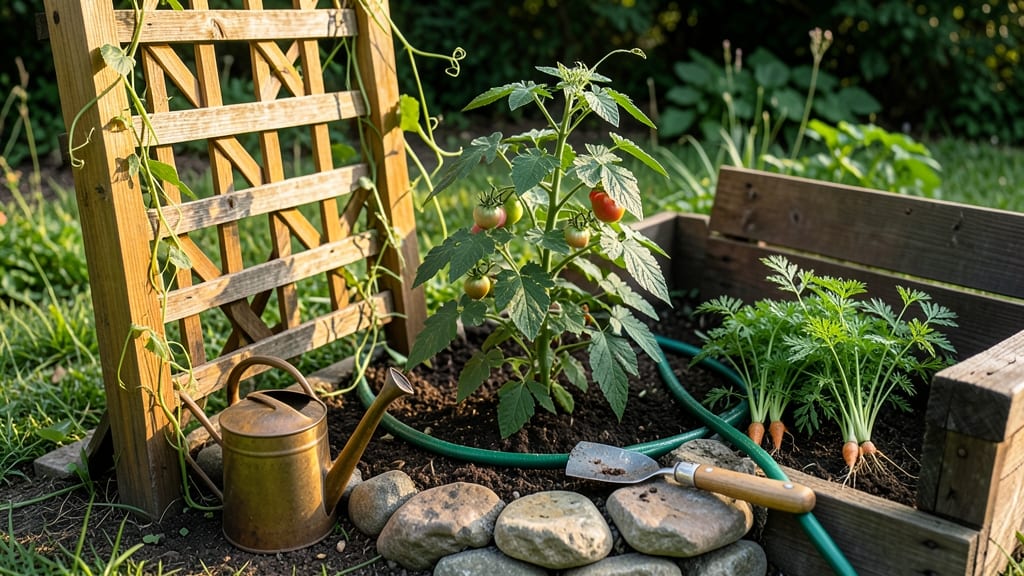
Victory garden facts reveal these small-scale vegetable plots played a pivotal role during World War II by producing over 40% of the nation’s produce through homegrown efforts. Today, they’ve transformed into modern sustainable urban farming projects.
During WWII, these gardens weren't just backyard projects—they were a national effort. 🌱 The U.S. government actively promoted them through posters and radio broadcasts, encouraging families to grow their own food to combat rationing.
What's fascinating is how these gardens thrived in even the smallest spaces, proving that intensive planting techniques could yield remarkable results.
Modern victory gardens focus on sustainability and community building. Many urban farmers now use container gardening and vertical growing methods to maximize limited space. The movement has expanded to include seed-sharing networks and educational workshops, showing how these gardens continue to nourish both bodies and communities today.
💡 In This Article
- How WWII Victory Gardens Boosted Food Production
- Modern Victory Gardens: Urban Farming Trends and Tips
How WWII victory gardens boosted food production
Victory gardens emerged as a direct response to wartime food shortages, where government-imposed rationing limited access to staples like meat, butter, and sugar.
The U.S. Department of Agriculture launched the "Victory Garden" campaign in 1943, encouraging families to cultivate 40% of the nation's produce—equivalent to feeding the entire population of New York City at the time.
These gardens thrived in backyards, vacant lots, and even rooftops, using intensive planting techniques like double-digging (turning soil twice for better aeration) and succession planting (staggering crops to maximize yield).
What made these gardens so effective was their focus on high-yield, fast-growing crops. Tomatoes, potatoes, and leafy greens like lettuce and spinach were staples because they could be harvested in 30-60 days, providing quick returns.
For example, a single 10x10-foot plot could produce 20 pounds of potatoes—enough to feed a family for weeks. The government even distributed free seeds and gardening guides, turning novice growers into productive farmers overnight. 🌱
The impact went beyond food security. Victory gardens reduced pressure on commercial farms, allowing more produce to be shipped overseas to troops. They also fostered community spirit—neighbors shared seeds, tools, and harvests, creating a sense of shared purpose.
Studies show that during peak production in 1943, these gardens supplied 9-10 million tons of food, equivalent to the output of 700,000 acres of farmland.
One lesser-known fact is how these gardens adapted to urban environments. In cities like Chicago, residents transformed empty lots into "war gardens," using raised beds and vertical trellises to grow vegetables in tight spaces.
The success of these efforts proved that food production wasn't limited to rural areas—it could thrive anywhere with soil and sunlight. This adaptability laid the foundation for modern urban farming movements.
Today, historians credit victory gardens with teaching Americans about self-sufficiency and the power of collective action. The techniques developed during WWII—like crop rotation and efficient space use—are still used in community gardens worldwide. What’s remarkable is how a wartime necessity became a lasting legacy for sustainable living. 💫