
Vegetables
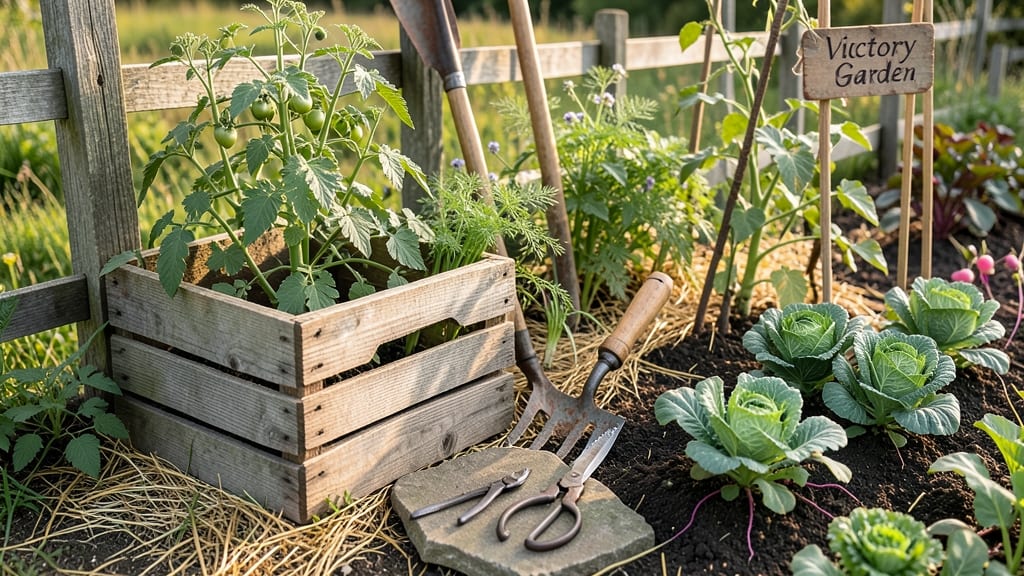
Victory gardens during WW2 produced over 40% of America's vegetables, easing wartime food shortages while fostering community resilience through shared gardening initiatives across urban and rural areas.
These gardens became a cornerstone of American resilience during the war, with the federal government launching campaigns like "Food Will Win the War" to encourage participation. 🌱 By 1943, over 20 million gardens were in operation, covering about 40% of the nation's vegetable production—equivalent to feeding the entire population for a year.
The effort wasn't just about food security; it was a morale booster, turning neighbors into collaborators and transforming empty lots into productive green spaces.
What made these gardens so effective was their adaptability. Urban families grew potatoes in window boxes while rural homesteaders expanded their plots, all using simple tools and shared seeds. The government even distributed free seeds through ration books, ensuring everyone could participate regardless of resources.
This collective effort didn't just feed bodies—it nourished spirits during one of America's most challenging periods.
💡 In This Article
- How WW2 Victory Gardens Worked: Government Programs and Gardening Strategies
- Best Crops for Victory Gardens: High-Yield Plants That Fed Families
How WW2 victory gardens worked: government programs and gardening strategies
The U.S. government launched the "Victory Garden" campaign in 1942 through the Office of Civilian Defense, repurposing the National War Garden Commission from WWI.
Their slogan, "Food Will Win the War," framed gardening as patriotic duty, distributing 10 million seed packets in 1943 alone—enough to plant 1.5 million acres. 🌱 These weren't just gardens; they were strategic food production units, with the government even publishing Victory Garden Manuals detailing planting schedules and space-saving techniques.
Urban families adapted creatively, using window boxes for lettuce, balcony planters for tomatoes, and backyard plots for potatoes (which could yield 200-300 lbs per 100 sq ft).
The government promoted intensive planting methods, like the "square foot gardening" precursor where vegetables were spaced 12 inches apart instead of the usual 24 inches, doubling yield per square foot.
Rural gardens expanded existing plots, but both approaches relied on composting household scraps and crop rotation to maintain soil fertility without commercial fertilizers.
Seed rationing created urgency—families received limited seed allotments through ration books, encouraging them to save seeds year-to-year. The government prioritized high-calorie, nutrient-dense crops like potatoes, carrots, and cabbage, which could be stored long-term.
Schools and churches organized community plots, turning gardening into a shared experience that strengthened neighborhoods. This wasn't just about growing food; it was about reclaiming autonomy in a time of scarcity.
Tools were simple but effective: hand trowels, hoes, and watering cans became symbols of self-sufficiency. The government even distributed free garden tools through local programs.
What made these gardens remarkable was their adaptability—from New York City rooftops to California backyards, families grew food in whatever space they had. The effort produced 40% of the nation's vegetables by 1943, proving that collective action could feed a country at war.
Beyond food production, victory gardens had psychological benefits. The act of planting and harvesting gave people a sense of control during uncertain times.
Studies from the era show that communities with active gardens reported higher morale and lower stress levels—a direct result of seeing tangible progress in their own hands.
The gardens became social hubs, where neighbors swapped tips, seeds, and harvests, reinforcing the idea that community resilience was just as important as food security. 💛