
Companion Plants
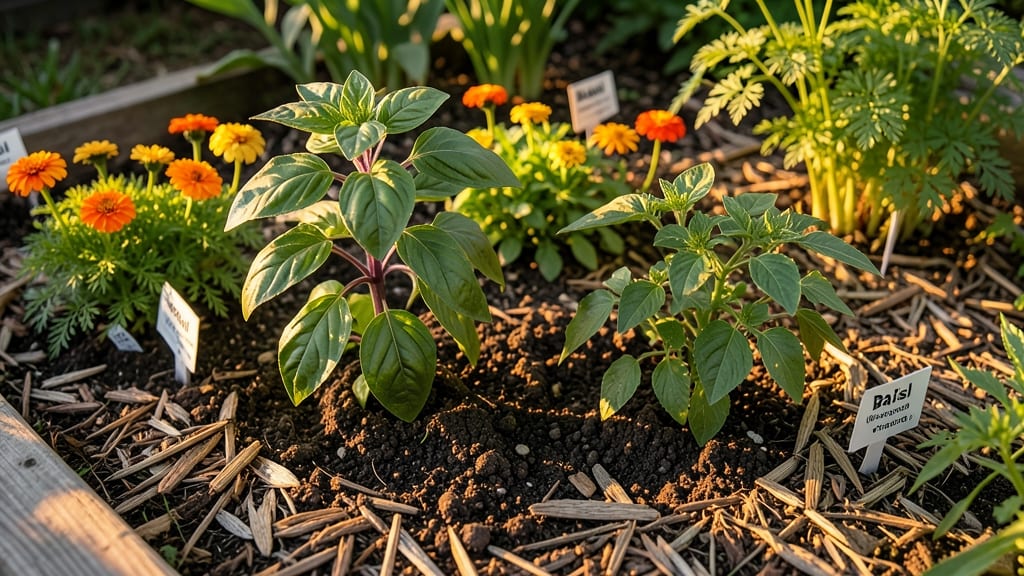
What to plant together in garden creates thriving ecosystems by combining plants that support each other's growth: pair tomatoes with basil to deter pests, marigolds with vegetables to repel nematodes, or lettuce with carrots to optimize space and soil nutrients. Thoughtful combinations reduce maintenance while enhancing yields through natural pest control and shared resources.
Companion planting works because certain plants naturally repel pests or attract beneficial insects while others improve soil quality or shade sensitive crops. 🌱 For example, planting onions near carrots deters carrot flies, while nasturtiums act as a sacrificial trap for aphids.
The key is understanding which plants share similar growing conditions—like herbs that thrive in partial shade alongside leafy greens—or those that fix nitrogen in the soil, such as beans paired with corn and squash.
This method isn't just about aesthetics; it's a science-backed way to create a self-sustaining garden ecosystem that requires less intervention from you.
Beyond pest control, strategic pairings help maximize limited space in small gardens.
Tall plants like sunflowers or corn can provide shade for heat-sensitive crops below, while shallow-rooted herbs keep weeds at bay. 💫 Regional adaptations matter too—some pairings thrive in Southern heat (like okra with sweet potatoes) while others suit Northern climates (such as kale with onions).
Always check your local growing zone and soil type before committing to combinations, as microclimates can drastically alter results.
💡 In This Article
- Science-Backed Companion Planting Principles for Pest Control
- Top 30+ Garden Pairings for Growth and Space Efficiency
Science-backed companion planting principles for pest control
The foundation of effective companion planting lies in olfactory masking, where strong-scented plants like basil or rosemary confuse pests by overwhelming their ability to locate target crops. For instance, basil emits eugenol—a compound that disrupts the mating signals of tomato hornworms—while its peppery aroma deters whiteflies.
This chemical interference works best when companion plants are placed within 1-2 feet of vulnerable crops, creating an invisible protective barrier. 🌿 The key is selecting herbs with volatile oils that pests find repellent but humans perceive as pleasant, like dill or cilantro near cabbage families.
Nutrient competition plays another critical role, particularly against weeds. Deep-rooted plants such as comfrey or Jerusalem artichokes absorb excess nitrogen that would otherwise fuel weed growth, while their extensive root systems create a physical barrier that shades out invasive species.
Studies show that cover crops like clover can reduce weed pressure by up to 70% when interplanted with vegetables, thanks to their rapid growth and dense foliage. This strategy works best in early spring when weeds are most aggressive, allowing companion plants to establish dominance before the growing season peaks.
Symbiotic relationships form the third pillar of pest control, where one plant directly benefits another through shared resources.
The classic "Three Sisters" combination—corn, beans, and squash—demonstrates this perfectly: corn stalks provide vertical support for beans, which fix nitrogen in the soil to feed the heavy corn, while squash leaves suppress weeds and retain moisture. 🌽 This system mirrors natural ecosystems, where plants coevolve to support each other's survival.
The nitrogen-fixing bacteria in bean roots (Rhizobium) convert atmospheric nitrogen into a usable form, increasing soil fertility by 20-30% for neighboring crops.
Regional adaptations are crucial because pest behaviors vary by climate. In Southern gardens, where aphids thrive year-round, planting garlic and chives near roses disrupts their life cycles by releasing allicin, a compound toxic to soft-bodied insects.
Conversely, in Northern climates, where cabbage moths are the primary threat, tansy (a perennial herb) releases thujone, which repels them without harming beneficial insects like ladybugs. Always research local pest calendars to match companion plants to seasonal threats.
Timing matters just as much as placement. For example, marigolds should be sown 4-6 weeks before planting vegetables to establish their roots and begin releasing alpha-terthienyl, a compound that deters nematodes.
The optimal spacing between companion plants also varies: basil and tomatoes need 12-18 inches apart for airflow, while carrots and onions can share the same space due to their complementary root structures. Overcrowding reduces effectiveness by limiting airflow, which can create humid conditions that attract fungal pests.
One often-overlooked mechanism is trap cropping, where a sacrificial plant lures pests away from your main crops. Nasturtiums, for instance, attract aphids with their sweet nectar, while their peppery leaves contain glucosinolates that deter other pests.
By placing nasturtiums at the garden's edge, you create a biological buffer zone that protects central crops. This method is particularly effective for cabbage families, which are prone to diamondback moths—a pest that nasturtiums can reduce by 50% when planted in proximity. 🌸