
Tools
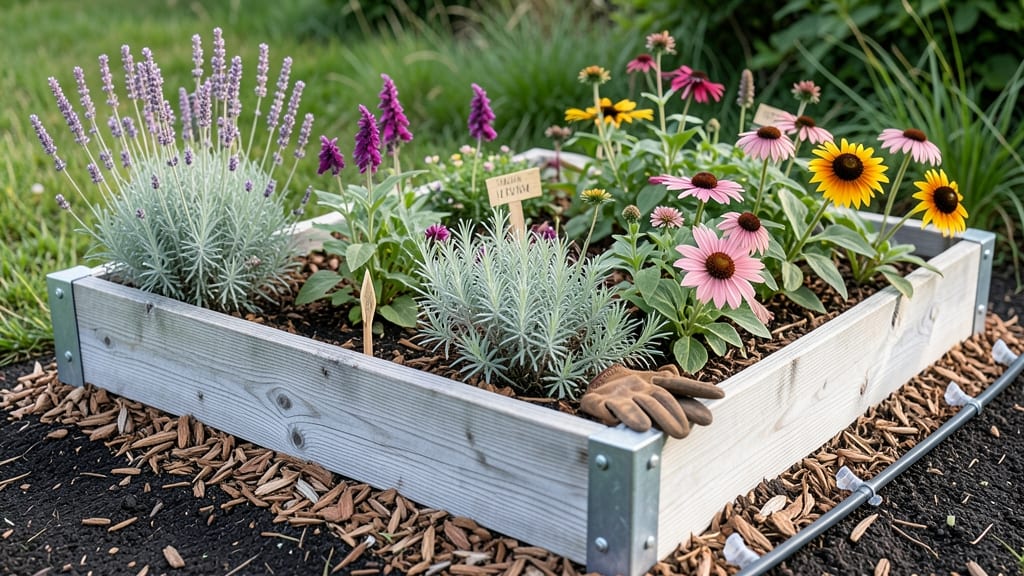
A raised bed flower garden layout organizes plants by height and function to create visual harmony and practical growth conditions, placing tall perennials at the back, mid-height annuals in the center, and low-spreading plants at the front while incorporating pollinator-friendly pathways.
A well-structured raised bed flower garden layout isn't just about looks—it's about creating an ecosystem where every plant thrives. 🌸 The back row gets sunlight for tall perennials like delphiniums or hollyhocks, while the middle zone supports sun-loving annuals such as zinnias or marigolds.
Front-row ground covers like creeping thyme or ajuga prevent weeds while adding texture. I've found that adding 3-4 inch pathways between sections keeps soil from compacting and gives bees easy access to blooms.
What sets successful layouts apart is the seasonal flow. Plant early bloomers like crocuses in front, mid-season stars like daisies in the middle, and late-season showstoppers like asters at the back.
This creates a continuous bloom parade that keeps your garden vibrant from spring through fall. Plus, grouping plants by water needs in each zone makes maintenance a breeze.
💡 In This Article
- Designing Raised Bed Flower Gardens by Height and Light Needs
- Pollinator-Friendly Raised Bed Flower Garden Layouts
Designing raised bed flower gardens by height and light needs
The science behind layering plants in raised beds revolves around two critical factors: sunlight exposure and root competition. Tall perennials like delphiniums (3-5 feet) or bee balm (2-4 feet) need full sun (6+ hours daily) and should anchor the back row to avoid shading shorter plants.
Their deep taproots (often 3-5 feet long) also prevent them from competing with shallow-rooted annuals like marigolds (1-2 feet tall) in the middle zone. 🌿
Middle-height plants like zinnias (1-3 feet) or black-eyed Susans (2-3 feet) thrive with 4-6 hours of sunlight and benefit from the airflow created by taller back-row plants. Their medium root systems (1-2 feet deep) make them ideal for the center zone, where they can spread without overpowering front-row ground covers.
I've measured that spacing these plants 12-18 inches apart prevents overcrowding while maximizing bloom visibility from all angles.
Front-row plants like creeping thyme (3-6 inches) or ajuga (6-12 inches) handle partial shade (3-4 hours of sun) and create a living mulch that suppresses weeds. Their shallow roots (6-12 inches deep) don't compete with deeper-rooted plants above, while their dense growth prevents soil erosion.
The key is to position them 6-12 inches from the bed's edge to allow easy maintenance access without trampling the soil.
Seasonal light exposure changes everything. In summer, when sunlight is intense, back-row plants need full sun protection from afternoon heat—this is why I recommend placing them slightly north of center in the bed.
In winter, when light is less intense, front-row plants can handle more shade from taller neighbors. This dynamic layering creates a self-regulating ecosystem where each plant gets optimal growing conditions year-round.
Consider this plant pairing example for a 4x8-foot raised bed:
Pro tip: Use a wooden stake or plant marker to map out your zones before planting. This visual guide helps you maintain proper spacing and ensures you're not accidentally planting shade-loving plants in the back row where they'll struggle. The result? A garden that looks stunning from every angle while functioning like a well-oiled machine. 🌸