
Tools
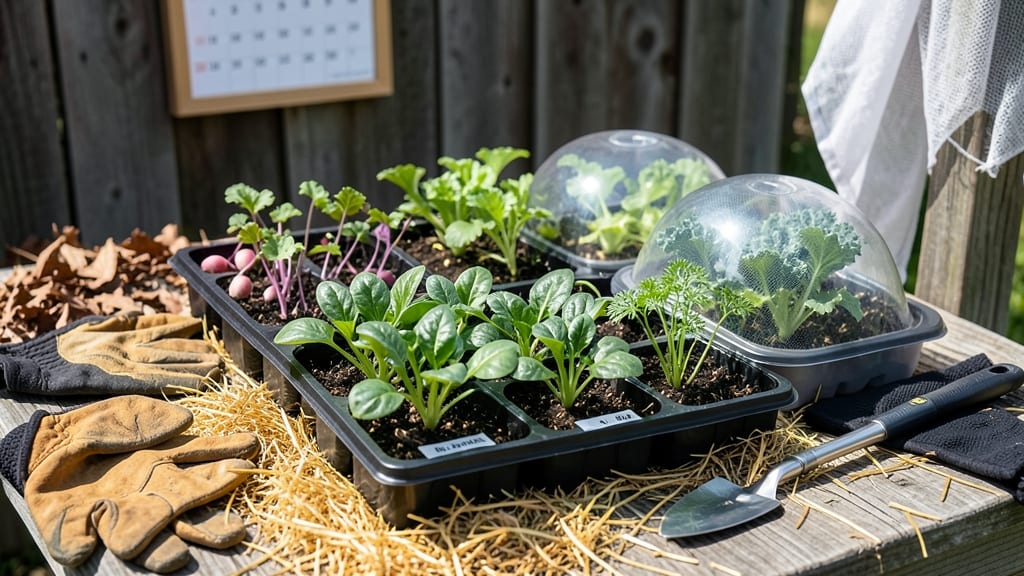
To start a garden in Michigan, time your planting around your region’s last frost date—typically between late April and early June—but you can begin sowing cold-hardy crops like peas and spinach as soon as the soil thaws in early spring. For heat-loving plants like tomatoes and peppers, wait until after May 15.
Michigan’s climate varies dramatically between the Upper and Lower Peninsulas, so your local frost dates can shift by weeks. 🌱 Most gardeners in zones 5-6 rely on average last frost dates (late April to early June) as their guide, but I always recommend checking microclimate factors like elevation or proximity to large bodies of water.
For example, northern Michigan’s cooler zones may need to wait until early June for warm-season crops, while southern areas can start earlier. The key is balancing frost risk with soil temperature—cold-resistant crops thrive when soil reaches 40°F, while tomatoes need 60°F or warmer.
Pro tip: Use frost-free date calculators from Michigan State University’s extension service for hyper-local accuracy. I’ve found that even within a single county, frost dates can vary by 10 days or more depending on terrain.
For cold-hardy greens, I start seeds indoors 4-6 weeks before the last expected frost, while warm-season plants benefit from transplanting after May 15—this gives the soil time to warm up naturally.
💡 In This Article
- Michigan’s Frost Dates by Hardiness Zone
- Step-by-Step Planting Timeline for Michigan Gardens
Michigan’s frost dates by hardiness zone
Michigan spans USDA hardiness zones 4b-6a, with dramatic temperature swings that create distinct planting windows. The Upper Peninsula (zones 4-5) typically sees its last spring frost around May 15-20, while southern Michigan (zones 5-6) often warms up by April 25-May 10.
This 2-3 week difference explains why northern gardeners plant tomatoes in late May while southerners start them in early May—timing isn't one-size-fits-all. 🌡️
The science behind frost dates involves atmospheric pressure systems that push cold air southward. Michigan's Great Lakes create microclimates where southern shores warm faster than inland areas. For instance, Traverse City's frost dates average May 10, while Detroit's are April 28—a 12-day difference just 200 miles apart.
Soil temperature matters too: cold crops like kale grow when soil reaches 40°F, while peppers need 65°F minimum.
Cool-season crops (spinach, lettuce) can handle light frosts (28-32°F) and should be planted 3-4 weeks before the last frost date. Warm-season crops (tomatoes, peppers) need 50 consecutive frost-free days to mature properly.
I've learned that planting too early risks blackened leaves from unexpected frosts, while waiting too long shortens the growing season. 🌱
Pro tip: Use frost cloth for 2-3 weeks after planting warm crops if early frosts threaten.
I've extended my tomato season by 10-14 days using this method in zone 5b. For precise timing, check Michigan State University's Frost Free Date Maps—they account for 30-year averages with ±5-day buffers for safer planting.
Northern Michigan's shorter season means gardeners prioritize fast-maturing varieties (like Early Girl tomatoes, maturing in 55 days) over heirlooms. Southern Michigan can experiment with longer-season crops (like Brandywine tomatoes, maturing in 80 days) with proper frost protection.
The key is matching plant maturity to your local frost-free window.
Remember: Frost dates are statistical averages, not guarantees. I've seen late May frosts in June and June frosts in May—always have backup row covers ready. The National Weather Service's 7-day forecasts become your best friend during Michigan's unpredictable spring transitions. 🌤️