
Planting
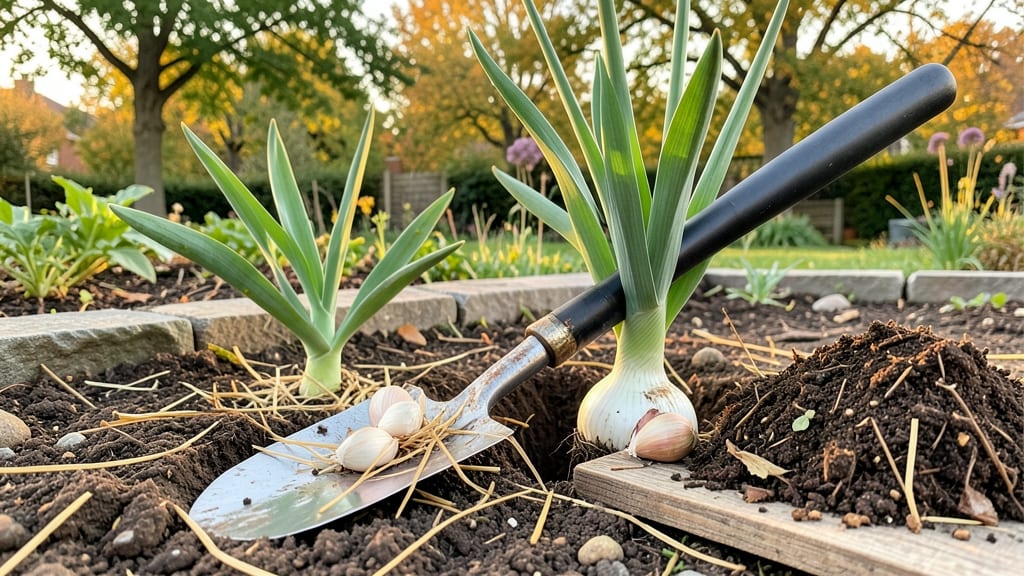
To plant garlic in your garden, select a sunny spot with well-draining soil—preferably in raised beds or mounds to prevent waterlogging. Aim for at least 6 hours of sunlight daily and space cloves 4-6 inches apart in rows 12 inches apart for maximum bulb development.
Garlic thrives where it gets plenty of sunlight and air circulation, which is why raised beds or slightly elevated ground work best. 🌱 The key is avoiding soggy soil, as garlic roots rot easily in waterlogged conditions.
I’ve found that adding compost before planting boosts nutrient levels, especially in heavy clay soils, helping bulbs form more robustly.
For those in cooler climates, fall planting (6-8 weeks before first frost) gives garlic time to establish roots before winter dormancy, while warmer regions can plant in late fall or early winter.
When arranging your cloves, think about future growth—crowding leads to smaller bulbs, so keep that 4-6 inch spacing between cloves and 12 inch row spacing to allow airflow. Planting vertically (pointy end up) encourages straighter stems, while horizontal planting can yield more scapes but requires extra care to prevent disease.
Pro tip: Mark your rows with stakes so you remember where they are when harvest time comes!
💡 In This Article
- Optimal Soil Conditions for Garlic Growth
- Garlic Planting Layout Guide for High-Yield Harvests
Optimal soil conditions for garlic growth
Garlic roots thrive in soil with a pH between 6.0 and 7.0, which ensures proper nutrient uptake—especially nitrogen, phosphorus, and potassium.
The ideal soil should feel like a damp sponge, holding moisture without becoming waterlogged. 🌱 Sandy loam or loamy soil drains well while retaining enough moisture for root development, whereas heavy clay soils can suffocate roots and lead to rot.
If your soil is too dense, amending it with 3-4 inches of compost or well-aged manure before planting improves aeration and microbial activity, which breaks down organic matter into plant-accessible nutrients.
Nutrient deficiencies show up in garlic plants as stunted growth or poor bulb formation. For example, nitrogen deficiency causes pale green leaves, while phosphorus deficiency leads to dark green, purplish stems. Garlic also needs adequate sulfur for flavor development—soils low in sulfur produce milder-tasting bulbs.
To test your soil, use a home pH kit or send a sample to a local extension office; adjusting pH with lime (to raise) or sulfur (to lower) can make a dramatic difference in yield and flavor.
Drainage is non-negotiable for garlic. Waterlogged soil cuts off oxygen to roots, causing them to rot within days. Raised beds or planting on mounds elevates cloves above ground level, allowing excess water to drain away.
In areas with heavy rainfall, consider planting on a slight slope or using containers with drainage holes. I’ve seen garlic planted in containers with 2-3 inches of gravel at the bottom thrive even in apartments, proving that proper drainage can overcome many soil limitations.
Organic matter isn’t just about nutrients—it’s also about soil structure. Compost adds beneficial microbes that help garlic absorb nutrients more efficiently. A 10-20% compost mix in the planting area reduces compaction and improves water retention without risking over-moisture.
For organic gardeners, avoid fresh manure, which can burn garlic’s delicate roots due to high ammonia levels. Instead, opt for composted materials that have broken down into a crumbly, dark brown texture.
One often-overlooked factor is soil temperature. Garlic roots grow best in soil that’s between 40-60°F—cooler than many gardeners realize. Planting too early in warm soil can trigger premature sprouting, while waiting until soil is too cold delays root establishment.
Use a soil thermometer to monitor temperatures, especially in spring-planting zones. In my experience, planting when soil is 50°F strikes the perfect balance for root growth before the shoot emerges.
For those with acidic soils (pH below 6.0), adding elemental sulfur at a rate of 1 pound per 100 square feet can lower pH gradually over a few weeks.
Conversely, if your soil is alkaline (pH above 7.0), mix in pelletized lime sparingly—too much can lock out essential micronutrients like iron and manganese. Always test soil again after amending to ensure you’ve hit that 6.0-7.0 sweet spot for garlic.