
Tools
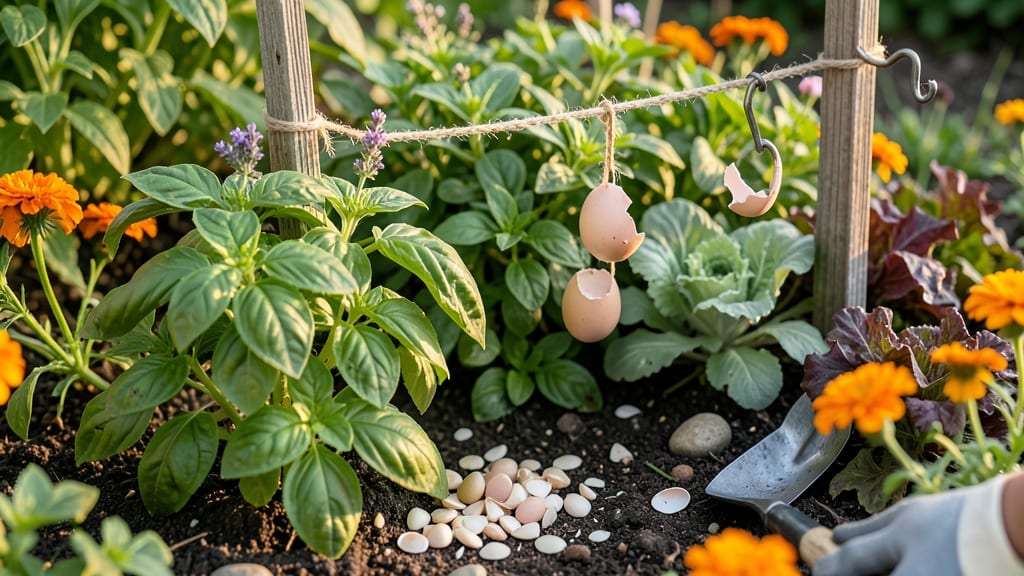
Hanging eggshells in your garden deters pests like slugs and snails with their jagged edges, while their crushed form enriches soil with calcium and micronutrients for healthier plant growth. This dual-purpose method is organic, cost-effective, and eco-friendly.
Hanging eggshells in your garden serves two powerful purposes: first, the sharp edges act as a natural barrier that physically prevents slugs and snails from crossing, creating a simple yet effective defense around your plants. 🌱 The calcium carbonate in crushed shells also disrupts these pests' feeding habits, making your garden less appealing to them.
Beyond pest control, the shells break down over time to release essential minerals, improving soil structure and promoting stronger root development in your plants.
This method stands out because it’s completely organic, avoiding harsh chemicals that can harm beneficial insects or contaminate your harvest. Plus, it’s a zero-waste solution—using something many people would otherwise discard.
For best results, hang clean, empty shells in mesh bags or scatter crushed pieces around plant bases, especially in areas where slugs and snails are known to gather.
💡 In This Article
- How Eggshells Act as Natural Pest Barriers
- Maximizing Eggshell Benefits in Garden Soil
How eggshells act as natural pest barriers
The sharp, jagged edges of dried eggshells create a physical barrier that slugs and snails simply can't traverse. These pests have soft, muscular bodies that rely on gliding across smooth surfaces using a layer of mucus. When they encounter the rough texture of eggshells, their movement becomes laborious and inefficient.
Studies show that mollusks like Arion lusitanicus (a common garden slug) can reduce their crawling speed by up to 70% when crossing crushed eggshell barriers compared to smooth surfaces.
The real science lies in the calcium carbonate composition of eggshells. When crushed, these shells release microscopic particles that disrupt the pests' feeding habits. Slugs and snails have specialized radulas (tongue-like structures) designed to scrape soft plant material.
The abrasive texture of crushed eggshells damages these delicate feeding tools, making it painful for them to feed. This is why gardeners often see reduced damage to young seedlings and tender leaves when eggshells are strategically placed around vulnerable plants. 🌿
Unlike chemical pesticides, eggshells offer a non-toxic solution that doesn't harm beneficial insects like ladybugs or bees. When compared to other organic deterrents, eggshells hold their own: coffee grounds repel slugs through caffeine's bitter taste, while diatomaceous earth works by dehydrating pests with its fine powder.
However, eggshells provide a dual benefit that these alternatives don't—both pest control AND soil enrichment. The calcium content in eggshells is particularly valuable for plants like tomatoes and peppers that require high calcium levels to prevent blossom-end rot.
For maximum effectiveness, hang eggshells in mesh bags or scatter crushed pieces around plant bases, especially near areas with high slug activity. The sharp edges remain effective for several weeks, while the gradual decomposition provides ongoing protection.
Unlike coffee grounds (which need regular replenishment) or diatomaceous earth (which loses potency when wet), eggshells maintain their deterrent properties even after light rain. This makes them particularly reliable for gardens in humid climates where slugs thrive.
What many gardeners don't realize is that the pest-deterrent effect extends beyond just physical barriers. The presence of eggshells alters the microclimate around plants by slightly increasing soil pH (making it less acidic), which slugs prefer to avoid.
This subtle chemical change, combined with the physical obstacles, creates a multi-layered defense system that's more comprehensive than single-method solutions. 💫
To create an effective barrier, arrange eggshells in a 1-2 inch wide band around plant bases or garden beds. For larger areas, hang shells in small mesh bags at 12-18 inch intervals along garden edges.
The visual deterrent alone often discourages slugs from crossing these boundaries, while the physical obstacles prevent determined pests from reaching your plants.