
Vegetables
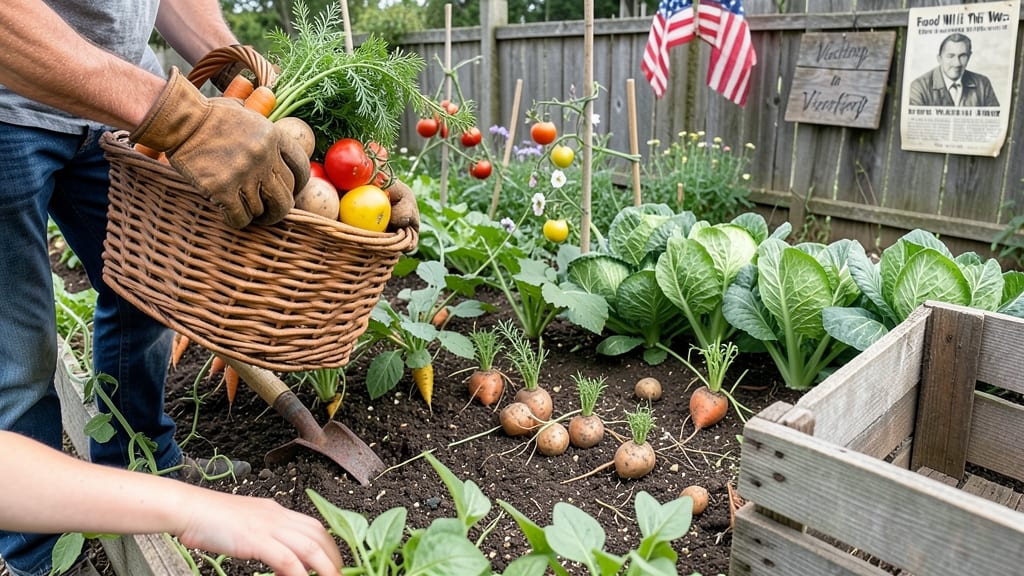
Victory gardens were important during WWII because they boosted food production, reducing reliance on commercial supplies strained by wartime rationing and shipping shortages. These homegrown plots also fostered patriotism by encouraging self-sufficiency and community cooperation, directly supporting the war effort by conserving resources for troops overseas.
During WWII, victory gardens became a critical solution to the nation's food crisis, with over 20 million gardens producing about 40% of all U.S. vegetables by 1943. 🌱 The U.S. government actively promoted them through posters and radio broadcasts, framing gardening as a direct contribution to the war effort.
These gardens weren't just about food—they created community bonds, as neighbors shared seeds and tools while working together to grow fresh produce during shortages.
What made victory gardens so impactful was their dual purpose: they increased food availability while reducing strain on commercial agriculture. With many farm workers drafted into military service, home gardens filled the gap, ensuring families had access to fresh vegetables despite rationing.
The movement also empowered women, who took on gardening roles traditionally held by men, further strengthening the nation's resolve during challenging times.
💡 In This Article
- How WWII Victory Gardens Solved Food Shortages
- Patriotic and Community Benefits of Home Gardening
How WWII victory gardens solved food shortages
The U.S. faced a severe agricultural crisis during WWII, with commercial food production plummeting due to three major factors: rationing, shipping bottlenecks, and labor shortages.
By 1943, victory gardens—small-scale home plots—produced roughly 40% of the nation's vegetables, equivalent to feeding the entire population of New York, Philadelphia, and Chicago combined. 🌱 The U.S. Department of Agriculture reported that these gardens saved shipping capacity by reducing the need to transport produce over long distances, freeing up cargo space for military supplies.
Labor shortages were particularly devastating. Over 16 million men were drafted into military service by 1945, including many farmworkers. Victory gardens filled this gap by shifting production to urban and suburban areas, where families could grow their own food.
A typical 1,000-square-foot garden could yield 200-300 pounds of vegetables annually, enough to supplement a family's diet during rationing. The government even distributed 9 million seed packets in 1943 alone, ensuring families had the resources to start growing.
These gardens also redirected commercial agriculture toward military needs. With victory gardens producing vegetables, large farms could focus on growing grains and livestock feed for troops. The U.S. military relied heavily on canned goods and preserved foods, and victory gardens helped stabilize domestic supplies by reducing demand on commercial canneries.
For example, tomato production from home gardens reduced the strain on processing plants, ensuring canned tomatoes remained available for military rations.
Another critical mechanism was the conservation of resources. Victory gardens encouraged families to use compost and organic methods, reducing reliance on synthetic fertilizers that were also needed for military purposes.
The movement even included programs like "Victory Gardens for Victory Ships," where families pledged to grow extra food to support the construction of warships. 🌿 By 1944, the average victory garden produced enough food to feed a family for an entire year, demonstrating their direct impact on food security.
Government propaganda played a key role in driving adoption. Posters like "Grow Food for Freedom" and radio broadcasts from figures like Eleanor Roosevelt emphasized the patriotic duty of gardening.
The Office of War Information reported that 8 million new gardens were planted between 1942 and 1945, proving the effectiveness of these campaigns. Schools and community groups also participated, turning public spaces into shared gardens that reinforced collective effort.
What’s often overlooked is how victory gardens reduced food waste. With rationing limiting purchases, families grew only what they needed, minimizing spoilage. The U.S. Department of Agriculture estimated that victory gardens cut household food waste by up to 30% during the war, further easing the strain on supply chains.
This efficiency was a testament to the movement’s broader impact beyond just production.