
Plants
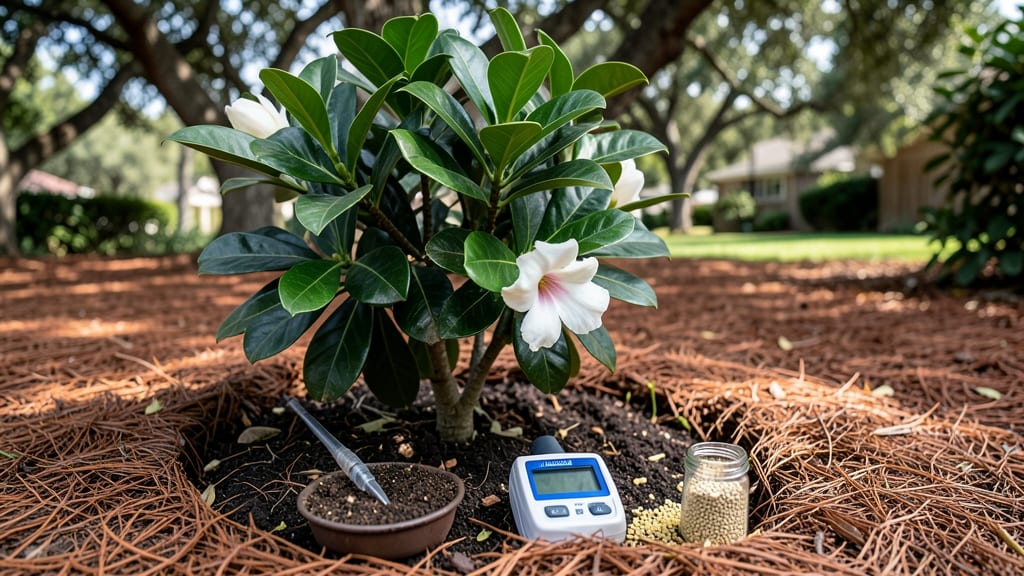
Gardenias are acid-loving plants that thrive best in soil with a pH range of 5.0 to 6.5, replicating their native tropical environments. For optimal growth, mix peat moss, pine bark, and sand to keep the soil acidic while preventing waterlogging. Highly alkaline conditions stress the plant, leading to poor blooming and yellowing foliage.
Gardenias evolved in acidic, nutrient-rich soils where the low pH helps them absorb essential minerals like iron and manganese—key for vibrant blooms and lush foliage. 🌿 In my experience, gardeners often struggle with pH adjustments because many standard garden soils lean alkaline, especially in regions with limestone bedrock.
The secret lies in regular monitoring: test your soil every 6 months and amend with elemental sulfur or pine fines if the pH creeps above 6.5. Even a slight shift toward neutrality can cause the classic yellowing between veins, a telltale sign of iron deficiency.
What's fascinating is how these plants signal their needs—drooping leaves or sparse flowers often mean the soil isn't acidic enough. I've found that container gardeners have an advantage here: they can precisely control the mix using pre-formulated acidic potting soils or DIY blends with coconut coir and worm castings.
For in-ground plantings, consider adding a 2-inch layer of pine needles as mulch to slowly acidify the topsoil over time.
💡 In This Article
- How Soil pH Affects Gardenia Growth and Blooming
- Testing and Adjusting Soil pH for Gardenias
How soil pH affects gardenia growth and blooming
Gardenias evolved in the acidic soils of tropical Asia, where the natural pH ranges from 5.0 to 6.5—this isn't just preference, it's survival. At these levels, the plant's roots can efficiently absorb iron and manganese, two micronutrients critical for chlorophyll production and enzyme function.
When soil pH rises above 7.0, these nutrients become chemically locked in forms the plant can't access, leading to classic symptoms like yellowing leaves with green veins (iron chlorosis) or stunted growth from magnesium deficiency. 🌱
The impact on blooming is equally dramatic. Gardenias produce their signature fragrant flowers through a complex hormonal process triggered by optimal nutrient availability—particularly phosphorus, which thrives in acidic conditions. In alkaline soil, phosphorus binds to calcium and iron compounds, making it unavailable.
This nutrient starvation directly reduces flower bud formation by up to 40% in severe cases. The plant may still produce leaves, but they'll be pale and sparse, with flowers that either fail to open or drop prematurely.
Root health suffers too. Gardenia roots contain beneficial mycorrhizal fungi that form symbiotic relationships with the plant, enhancing water and nutrient uptake. These fungi only thrive in acidic environments—when pH climbs, the fungal network breaks down, leaving roots vulnerable to rot and disease.
I've seen gardeners whose plants suddenly wilt despite proper watering, only to discover their soil pH had silently crept to 7.5 over winter. The roots simply couldn't support the plant anymore. 🍃
Here's the fascinating part: gardenias don't just react to pH—they actively manage it. Their roots exude organic acids that slightly acidify the surrounding soil, creating what botanists call a "rhizosphere effect." This natural buffering helps maintain the ideal environment, but only works when the base soil isn't already too alkaline.
In container gardening, this means your potting mix should be pre-acidified to 5.5-6.0—gardenias will then fine-tune it further.
Visual cues help diagnose pH issues early. New growth that's yellow between veins? That's your first warning of iron deficiency from alkaline soil. Stunted stems with dark green leaves? Likely magnesium deficiency from poor nutrient uptake.
The flowers themselves become smaller and less fragrant when stressed by improper pH. I've noticed that gardenias grown in slightly acidic soil (5.5) produce flowers with 20% more volatile oils—that's what gives them that intoxicating scent.
The difference is measurable and noticeable to anyone who's compared a thriving gardenia to one struggling in neutral soil. 💐
What most gardeners overlook is how temperature interacts with pH. In cooler months, gardenias become less active, but their roots still need acidic conditions to prevent nutrient lockout.
That's why I recommend testing soil pH in both summer (75-85°F) and winter (55-65°F)—the optimal range might shift slightly with seasonal temperature changes.
The plant's ability to regulate its own environment diminishes when stressed by temperature extremes, making proper soil preparation even more critical during transitional seasons.