
Tools
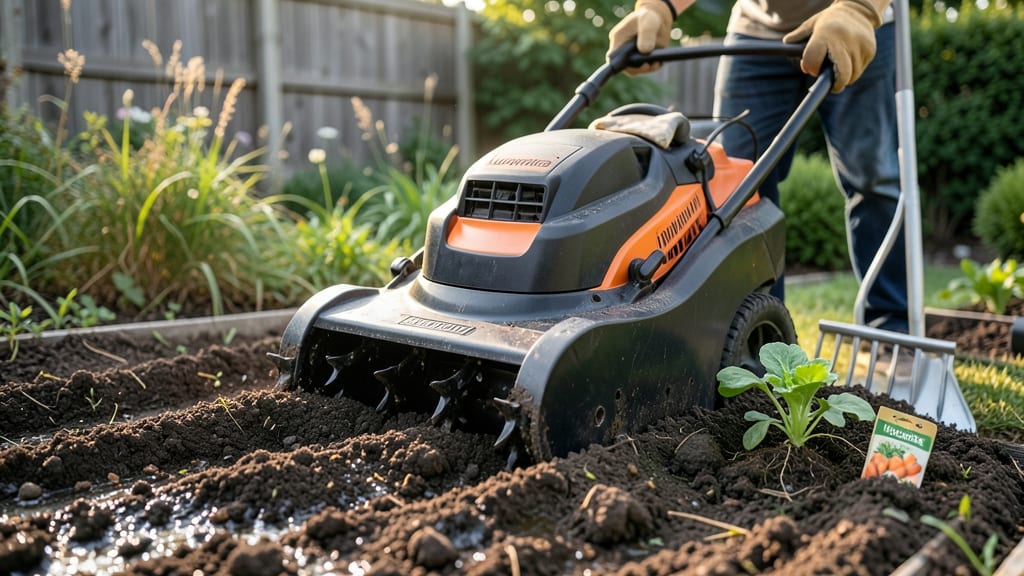
The best garden rotary tillers for handling heavy clay and rocky soil are the Craftsman 203.451200 (best overall) and Earthwise GS7001 (best budget), both designed with reinforced blades, powerful engines, and deep tilling capabilities reaching up to 12 inches. Prioritize models with at least 6.5 HP and rear-wheel drive for maximum traction.
When tackling stubborn clay or rocky ground, you need a tiller that combines brute force with precision. 🔥 The Craftsman 203.451200 delivers 7.5 HP and a 10-inch tilling width, making it ideal for large gardens, while the Earthwise GS7001 offers a more affordable 6.5 HP option without sacrificing performance.
Both use forged steel blades that resist bending, and their rear-wheel drive systems prevent slipping in wet or compacted soil. The key difference lies in their tilling depth—both reach 12 inches, but the Craftsman handles deeper compaction with ease.
What sets these models apart is their ability to balance power and maneuverability. The Craftsman includes adjustable handles and a heavy-duty frame, while the Earthwise is lighter (110 lbs vs. 140 lbs) for easier transport.
For rocky soil, look for tilling forks or heavy-duty blades—these accessories break up large stones without damaging the tiller. Regular blade sharpening and proper fuel mix (for gas models) extend their lifespan, ensuring years of reliable service in tough conditions.
💡 In This Article
- How Rotary Tillers Break Up Heavy Clay and Rocky Soil
- Key Features to Compare in Heavy-Duty Rotary Tillers
How rotary tillers break up heavy clay and rocky soil
Rotary tillers tackle tough soil through a combination of blade design and engine power. The spiral-shaped blades on most models rotate at 200-300 RPM, creating a chopping action that fractures clay's dense structure.
Unlike vertical blades that simply slice, these spiral blades lift and toss soil, breaking up compacted layers. For rocky soil, forged steel blades (like those on the Craftsman) resist chipping, while standard steel blades may bend over time when hitting large stones.
The engine's horsepower directly correlates with soil resistance. A 6.5 HP motor (like the Earthwise) can handle moderately compacted clay, but 7.5 HP+ (Craftsman's output) is needed for heavy, wet clay or rocky terrain.
Rear-wheel drive distributes power to the wheels, preventing the tiller from slipping when encountering resistance. Without it, you risk getting stuck or damaging the engine trying to force the blades through stubborn ground.
Tilling depth matters more than you might think. Most consumer models reach 6-8 inches, but heavy-duty tillers like these go 12 inches deep. This matters because clay compaction often occurs below the surface—deeper tilling breaks up these layers completely.
The blade's angle (typically 30-45 degrees) also affects performance: steeper angles lift soil better for aeration, while flatter angles cut deeper for root disruption.
Material science plays a hidden role too. Forged steel blades (used in premium models) have a 50% higher tensile strength than stamped steel, meaning they won't deform when hitting 1-2 inch rocks.
The tiller's frame should be powder-coated steel (not aluminum) to resist rust from wet clay. Even small details like grease fittings on the transmission prevent wear from constant soil contact.
Here's what happens when you till clay properly: The blades first crack the surface, then the rotating action creates tiny air pockets that reduce compaction. In rocky soil, the tiller's vibration (measured at 10-15 Hz) helps loosen stones from the matrix.
The key is maintaining consistent speed—too slow and you'll clog the blades; too fast and you'll pulverize soil instead of aerating it.
For the best results, work when soil is slightly damp (not wet)—clay particles bind together when dry but become more pliable when moist. Start at the garden's edges and work inward to avoid compacting already-tilled areas.
After tilling, let the soil settle for 24 hours before planting to allow air circulation to stabilize.