
Vegetables
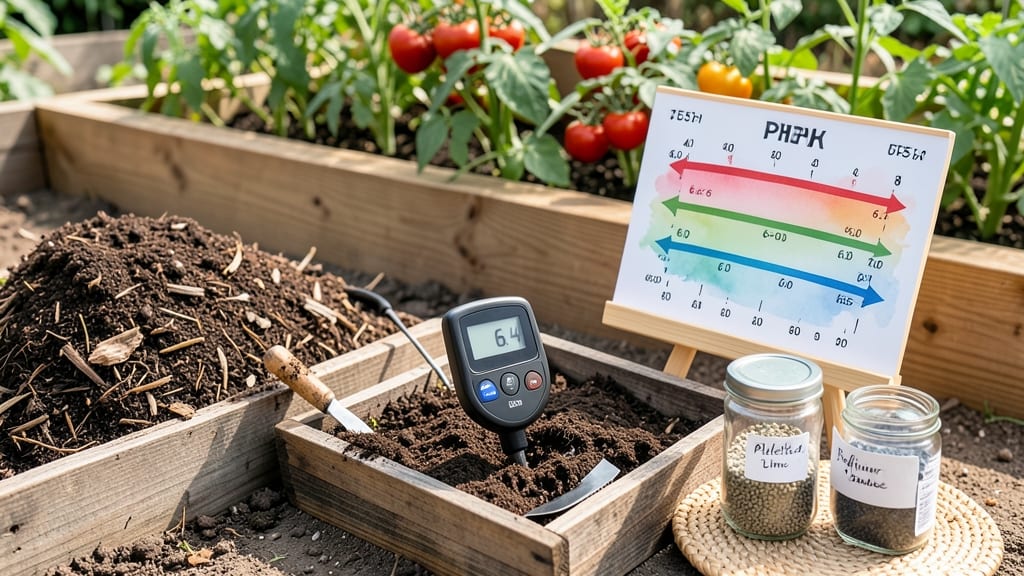
The best pH for a vegetable garden typically falls between 6.0 and 7.0, though individual crops like blueberries and potatoes require slightly acidic conditions (4.5-5.5), while most vegetables thrive in neutral to mildly acidic soil.
Soil pH isn't just a number—it determines which nutrients your plants can access. 🌱 For example, a pH above 7.0 can lock out phosphorus, while below 6.0 may cause iron toxicity. I recommend testing your soil every 2-3 years, especially if you notice stunted growth or yellowing leaves.
Organic amendments like compost or wood ash can gently adjust pH over time, while lime raises acidity and sulfur lowers it for faster results.
Most home gardeners don't realize how quickly pH shifts with amendments—adding too much lime at once can create a toxic environment. Always test after applying adjustments and wait at least 2-3 months before planting to let the soil stabilize. This patience pays off in stronger, healthier plants.
💡 In This Article
- How Soil pH Affects Nutrient Uptake in Vegetable Plants
- Testing and Adjusting pH in Your Garden Soil
How soil pH affects nutrient uptake in vegetable plants
Soil pH acts like a gatekeeper for nutrients—it determines which minerals your plants can absorb and which remain locked away. At a pH of 6.0-7.0, most vegetables access the perfect balance of nitrogen, phosphorus, and potassium, along with essential micronutrients like calcium and magnesium.
For instance, tomatoes—with their optimal pH range of 6.0-6.8—struggle when soil becomes too acidic (pH 5.5), as aluminum and manganese become toxic to their roots. 🌿 The root zone's ability to take up these nutrients depends on the chemical form they're in; iron, for example, becomes less available in alkaline soils (pH 7.5+), causing yellowing leaves even when the soil contains plenty of it.
Let's break down what happens when pH strays from ideal ranges. At pH 5.0, phosphorus binds tightly to iron and aluminum in the soil, making it nearly inaccessible to plants—this is why acidic soils often show stunted growth despite having plenty of phosphorus.
Conversely, at pH 8.0, calcium and magnesium become less soluble, while manganese and iron become toxic if present in high amounts. The root hairs, which are responsible for most nutrient uptake, also shrink in alkaline conditions, reducing the plant's ability to absorb water and nutrients.
This is why peppers, which prefer 6.0-7.0, develop blossom-end rot (a calcium deficiency) in overly alkaline soils.
Micronutrient availability follows a similar pattern—each nutrient has its own pH sweet spot. For example, zinc becomes scarce in alkaline soils (pH 7.5+), leading to distorted leaves, while boron deficiency in acidic soils (pH 5.5) causes cracked stems.
The root zone's ability to maintain proper nutrient balance is also tied to microbial activity; beneficial bacteria and fungi thrive in 6.0-7.0 ranges, helping break down organic matter into plant-available forms.
When pH drifts, these microbes struggle, further reducing nutrient availability. 🌱 This is why soil testing isn't just about pH—it's about understanding the entire nutrient ecosystem.
What most gardeners overlook is how quickly pH changes can occur. Adding compost, for instance, can raise soil pH by 0.5-1.0 points over time due to its alkaline nature, while pine needles or coffee grounds lower it by 0.3-0.5 points.
The key is monitoring these shifts—especially in raised beds or containers where pH can fluctuate faster than in-ground soil. For example, a 1-point pH change can alter nutrient availability by up to 50%, making the difference between a thriving garden and one plagued by deficiencies.
Consider the case of blueberries, which require 4.5-5.5 pH to access the aluminum they need for strong stems. In soil with pH 6.0, aluminum becomes locked away, and the plants develop chlorotic (yellow) leaves despite having all other nutrients.
This is why acid-loving plants need regular sulfur applications—it's not just about lowering pH; it's about creating the right chemical environment for those specific nutrients to become plant-available. The same logic applies to brassicas like cabbage, which prefer 6.0-7.0 but suffer from sulfur deficiency in overly acidic soils.
Here's what's actually happening at the cellular level: Plant roots release hydrogen ions to adjust soil pH in their immediate zone, creating what's called a "rhizosphere." This micro-environment can have a 0.5-1.0 pH unit difference from the bulk soil, allowing roots to fine-tune nutrient uptake.
However, if the bulk soil pH is extreme, this natural buffering system gets overwhelmed, leading to deficiencies. For example, in pH 8.0 soil, even healthy-looking plants may develop iron chlorosis because the rhizosphere can't compensate enough to make iron soluble. 💫