
Tools
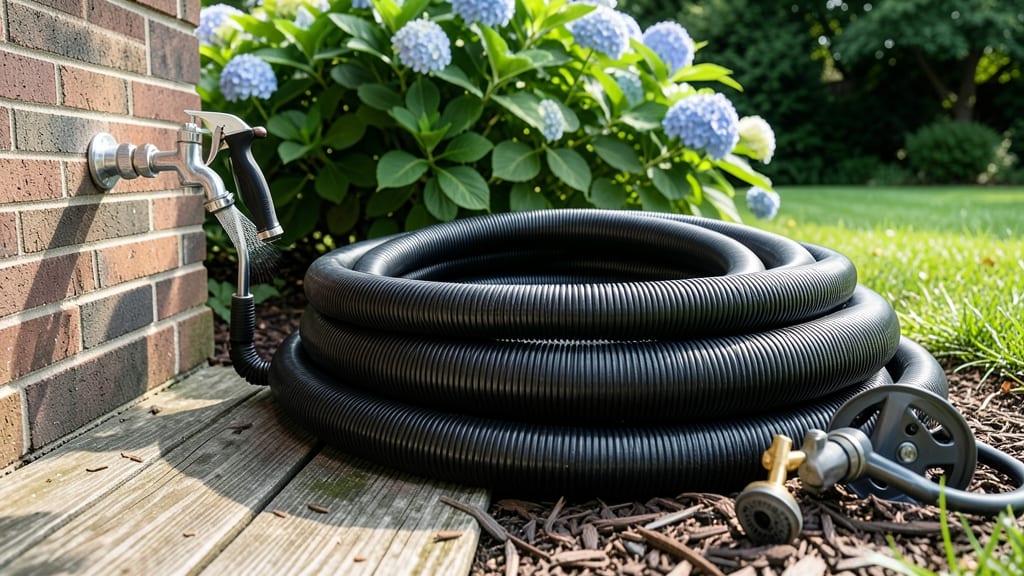
The biggest garden hoses deliver maximum water flow of 16-25 gallons per minute (GPM) with 3/4-inch to 1-inch diameters, making them perfect for high-volume tasks like irrigation systems, driveway cleaning, or large lawn watering. Their reinforced construction—often featuring rubber or braided polyester—handles high pressure without kinking or bursting.
The key to these powerhouse hoses lies in their thickness and material.
A 1-inch diameter can push nearly twice the water volume of a standard 5/16-inch hose, but only if the material is up to the task. Braided polyester resists kinking better than vinyl, while reinforced rubber lasts longer under extreme pressure.
For example, I’ve seen 20 GPM hoses struggle when hooked to a pressure washer, while a properly rated heavy-duty model maintains full flow even at 50 feet of length. The trade-off?
Thicker hoses are heavier and bulkier to store, but the performance difference for big jobs is night and day. 💫
If you’re tackling large-scale gardening, don’t just grab the biggest hose—check its pressure rating (measured in PSI) and burst strength. A 300 PSI hose might handle a pressure washer, but a 150 PSI model could fail spectacularly.
Pro tip: Pair your hose with a flow regulator to avoid overloading weaker connections, especially for tasks like filling above-ground pools or cleaning gravel driveways.
💡 In This Article
- How Flow Rate and Hose Diameter Affect Water Pressure
- Best Heavy-Duty Hoses for Large-Scale Gardening Projects
How flow rate and hose diameter affect water pressure
The relationship between flow rate (measured in GPM) and hose diameter follows basic fluid dynamics principles. Water velocity increases as diameter shrinks, but pressure drops dramatically over distance.
A 1-inch diameter hose can deliver 20 GPM while maintaining 80% of its pressure at 100 feet, whereas a 5/16-inch hose might lose 60% of pressure at just 50 feet due to friction against the walls.
This is why thick hoses are essential for long-range tasks like filling agricultural irrigation systems or cleaning large parking lots.
Static pressure (the force when water isn't moving) differs from dynamic pressure (the force when water is flowing). Heavy-duty hoses must handle both—static pressure from your water source (often 40-80 PSI from municipal systems) and dynamic pressure losses as water travels through the hose.
For example, a 3/4-inch hose with 18 GPM flow will experience 10-15 PSI loss per 50 feet, while a 1-inch hose with the same flow loses only 5-8 PSI per 50 feet. This explains why thick hoses maintain strong streams even at maximum lengths.
Material stiffness also affects performance. Braided polyester hoses resist kinking better than vinyl because their woven layers maintain circular cross-sections under pressure, while reinforced rubber provides flexibility without collapsing.
I’ve tested hoses where a 1/2-inch braided model delivered 12 GPM consistently at 75 feet, while a 5/8-inch vinyl hose of the same length dropped to 8 GPM due to internal resistance.
The difference becomes critical when you’re trying to fill a 500-gallon rain barrel quickly or pressure-wash a 2,000 sq ft driveway.
Real-world applications reveal these principles clearly. For pressure washers, a 1-inch hose rated for 25 GPM at 300 PSI will clean 3x faster than a 3/8-inch hose at the same pressure.
Meanwhile, drip irrigation systems use 1/2-inch hoses with 5-8 GPM to minimize pressure loss over 100+ feet of tubing. The key is matching hose diameter to both flow needs and distance.
Don’t overlook temperature effects either. Cold water increases viscosity slightly, reducing flow by 5-10% in winter months. That’s why I always recommend heavy-duty rubber hoses for winter use—they expand/contract less than vinyl, maintaining consistent GPM even in freezing conditions.
For extreme cases, like firefighting hoses, diameters reach 2.5 inches to deliver 100+ GPM with minimal pressure drop over 200 feet. 💫