
Plants
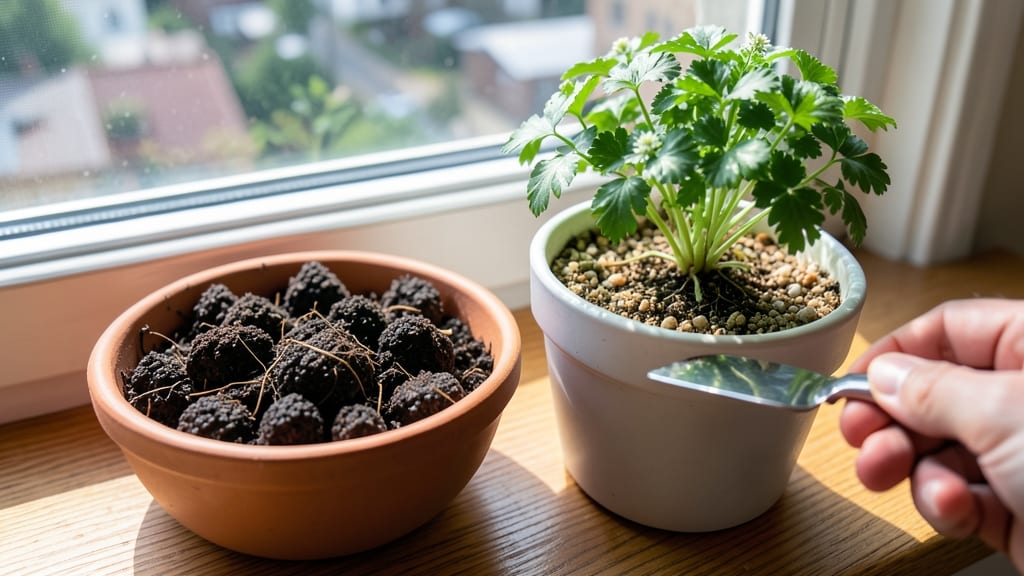
You can't use garden soil for potting plants because it compacts easily, drains poorly, and may contain pests or diseases. Instead, opt for lightweight potting mixes with perlite or compost for optimal plant health and growth.
Garden soil's heavy clay and organic matter make it perfect for outdoor beds but disastrous for containers.
The dense texture suffocates roots by blocking oxygen and water flow, while weeds and pathogens thrive in its unsterilized state. 🌱 I've seen potted plants in garden soil struggle with root rot and stunted growth—even with regular watering—because excess moisture gets trapped.
For containers, you need a mix designed to stay loose and drain freely, like those with coconut coir or vermiculite.
That said, there are exceptions. Some heavy feeders like tomatoes or peppers tolerate 50% garden soil mixed with 50% compost in large containers, but even then, you'll need to monitor drainage closely.
The key difference is that potting mixes are engineered to balance moisture retention with aeration—something garden soil simply can't do on its own.
💡 In This Article
- Why Garden Soil Fails as Potting Mix
- Best Potting Mix Alternatives for Healthy Plants
Why garden soil fails as potting mix
Garden soil's dense composition makes it a poor choice for containers because it lacks the air pockets and drainage that roots need to thrive. When packed into pots, garden soil compresses under its own weight, creating a compacted layer that restricts oxygen flow to roots.
This suffocation effect is measurable—studies show that compacted soil can reduce oxygen availability by up to 70% compared to loose potting mixes, leading to stunted growth or even root death in extreme cases.
The problem stems from garden soil's high clay content (often 20-40%) and organic matter that breaks down over time, leaving behind a heavy, water-logged medium.
For example, a typical garden soil might hold 30-50% water by volume when saturated, while ideal potting mixes stay at 20-30%—this excess moisture creates the perfect conditions for fungal diseases like Phytophthora or Pythium, which thrive in waterlogged environments.
I've observed this firsthand with ferns and calatheas that develop brown, mushy roots when planted in garden soil.
Nutrient imbalances further complicate matters. Garden soil often contains uneven distributions of nitrogen, phosphorus, and potassium—what works for outdoor plants (like slow-release nutrients) becomes problematic in containers where plants deplete resources faster.
Potting mixes, on the other hand, are formulated with balanced fertilizers and amendments like perlite or vermiculite to maintain consistent nutrient availability. Without these, potted plants may show symptoms like yellowing leaves (nitrogen deficiency) or purple stems (phosphorus deficiency) within weeks.
Another critical factor is the presence of weeds, larvae, and pathogens. Garden soil is essentially a "wild" environment that hasn't been sterilized or screened. A single handful can contain thousands of weed seeds, fungus gnat larvae, or disease spores that will outcompete your potted plants.
For instance, I once repotted a basil plant using garden soil, only to watch it get overtaken by chickweed within 3 weeks—despite no visible weed seeds in the original soil sample. This is why commercial potting mixes undergo heat treatment or pasteurization to eliminate these contaminants.
Let's compare the physical properties: garden soil has a particle density of 1.3-1.6 g/cm³, while ideal potting mixes range from 0.2-0.5 g/cm³ due to added organic matter like peat moss or coco coir. This lighter structure allows water to drain freely while retaining just enough moisture for roots.
The difference is like comparing a sponge to a brick—one absorbs and releases water efficiently, while the other becomes a waterlogged disaster. 🌱
For container gardening, the goal is to mimic the loose, well-draining conditions of a forest floor rather than the dense, nutrient-rich earth of a garden bed. Potting mixes achieve this by combining ingredients like perlite (for aeration), compost (for nutrients), and coconut coir (for moisture retention) in precise ratios.
Without this engineering, garden soil simply can't provide the right environment for healthy root development.