
Container Gardens
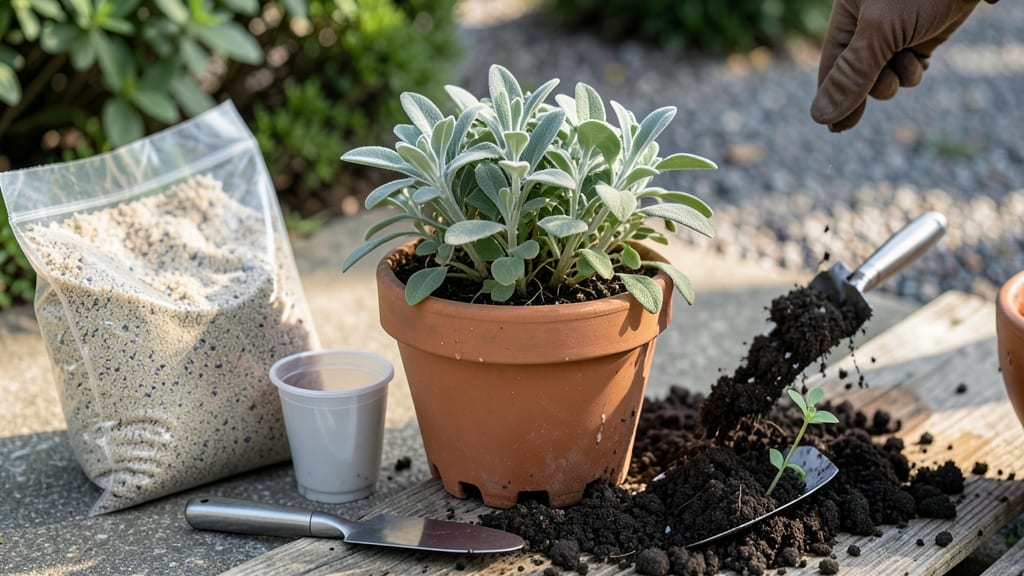
You shouldn't use garden soil in containers because it compacts easily, drains poorly, and may introduce pests or weeds. Instead, combine it with perlite or compost for better aeration, or use specially formulated potting mixes designed for container gardening.
Garden soil's heavy texture and lack of organic matter create a suffocating environment for container plants, where roots need constant airflow and quick-draining conditions. 🌱 The dense particles also trap moisture, leading to rot—especially problematic in small pots with limited drainage.
I've seen even hardy plants like tomatoes struggle when planted directly in garden soil, while the same varieties thrive in lightweight mixes with 20-30% perlite or coconut coir for structure.
For best results, aim for a mix that's 40% organic matter (compost or peat), 30% perlite or vermiculite for aeration, and 30% garden soil. This blend prevents compaction while providing the nutrients plants crave.
Succulents need even more grit (up to 50% perlite), while leafy greens tolerate slightly more organic content.
💡 In This Article
- Why Garden Soil Fails in Container Planting
- Best Soil Mixes for Container Gardening
Why garden soil fails in container planting
Garden soil is designed for in-ground planting where roots can spread freely, but containers create a completely different environment. The dense particles in garden soil—often clay or silt—pack tightly when confined, reducing pore space by up to 40%.
This compaction suffocates roots by blocking oxygen flow, which is critical for cellular respiration. Without proper aeration, roots can't absorb nutrients efficiently, leading to stunted growth or even death. 🌱
The water retention issue is equally problematic. Garden soil holds moisture like a sponge, creating waterlogged conditions that trigger root rot within 2-3 days in small containers. Unlike in-ground soil where excess water drains downward, container soil has nowhere to escape, leaving roots drowning.
This is why even drought-tolerant plants like lavender struggle in garden soil alone—they need rapid drainage that garden soil simply can't provide.
Nutrient imbalances are another hidden danger. Garden soil contains variable amounts of organic matter (often 1-5% by volume), while container plants need consistent nutrition. Without regular amendments, essential nutrients like nitrogen and phosphorus get depleted quickly in the confined space.
I've seen herbs like basil turn yellow within weeks when planted in garden soil, signaling nitrogen deficiency—a clear sign the soil can't sustain plant needs long-term.
Pests and weeds are the final nail in the coffin. Garden soil often contains dormant weed seeds that sprout uncontrollably in containers, competing with your plants for water and nutrients. Earthworms, while beneficial in gardens, can't survive in containers and may even damage delicate root systems.
The confined space also traps fungal spores, creating ideal conditions for diseases like powdery mildew that thrive in the humid microclimate of dense soil.
Consider this comparison: A typical garden soil has a porosity (air space) of 30-40%, while ideal potting mix achieves 60-70% through added perlite or vermiculite. This extra aeration allows roots to breathe and water to drain freely—two critical factors that garden soil simply can't deliver in containers. 💫
The root of the problem lies in how soil structure interacts with container physics. In-ground soil benefits from natural layering and depth, but containers force all components into a compacted volume where physics work against plant health.
The solution isn't just about adding amendments—it's about recreating the ideal growing conditions that nature provides below ground, but in a controlled, container-friendly format.