
Planting
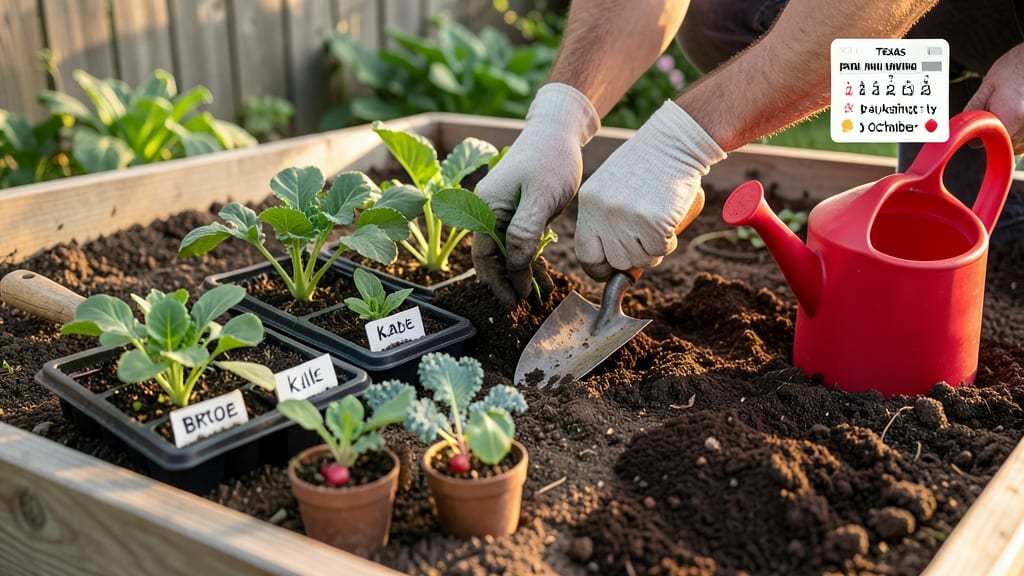
You should plant a fall garden in Texas between mid-August and early October, depending on your region’s frost dates and heat levels.
Texas gardeners know the struggle—scorching summers and unpredictable frosts can make fall planting a high-stakes game of timing. Plant too early, and your crops wilt in the heat; too late, and frost ruins your harvest.
But master these exact planting windows, and you’ll enjoy a thriving fall garden packed with fresh produce—just in time for holiday feasts.
Cooler temperatures and fewer pests make fall the ideal season for growing leafy greens, root vegetables, and brassicas. The key is knowing your heat zone and adjusting for local microclimates, whether you’re in North Texas or the Gulf Coast.
In this guide, I’ll break down the best planting dates by region, the top crops for a Texas fall garden, and pro tips to extend your harvest well past the first frost.
Texas heat-zone planting calendar for fall vegetables
Texas' diverse climate means your fall planting timeline depends heavily on your heat zone. The Lone Star State spans from USDA Zone 6a in the Panhandle to Zone 9b-10a in the Rio Grande Valley.
Understanding these zones helps you avoid heat stress in early plantings or frost damage when temps drop. Let’s break down the best planting windows for each region.
For North Texas (Zones 7a-8a), your last spring frost typically occurs around March 15-April 15, while first fall frosts arrive between November 15-December 15. This gives you a 6-8 week window for cool-season crops.
In Central Texas (Zones 8a-8b), expect last spring frosts around March 1-April 15 and first fall frosts from November 1-October 31—a slightly longer growing season.
In South Texas (Zones 9a-10a), you can plant year-round with minimal frost risk, but cool-season crops thrive best when daytime temps drop below 85°F. Aim to plant August-September for fall harvests before December frosts, which are rare but possible in the Hill Country.
Here’s your heat-zone planting calendar with exact windows for popular fall crops:
| Heat Zone | Crop | Planting Window | Last Harvest Before Frost | Key Notes |
|---|---|---|---|---|
| North (7a-8a) | Kale | August 15-September 15 | November 15-December 1 | Tolerates light frost; harvest before 25°F |
| North (7a-8a) | Broccoli | August 1-September 10 | October 15-November 15 | Plant in partial shade if temps exceed 85°F |
| Central (8a-8b) | Carrots | July 15-September 1 | November 1-October 31 | Loosen soil to prevent forking; mulch to retain moisture |
| Central (8a-8b) | Lettuce | August 1-September 15 | October 15-November 10 | Use shade cloth if temps exceed 80°F |
| South (9a-10a) | Spinach | August 15-September 30 | December 15-January 15 | Bolts quickly in heat; plant in partial shade |
| South (9a-10a) | Radishes | September 1-October 15 | November 1-December 10 | Fast-growing; ideal for succession planting |
Pro tip: Use soil thermometers to confirm soil temps are below 85°F before planting. Cool-season crops like kale and broccoli thrive when soil temps drop to 60-70°F.
In North Texas, aim to plant 6-8 weeks before your first frost, while South Texas gardeners can push harvests into December with minimal risk.
For Central Texas, where frost dates vary widely, check your local Cooperative Extension Service for precise frost predictions. I’ve planted lettuce as late as October 1 in Austin and still harvested before frost—just be ready to cover plants if temps dip below 32°F
Best fall crops for Texas gardens and their ideal planting windows
Fall in Texas transforms your garden from a heat-stressed battleground to a productive oasis. The key is selecting cold-hardy crops with precise planting windows to avoid both summer scorching and early frost damage.
My top picks deliver reliable harvests while working with Texas' unpredictable climate—think leafy greens, root vegetables, and fast-maturing legumes that thrive in cooler temps.
Timing is everything in Texas' three distinct heat zones. North Texas (Zones 7-8) has earlier frosts, while South Texas (Zones 9-10) can extend growing seasons. Central Texas (Zones 8-9) falls in between.
I've focused on crops that perform best in these zones, with maturity timelines calculated to finish before your region's first frost date—typically mid-November to December 1st depending on location.
- Spinach & Kale: Plant August 15-Sept 15 (60-70 days to harvest). Soil temps should be 50-70°F. Use row covers in North Texas after Sept 30 to delay frost.
- Radishes: Plant Sept 1-Oct 15 (25-30 days). Fastest crop—great for succession planting. Avoid planting after Oct 1 in frost-prone areas.
- Green Beans (Bush): Plant Sept 1-Oct 1 (50-60 days). Choose cold-tolerant varieties like 'Contender' for extended harvests.
- Carrots: Plant Sept 1-Oct 15 (70-80 days). Loosen soil to 12 inches deep for long roots. Mulch heavily to maintain even soil temps.
- Broccoli: Plant Sept 1-Oct 15 (75-90 days). Transplant seedlings for best results. Side-dress with compost when heads form.
- Turnips: Plant Sept 1-Oct 10 (50-60 days). Both roots and greens are edible—harvest greens first to prolong root storage.
- Lettuce: Plant Aug 15-Oct 1 (30-50 days). Use heat-tolerant varieties like 'Black Seeded Simpson' for late summer starts.
Soil temperature is your most critical factor in Texas fall planting. Aim for soil temps below 85°F (use a soil thermometer to check). Most cool-season crops struggle when soil stays above 80°F for more than 3 days.
I recommend testing soil temps in the morning—afternoon temps can be misleadingly high.
Don't forget succession planting for crops like radishes and lettuce. By staggering plantings every 2-3 weeks through September, you'll have continuous harvests. For example, plant a new radish batch every 10 days—they mature in just 25 days, giving you fresh harvests through October.
This strategy maximizes your garden space and minimizes waste.
Protect your fall crops with lightweight row covers once nighttime temps drop below 50°F. These simple fabric covers add 5-10°F of protection and can extend your harvest window by 2-3 weeks.
I've had great success with frost blankets on broccoli and kale—just secure them with bricks or stakes to prevent wind damage. Remove covers during the day to allow pollination for crops like beans.
Plan your fall garden like a Texas pro by aligning crop maturity with your region's first frost date. Check your local AgriLife Extension office for precise frost predictions—North Texas typically sees frost by November 15, while South Texas may hold off until December 10.
With these 7 powerhouse crops** and their exact planting windows, you'll enjoy a bountiful fall harvest without the stress of timing mistakes.