
Landscaping
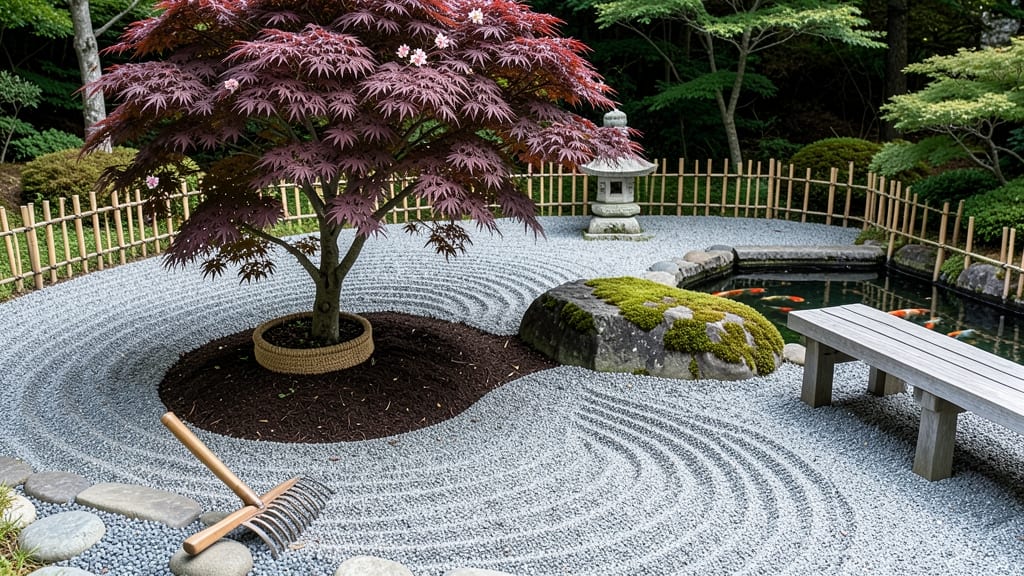
To create a zen garden, blend smooth river rocks, raked gravel patterns, a few carefully chosen plants, and a central focal point like a lantern or small tree. Adding water elements or bamboo screens enhances the peaceful ambiance, while keeping the space uncluttered delivers instant tranquility.
Zen gardens thrive on simplicity and intentionality.
The key is creating a space that feels like a quiet retreat, where every element serves a purpose—whether it's the meditative act of raking gravel or the calming presence of water. 💫 I recommend starting with a small area, like a corner of your yard, to practice the principles before expanding.
This approach lets you focus on perfecting the balance between natural elements and minimalist design, which is what makes these gardens so deeply relaxing.
For example, the gravel patterns aren't just decorative—they mimic water ripples, inviting a sense of movement without any actual motion. Similarly, the placement of rocks and plants should feel organic, as if they've always been part of the landscape.
This attention to detail transforms even a modest space into a sanctuary for mindfulness.
💡 In This Article
- Zen Garden Design Principles for Harmony and Balance
- Step-by-Step Guide to Building a Zen Garden
Zen garden design principles for harmony and balance
The foundation of a zen garden lies in the Japanese concept of wabi-sabi, embracing imperfection and transience. This philosophy guides every design choice, from the weathered texture of stones to the irregular shape of moss.
The goal isn't perfection but authenticity—using natural, unrefined materials that tell a story. For instance, smooth river rocks with their organic curves feel more grounding than perfectly round pebbles, because their irregularities mirror nature's unpredictability.
Asymmetry plays a crucial role in creating visual balance without symmetry. Unlike Western gardens that often rely on mirrored layouts, zen gardens use focal points like a single tree or lantern to anchor the space.
The Japanese call this shakkei (borrowed scenery), where elements outside your garden—like a distant mountain—become part of the composition. This technique creates depth and connection to the larger environment, making even a small backyard feel expansive.
For example, placing a moss-covered stone near the edge of your garden can frame a view of trees beyond, blending your space with nature.
Negative space is another essential principle—it's not just empty space but an active element that enhances tranquility. The raked gravel patterns (often called karesansui) create a visual rhythm that mimics water ripples, engaging the mind in a meditative process.
Studies show that repetitive motions like raking gravel can reduce stress by 20-30%, similar to the calming effects of meditation. The key is to leave ample open areas between elements, allowing the eye (and mind) to rest.
For instance, a 12-inch gap between rocks or plants feels intentional, while 6-inch spacing can feel cluttered.
Natural elements like water, wood, and stone work together to evoke the senses. A small bamboo water feature or a shallow koi pond adds the soothing sound of flowing water, which research shows lowers heart rates by 6-8 beats per minute.
Even the scent of pine needles or lavender planted near seating areas enhances relaxation. The texture contrast—smooth stones against rough bark or gravel underfoot—creates a tactile experience that grounds the mind. For example, pairing polished slate steps with rough-hewn cedar fencing adds visual and physical interest without overwhelming the space.
Seasonal adaptation is often overlooked but critical. A zen garden should evolve with the year: bare branches in winter create stark beauty, while spring blooms like cherry blossoms add fleeting color. Incorporating evergreen plants (like junipers) ensures year-round structure, while deciduous trees (like maples) provide seasonal variety.
For example, a 5-foot tall Japanese maple planted near a gravel path will cast delicate shadows in summer and vibrant red leaves in autumn, keeping the garden dynamic. This attention to seasonal change ensures your zen space remains a source of comfort throughout the year.
Finally, the emotional impact comes from intentionality. Every element—from the size of gravel (typically 3/8-inch to 1-inch) to the placement of a single lantern—should serve a purpose. The goal isn't decoration but creation of a space that feels like a sanctuary.
For instance, a small wooden bench positioned to face a quiet corner encourages reflection, while a stone lantern placed at the garden's entrance marks the transition from daily life to peaceful retreat. 🌿