
Watering
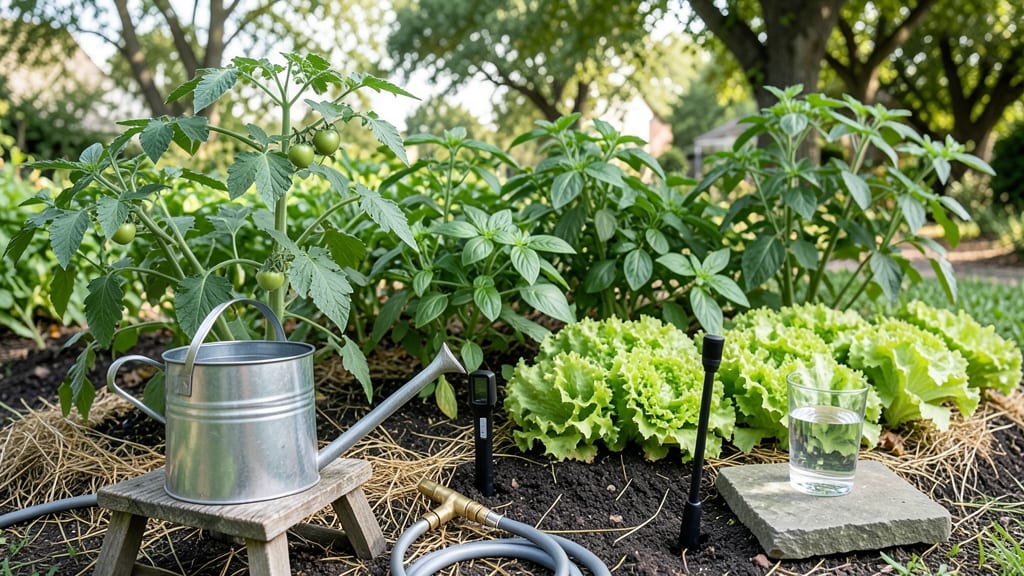
You don't need to water your garden every day unless you're facing extreme heat or sandy soil conditions, since most plants thrive with 1-1.5 inches of water per week. Adjusting for plant type and local climate helps prevent root damage and pest attraction.
Most gardeners overestimate how often their plants need watering, especially during mild weather. 💧 The key is understanding your soil type—sandy soil drains quickly and may need more frequent light watering, while clay holds moisture longer.
I've found that checking soil moisture with your finger (about 1-2 inches down) is the most reliable method, as it tells you exactly when to water rather than relying on a fixed schedule.
Different plants have unique needs too—vegetables like tomatoes and peppers often require consistent moisture, while drought-tolerant succulents can go weeks without water. Mulching with organic materials like straw or wood chips helps retain soil moisture and reduces evaporation, cutting your watering needs by up to 30%.
Climate plays a huge role: in arid regions, morning watering minimizes evaporation, while humid areas might need evening watering to prevent fungal growth. Always consider your local weather patterns and adjust accordingly—this approach saves water and keeps your garden healthier in the long run.
💡 In This Article
- How Often Different Plants Actually Need Water
- Climate-Specific Watering Schedules for Healthy Gardens
How often different plants actually need water
Plant watering needs vary dramatically based on root depth and growth habits. Vegetables like lettuce and spinach have shallow roots (4-6 inches) and need consistent moisture, while established tomato plants with roots extending 2-3 feet can handle deeper, less frequent watering.
Flowers like marigolds thrive with 1 inch of water per week, while thirsty hydrangeas may require 1.5-2 inches during peak summer growth.
The key is understanding each plant's natural moisture triggers.
Most plants signal thirst through wilting or crispy leaf edges, but some like succulents actually store water in their leaves. 🌱 For example, a basil plant wilts dramatically when thirsty but recovers quickly after watering, while a rose bush may show brown leaf tips before wilting appears.
Soil texture matters too—sandy soils drain in 30 minutes after watering, while clay holds moisture for 3-5 days.
Seasonal adjustments are critical. Newly planted perennials need frequent watering (2-3 times per week) for the first month to establish roots, while mature shrubs like boxwoods only need watering when soil is bone-dry.
Evergreens like junipers have shallow root systems and dry out faster than deciduous trees. Always check soil moisture before watering—stick your finger 1-2 inches down; if it feels dry, it's time to water.
Overwatering causes more problems than underwatering. Roots need oxygen, and constantly wet soil suffocates them, leading to fungal diseases like root rot. You'll often see yellowing leaves or a foul smell from overwatered plants. 💦 Pests like fungus gnats thrive in soggy soil, while beneficial insects avoid damp conditions.
The solution is to water deeply but less frequently, encouraging roots to grow deeper in search of moisture.
Consider these plant categories for quick reference:
- Vegetables: Most need 1-1.5 inches weekly, with 2 inches during fruiting (tomatoes, peppers)
- Flowers: Annuals like petunias need frequent watering; perennials like coneflowers are drought-tolerant
- Shrubs: Established ones need watering only during drought; newly planted ones require 1 inch every 2-3 days
- Trees: Young trees need 10-15 gallons weekly; mature trees only need watering during prolonged dry spells
Remember that mulch changes everything. A 3-inch layer of organic mulch can reduce water needs by up to 30% by slowing evaporation and keeping roots cool. This is especially valuable in hot climates where soil can dry out in just 2-3 hours after watering.