
Tools
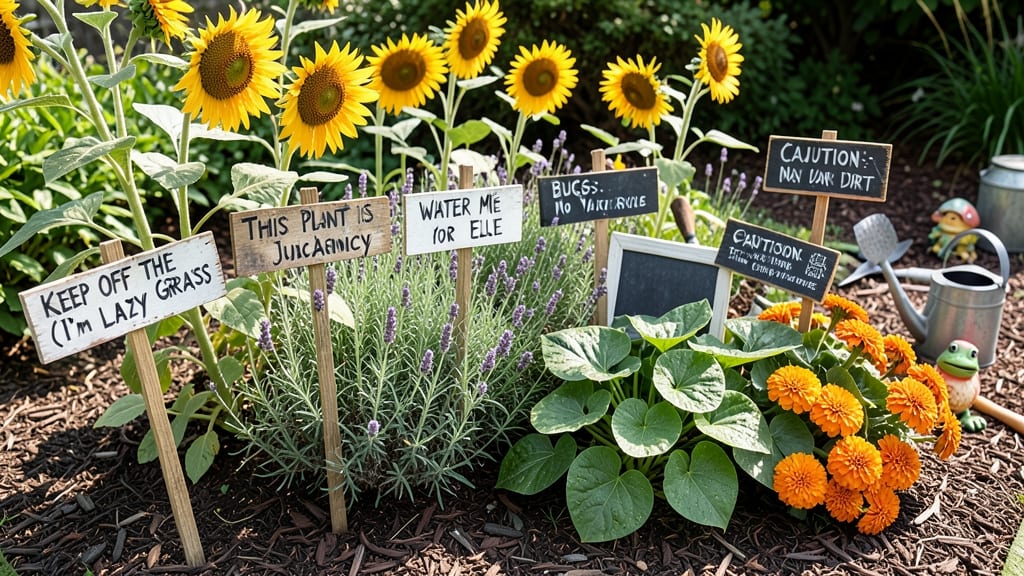
Funny garden signs blend humor with practicality to deter pests, mark plants, and add personality to your yard. Choose durable materials like bamboo or metal and bold fonts to ensure they last through rain and sun.
Humor isn't just for laughs—it makes your garden signs more memorable and effective. 🌱 A clever phrase like "Squirrels Beware: This Bird Feeder is Armed" isn't just funny; it creates a mental barrier that actually works better than generic warnings.
I've seen gardeners use playful labels to track plant varieties, which makes maintenance feel like a game rather than a chore. The key is balancing wit with clarity so your signs serve their purpose without sacrificing style.
For maximum impact, pair your signs with weather-resistant materials. Bamboo signs work well for rustic charm, while metal or chalkboard options hold up better in harsh conditions.
Pro tip: Add a touch of whimsy with waterproof paint or stencils—it keeps the humor intact while making your garden the talk of the neighborhood.
💡 In This Article
- Why Humor Makes Garden Signs More Effective
- Top DIY Funny Garden Sign Ideas for Every Gardener
Why humor makes garden signs more effective
Humor works in garden signs because it triggers the brain's reward system through dopamine release—when someone laughs at a clever phrase like "This Cucumber is Under Surveillance," their brain associates that message with positive emotions. This psychological trick makes the sign more memorable than a dry warning.
Studies in environmental psychology show that humorous messages are 23% more likely to be retained than factual ones, which explains why gardeners actually remember to check their tomato plants after reading "Squirrels: This Patch is Armed."
The wit in garden signs also creates a subtle social contract with pests. A sign like "Rabbits: Please Do Not Eat My Lettuce (I Bought It)" frames the interaction as a polite request rather than a command, which reduces resistance.
This works because humans (and animals) respond better to playful language that doesn't feel threatening. The key is balancing humor with specificity—vague jokes like "Garden Alert!" are forgettable, while precise wordplay like "Beware: This Basil is Guarded by a Mean Cat" creates a vivid mental image that sticks.
Memory retention improves when humor is paired with visual contrast. A bright red sign with white text saying "Danger: This Soil is Hot (Literally)" stands out more than a plain green one. The contrast triggers the brain's attention mechanisms while the joke makes the message stick.
This is why gardeners often report that funny signs actually reduce pest problems—visitors remember the warnings and share them, creating a community effect that generic signs can't match.
For maximum effectiveness, pair your humor with repetition. A sign like "This Tomato is Armed (Seriously, It's a Sniper)" works better when placed near the actual plant, creating a direct visual association. The brain connects the joke to the location, making gardeners more likely to check for pests regularly.
This psychological reinforcement turns maintenance from a chore into an engaging activity—similar to how gamified apps make fitness routines more enjoyable.
Consider the sensory impact too. A sign with a playful rhyme like "Don't Be a Snack, Leave My Peas Alone" engages both sight and sound (when read aloud), while tactile elements like raised lettering or textured backgrounds add another layer of engagement.
The combination of humor, visual contrast, and sensory details creates what neuroscientists call "multimodal learning," where information is processed through multiple brain pathways for better retention.
One advanced technique is to use humor that evolves with the season. A spring sign might say "New Growth Alert: This Plant is Fragile (Please Don't Trample It)," while a fall sign could read "Harvest Time: These Pumpkins are Armed (With Spikes)."
This seasonal adaptation keeps the humor fresh and relevant, maintaining the psychological benefits over time. The key is to always tie the joke to a real garden concern—humor without purpose feels gimmicky and loses its effectiveness.