
Tools
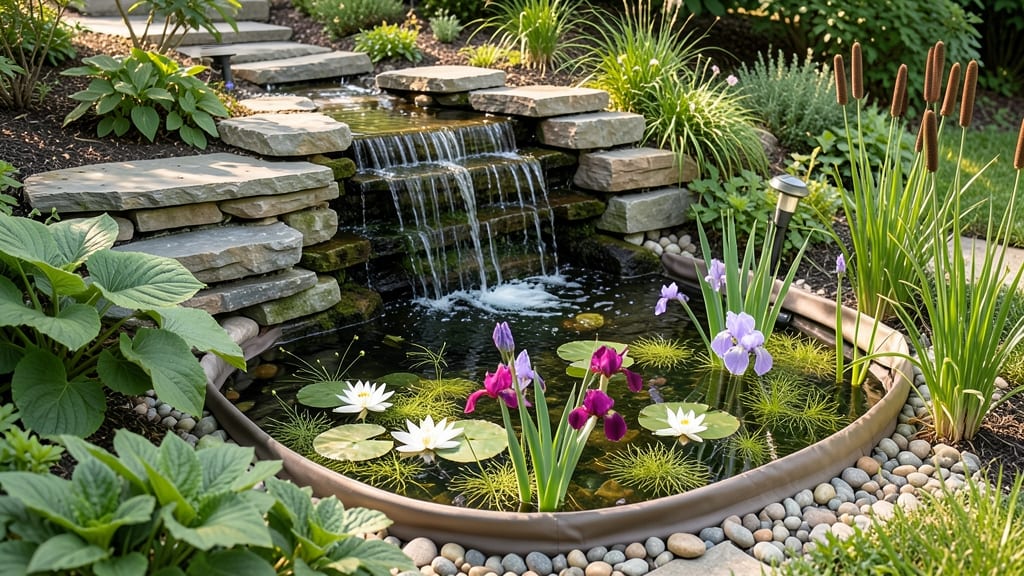
Creating a garden pond waterfall involves designing a gradual incline with a waterproof liner and pump system to maintain continuous flow. Begin with a shallow planting shelf, then carefully stack rocks to shape the water's path while preventing soil erosion. Match your pump's gallons-per-hour rating to the pond's volume for consistent, natural movement.
This design isn't just about aesthetics—it's about physics.
The gradual slope you create determines how fast water cascades, while rock placement controls aeration and oxygenation levels in the pond. 🌊 I've found that using flat stones for the waterfall face creates smoother flow, while larger rocks at the base help distribute water evenly.
The pump's role is often underestimated; undersizing it leads to weak flow, while oversizing can create a noisy, turbulent mess. Pro tip: Add a skimmer to catch debris before it reaches your pump for long-term maintenance ease.
For the liner, I recommend EPDM rubber—it's flexible, UV-resistant, and lasts decades. When selecting rocks, prioritize fieldstone or slate over river rocks; they're denser and less likely to shift over time.
The planting shelf should be at least 6 inches deep to accommodate marginal plants like sweet flag or water iris, which add natural beauty while stabilizing the soil.
💡 In This Article
- Designing a Natural Waterfall Flow for Garden Ponds
- Essential Materials and Tools for Pond Waterfall Construction
Designing a natural waterfall flow for garden ponds
The secret to a visually stunning waterfall lies in understanding hydraulic principles. Water naturally seeks the path of least resistance, so your slope should mimic this with a 1:2 ratio (1 foot vertical drop per 2 feet horizontal distance).
This creates a gentle cascade that looks organic rather than forced. Too steep, and you'll get a chaotic, erosion-prone torrent; too shallow, and flow becomes sluggish. 💫 The ideal angle also prevents "splashback" where water rebounds unnaturally from rocks.
Rock selection directly impacts flow dynamics. Flat stones like slate or flagstone create smooth water sheets, while rounded river rocks encourage bubbly, aerated cascades. The key is creating waterproof ledges where the flow can transition between levels without pooling.
Place larger rocks at the base to diffuse impact energy, preventing soil erosion from the force of descending water. I've seen DIYers use concrete pavers as hidden structural supports behind the rocks - they're invisible but crucial for stability.
Pump performance determines both flow rate and water quality. A pump's gallons-per-hour (GPH) rating should equal 10-20 times your pond's volume for proper circulation. For example, a 500-gallon pond needs a 5,000-10,000 GPH pump.
Too little flow creates stagnant zones where algae thrives, while excessive flow aerates excessively, raising oxygen levels that can harm fish. The pump's head pressure (measured in feet) must overcome your waterfall's height plus any pipe friction - a common oversight that leads to weak flow.
Erosion control requires a layered approach. First, use geotextile fabric under your liner to prevent soil from mixing with water. Then create a gravel underlayment (3-4 inches thick) to distribute water evenly. For the waterfall itself, install a waterproof membrane behind the rocks to catch any leaks.
I've found that adding a small recirculating filter at the waterfall base captures sediment before it reaches the pond, keeping water crystal clear. 🌊
Visual appeal comes from subtle details like variable flow paths. Create gentle curves in your waterfall path to break up straight lines, and incorporate small ledges where water can pool briefly before continuing. These features add dimension while preventing erosion hotspots.
The color contrast between dark rocks and flowing water creates natural focal points - consider using local stone varieties that complement your garden's existing palette. For maximum impact, position your waterfall where it catches sunlight at different times of day.
One advanced technique I've perfected is the "split flow" design, where water divides into two or three streams before reuniting. This creates a more dynamic visual effect while distributing water more evenly.
To achieve this, use a Y-shaped channel in your liner and carefully place rocks to guide the flow. The science behind this is simple: multiple streams increase surface area, which enhances oxygenation and creates a more natural, less mechanical appearance. 💫