
Container Gardens
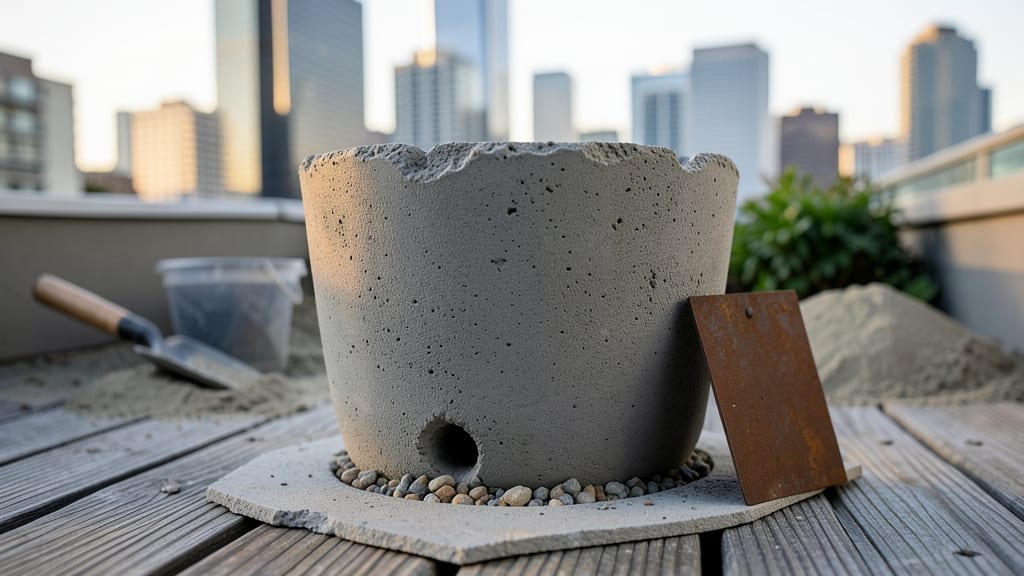
Creating garden pots from cement involves mixing 1 part Portland cement with 2 parts sand and 2 parts gravel, gradually adding water to create a workable paste, then forming it into molds and letting it cure for at least 7 days. Strengthen with wire mesh and maintain moisture during drying to prevent cracks.
Cement garden pots offer unmatched durability and customization for outdoor spaces, but their strength depends on the right cement mix ratios. The gravel in your mixture improves drainage and adds weight to prevent tipping, while the sand helps control the mix's workability.
I've found that adding fiber reinforcement—like chopped wire mesh—reduces cracking risks during the 7-day curing process, especially in hot or dry climates. The key is keeping the mixture consistently moist while it hardens, which prevents surface drying and internal stress. 🔥
For best results, use plastic molds lined with release agent to avoid sticking, and shape the mix to ¼-inch thickness for even curing. In cooler weather, extend curing time to 10 days, and always let pots dry completely before planting.
The finished product will be weather-resistant and perfect for succulents or herbs.
Pro tip: Seal finished pots with a concrete sealer to protect against moisture absorption and extend their lifespan. This extra step is especially useful if you plan to use the pots in rain-prone areas or near saltwater.
💡 In This Article
- Cement Mix Ratios and Materials for Durable Garden Pots
- Step-by-Step Cement Pot Molding and Curing Process
Cement mix ratios and materials for durable garden pots
The strength of your cement garden pots starts with the right mix ratio, which balances structural integrity with workability. The classic 1:2:2 ratio (cement:sand:gravel) creates a durable yet lightweight pot.
The sand (coarse, masonry-grade) fills gaps between cement particles, reducing shrinkage cracks during curing, while the gravel (½-inch to ¾-inch size) improves drainage and adds stability to prevent tipping. 🔥 This gravel also reduces the overall weight compared to solid concrete blocks, making pots easier to move.
For extra durability, especially in windy areas, I recommend adding fiber reinforcement—either chopped wire mesh (about 1-2% by volume) or polypropylene fibers. These fibers create a 3D reinforcement network that absorbs stress and prevents micro-cracks from spreading.
Without reinforcement, pots can develop hairline fractures when exposed to temperature fluctuations or root pressure from plants. The fibers also improve impact resistance, which is critical if you plan to use the pots for heavy plants like tomatoes or peppers.
Moisture control during curing is where most DIYers go wrong. The cement mix needs to stay consistently damp for 7-10 days—not soggy, but never allowed to dry out.
If the surface dries too quickly, it creates a hard outer shell while the interior remains soft, leading to internal stress and eventual cracking. I've seen pots fail spectacularly when left in direct sun without covering.
Use burlap sacks or plastic sheeting to maintain humidity, and mist the pots 2-3 times daily in hot climates. This slow hydration process ensures uniform strength throughout.
Climate plays a surprising role in material selection. In freeze-thaw zones, replace 10% of the gravel with expanded shale—its porous structure helps insulate against temperature swings. For coastal areas, use sulfate-resistant cement to combat salt corrosion.
The gravel's porosity also matters: rounded river gravel drains better than crushed stone, which can trap moisture and promote mold growth in the pot's base. Always sieve your sand to remove fine particles that can weaken the mix's structural bonds.
Here's a pro tip for texture: Add a handful of fine perlite to your mix (about 5% by volume) to create lightweight, airy pots perfect for delicate plants like ferns or orchids. The perlite reduces density by 15-20% while improving aeration for root systems.
Just be cautious—too much perlite can compromise strength, so limit it to decorative or lightweight applications. For heavy-duty pots, stick to the 1:2:2 ratio with fiber reinforcement for maximum durability. ✨