
Tools
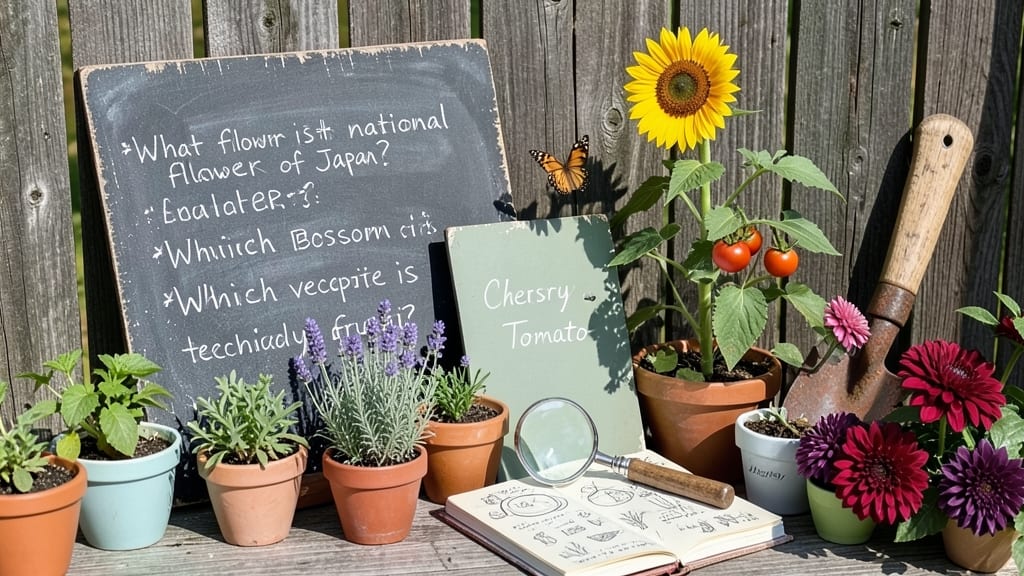
Garden trivia questions and answers uncover mind-blowing plant facts, from sunflowers reaching heights of over 12 feet to tomatoes being botanically classified as fruits. The oldest living tree, a bristlecone pine, has stood for more than 5,000 years—proving nature's ability to surprise us at every turn.
These fascinating tidbits go beyond basic gardening knowledge—they reveal the hidden stories behind your favorite plants. 🌱 For example, did you know that the Venus flytrap isn't just a carnivorous plant but also a relative of the cabbage family? Or that some orchids can change color based on temperature?
The best part is how these fun facts can spark conversations and deepen your appreciation for the green world around you, whether you're a seasoned gardener or just starting out.
What makes garden trivia especially engaging is how it connects science, history, and even pop culture. Many plants have surprising origins—like the avocado, which was once used as currency by the Aztecs, or the fact that roses have been cultivated for over 5,000 years.
These little-known details can turn a simple gardening session into an educational adventure, making every plant in your yard feel like a living storybook.
💡 In This Article
- Unexpected Facts Behind Popular Garden Plants
- How to Host a Memorable Garden Trivia Night
Unexpected facts behind popular garden plants
The Venus flytrap's carnivorous nature isn't just a quirky adaptation—it's a sophisticated survival mechanism. These plants thrive in nutrient-poor bogs where nitrogen is scarce.
When an insect triggers their sensitive hairs twice within 20 seconds, the trap snaps shut in just 0.1 seconds, creating a vacuum that pulls the prey inside.
What's fascinating is that the plant can only digest 1-2 insects per month, proving its "hunting" is more about supplementing nutrients than full-time predation.
Lavender's calming scent comes from compounds called linalool and linalyl acetate, which are released when the plant's cells are damaged. These same compounds are found in many perfumes and aromatherapies because they trigger the brain's limbic system—responsible for emotions and memories.
Wild lavender grows up to 3 feet tall, but cultivated varieties can reach 5 feet, with over 400 species worldwide. The plant's square stems contain oil glands that give it that signature purple hue and soothing aroma when brushed against.
Basil's reputation as a mosquito repellent stems from its high eugenol content—a compound also found in cloves. Studies show that basil oil can repel mosquitoes for up to 6 hours when applied to skin, making it a natural alternative to chemical repellents.
The plant's leaves contain 0.1-0.2% essential oil, which is why rubbing them between your fingers releases that distinctive scent. Interestingly, basil flowers are tiny white blooms that develop 2-3 weeks after leaves appear, and they're edible with a slightly bitter taste.
Some garden plants have evolved remarkable nighttime adaptations. The night-blooming jasmine, for example, opens its flowers only after sunset to attract nocturnal pollinators like moths. Its flowers release a strong, sweet fragrance at night—up to 100 times stronger than during the day—guided by the plant's internal clock (circadian rhythm).
This adaptation ensures cross-pollination when daytime pollinators like bees are inactive, showcasing nature's precise timing mechanisms.
Tomatoes' classification as fruits stems from botanical definitions: they develop from a flower's ovary and contain seeds. However, culinary traditions treat them as vegetables because they're savory and used in salads.
The modern tomato we know evolved from wild species in South America, where they were first cultivated 7,000 years ago.
Their bright red color comes from lycopene—a powerful antioxidant that gives them both their vibrant hue and health benefits, with studies showing 30% more lycopene in cooked tomatoes than raw.
Sunflowers' impressive height isn't just about size—it's a strategic adaptation. The tallest varieties can reach 12-15 feet, with stems containing a woody core that provides structural support against wind.
Their large seed heads (up to 12 inches wide) contain 1,000-2,000 seeds, making them efficient at spreading their genes.
The plant's heliotropic behavior—where flowers track the sun's movement—is controlled by hormones that cause cells on the shaded side to elongate, creating a slow but steady rotation throughout the day.