
Planting
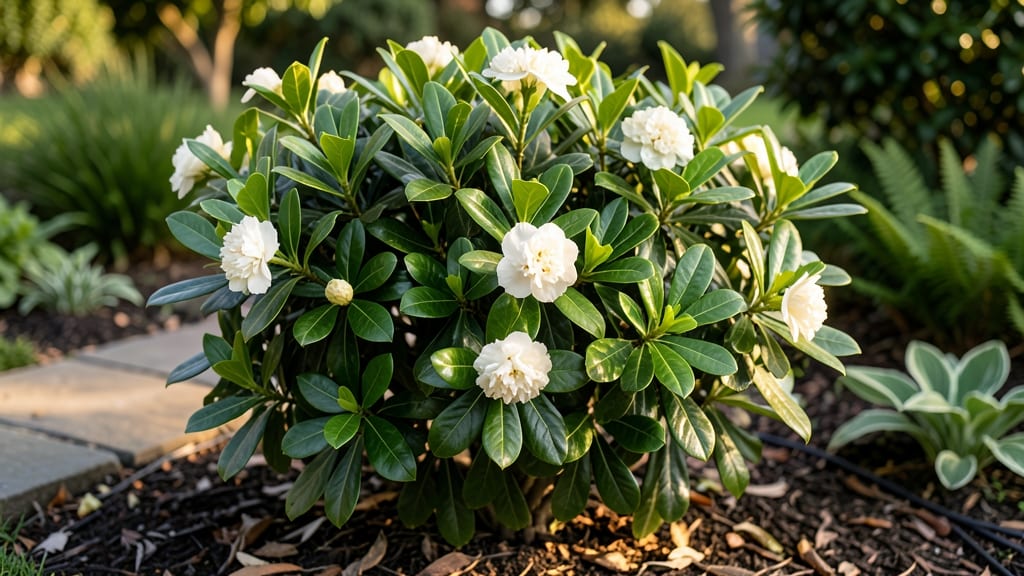
Determining your gardenia bush's hardiness zone is essential because these tropical plants thrive in USDA zones 7 through 10, where winter temperatures rarely fall below 10°F (-12°C). Use the USDA Plant Hardiness Zone Map to confirm your location, then adjust planting depth, mulching, and winter protection to protect your gardenia from frost damage.
Gardenia bushes originate from tropical regions, so they're particularly sensitive to cold temperatures below 10°F (-12°C). 🌿 In zones 7-10, gardeners can grow them outdoors year-round with proper care, but those in colder zones may need to bring them indoors during winter or use frost cloths for protection.
The key is understanding how your specific zone affects planting depth—deeper in colder zones—and mulching practices to maintain soil warmth.
For example, gardeners in zone 7 might need to plant slightly deeper and add extra mulch, while those in zone 10 can enjoy year-round growth with minimal winter care.
The USDA map helps you pinpoint exactly how your local climate interacts with your gardenia's needs, ensuring you provide the right conditions for vibrant blooms.
💡 In This Article
- Understanding Gardenia Bush Hardiness Zones and Climate Needs
- Zone-Specific Planting and Winter Care Tips for Gardenia Bushes
Understanding gardenia bush hardiness zones and climate needs
Gardenia bushes originate from tropical and subtropical regions of Asia and Africa, where they thrive in warm, humid climates with temperatures consistently above 50°F (10°C).
Their sensitivity to cold stems from their delicate leaves and stems, which can suffer irreversible damage when exposed to below 32°F (0°C) for extended periods.
The USDA hardiness zones 7-10 provide the ideal temperature range because these zones experience average minimum winter temperatures between 0°F (-18°C) and 30°F (-1°C), with rare drops below 10°F (-12°C).
The tropical nature of gardenias also means they require high humidity levels—typically 50-70%—to prevent leaf drop and bud blast. In zones 7-9, gardeners often need to supplement natural humidity with misting or indoor placement during dry spells.
For instance, a gardenia in zone 9 might handle outdoor humidity better than one in zone 7, where summer droughts can stress the plant. The key is replicating their natural environment as closely as possible.
What most people don't realize is that gardenias aren't just about temperature—they're also sensitive to sudden temperature swings. A hardy gardenia in zone 10 can handle steady warmth, but one in zone 7 may struggle with rapid fluctuations between day and night.
This is why gardeners in colder zones often use microclimates—planting near south-facing walls or under eaves—to buffer temperature extremes. The goal is to create a stable environment where the plant can focus its energy on blooming rather than surviving.
Soil type plays a surprising role in their hardiness too. Gardenias prefer well-draining, slightly acidic soil (pH 5.5-6.5) that retains moisture without becoming waterlogged. In colder zones, this means amending native soil with organic matter like compost or pine bark fines to improve drainage and insulate roots.
For example, a gardenia in zone 7 planted in heavy clay will fare worse than one in amended soil because clay retains cold longer and drains poorly. The right soil acts like a thermal blanket for roots during winter.
Here's what happens when you get it wrong: In zones below 7, gardenias often suffer from frost damage, where ice crystals form in plant tissues, causing blackened leaves and stem dieback.
Even in zones 7-10, improper winter care can lead to bud drop—a frustrating issue where the plant forms buds but never blooms. The solution lies in understanding your specific zone's microclimate and adjusting care accordingly, whether that means deeper planting in zone 7 or lighter mulching in zone 10.
Consider these key factors when evaluating your gardenia's climate suitability:
- Winter lows: Zones 7-10 rarely see sustained temps below 10°F (-12°C)
- Humidity needs: Supplemental misting may be needed in zones with dry summers
- Soil prep: Organic amendments improve cold tolerance in marginal zones
- Microclimates: South-facing locations add 5-10°F protection
The science behind this involves the plant's cellular structure—gardenia cells contain high levels of unsaturated fats in their membranes, which remain fluid in warm temperatures but become brittle when chilled.
This is why gardenias in zone 8 might survive 20°F (-7°C) brief dips but struggle with prolonged exposure. 🌸 Understanding these biological limits helps you make precise care decisions for your specific growing conditions.