
Aphids
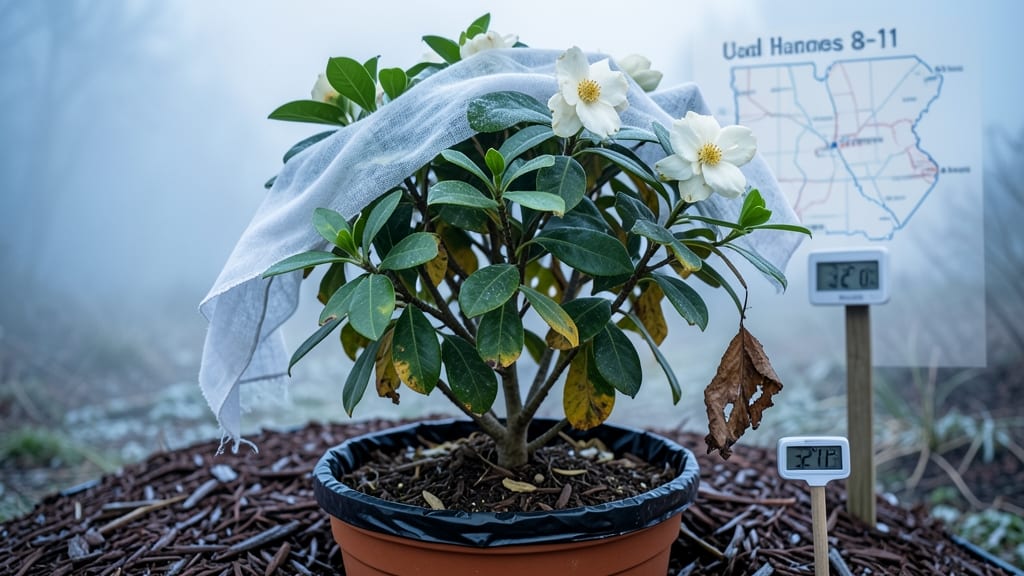
Gardenia cold hardiness is limited to USDA Zones 8-11, where temperatures rarely drop below 10°F (-12°C). Below Zone 8, frost damage or death occurs unless grown in containers and protected with insulation or heat sources during winter months.
Gardenias thrive in warm climates because they're tropical plants with delicate leaves and shallow roots that can't tolerate freezing temperatures. 🌱 Even a light frost can cause irreversible damage, so gardeners in colder regions need to treat them like annuals or use protective measures.
The key is understanding that gardenias can't handle sustained cold—just a few hours below 28°F (-2°C) can kill them, which is why container growing and winter insulation are essential strategies for survival.
For those outside Zones 8-11, overwintering techniques like moving potted plants to sheltered locations or wrapping them in frost cloth can make a huge difference. I've seen gardeners use bubble wrap or even old blankets to create a microclimate around the plant, which helps maintain warmth.
The goal is to prevent the roots from freezing, as that's where most damage occurs.
💡 In This Article
- USDA Zones for Gardenia Survival and Frost Sensitivity
- Container Gardening and Winter Protection Strategies
USDA Zones for gardenia survival and frost sensitivity
Gardenias originate from tropical regions of Asia and Africa, where temperatures rarely dip below 60°F (15°C) year-round. This tropical heritage explains why their cold hardiness tops out at USDA Zones 8-11—they simply lack the biological adaptations to survive freezing temperatures.
Their thin, waxy leaves and shallow root systems make them particularly vulnerable to cold stress, as these structures can't insulate against rapid temperature drops.
The critical temperature threshold for gardenias is 28°F (-2°C)—any exposure below this for more than a few hours will cause irreversible cellular damage. Even in Zone 8, where winters are mild, gardenias can suffer from 20-30% leaf burn during brief cold snaps.
In Zone 7, where winters average 10-15°F (-12 to -9°C), gardenias typically die unless given intensive protection.
What makes this challenging is how quickly cold damage occurs. Gardenias don't have the ability to produce antifreeze proteins like some cold-hardy plants (such as rhododendrons), so their cells rupture almost instantly when frozen.
The damage starts with leaf discoloration (turning brown or black), followed by stem dieback, and finally root failure if temperatures remain low for more than 6-8 hours. 🌬️
Here's where USDA Zones become critical: Zone 8 experiences 1,200-1,400 hours below freezing annually, while Zone 11 has virtually none.
Gardenias in Zone 10 (where winters average 30-35°F (-1 to 2°C)) may survive with minimal protection, but those in Zone 9 (20-30°F (-7 to -1°C)) need careful monitoring.
The key difference between survival and death often comes down to how quickly plants can recover from brief cold exposure.
Interestingly, gardenias in containers have slightly better cold tolerance than those planted in ground because the soil retains more heat. However, this advantage disappears if the container isn't properly insulated.
The root zone is particularly vulnerable—once roots freeze, the entire plant is doomed within 24-48 hours, regardless of air temperature. This is why container gardeners must prioritize root protection during winter.
For gardeners pushing the limits in Zone 7 or colder, the only reliable strategy is treating gardenias as seasonal plants. Even with the best insulation, most gardenias won't survive multiple winters below 20°F (-7°C).
The tropical nature of these plants means they simply weren't evolved to handle prolonged cold exposure—no amount of protection can fully compensate for their biological limitations. 🌿