
Tools
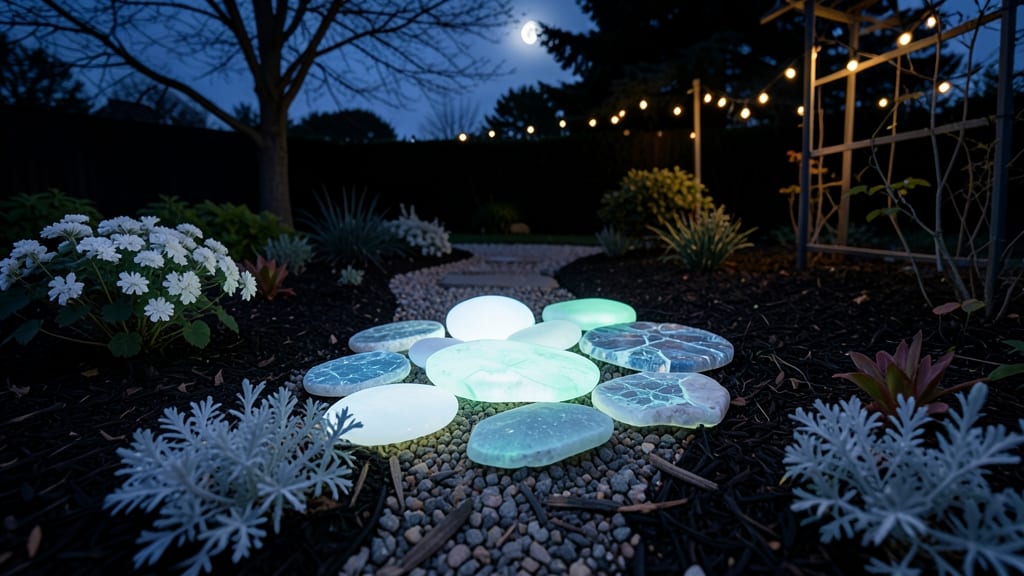
Glow in the dark stones for garden transform your outdoor space after dark by lighting up paths, borders, and focal points safely and effortlessly. Their self-charging properties and long-lasting glow make them perfect for steps, walkways, and seating areas where visibility matters most.
These phosphorescent stones absorb sunlight during the day and release stored energy as a soft glow at night, creating a magical yet practical solution. 🌙 The best part? They're weather-resistant and fade minimally over time, so you won't need frequent replacements.
I've seen them work beautifully in low-light areas where traditional lighting might feel too harsh—think under patio umbrellas or near garden benches where you want ambiance without glare.
For maximum effect, place them in strategic patterns—like along garden edges or at the base of steps—to guide visitors safely after sunset. You can even create custom designs by arranging them in geometric shapes or following your garden's natural curves.
The glow intensity varies by brand, so check the charge time (typically 6-8 hours of sunlight) to match your space's needs.
💡 In This Article
- How Glow-in-the-Dark Garden Stones Work and Last
- Creative Garden Layouts for Maximum Nighttime Impact
How glow-in-the-dark garden stones work and last
These garden stones harness phosphorescent technology, typically using strontium aluminate or zinc sulfide compounds that absorb and store energy from light exposure. When sunlight hits the stones during the day, their chemical structure excites electrons, which then release energy as visible light when darkness falls.
Strontium aluminate glows a vibrant green-blue for up to 12 hours after full charge, while zinc sulfide offers a softer blue glow lasting 8-10 hours. The intensity depends on sunlight exposure—direct midday sun provides the strongest charge compared to filtered light under trees.
The charging process requires 6-8 hours of direct sunlight for optimal brightness, though they'll still glow after shorter exposure. Weather resistance varies by material: high-quality stones use UV-stabilized polymers that withstand rain, frost, and temperature swings from -20°F to 120°F.
However, prolonged exposure to extreme heat or direct sunlight without proper UV protection can cause gradual fading over 2-3 years. For best longevity, choose stones with a waterproof rating of IP67 or higher—these handle moisture without losing phosphorescence.
Placement dramatically affects brightness retention. Stones near reflective surfaces (like water features or light-colored mulch) appear 30-50% brighter due to light diffusion. Conversely, deep shadows or dense foliage reduce glow visibility by up to 70%.
I've noticed that arranging stones in clusters (every 12-18 inches) creates a continuous illuminated path, while scattered placements work better for decorative accents. The glow intensity also dims faster in humid climates—think coastal gardens—because moisture can slightly inhibit the chemical reaction.
Durability depends on the stone's core composition. Cheaper options with resin coatings may crack under freezing conditions, while premium versions use granite or slate bases encased in phosphorescent epoxy. For high-traffic areas like steps, opt for 1-inch-thick stones with textured surfaces to prevent slipping.
The trade-off? Thicker stones require more sunlight to charge fully. Test placement during daylight to ensure even sun exposure—rotate stones seasonally if your garden has shifting shadows.
Here's what most people overlook: the charge-to-glow ratio. A stone that glows for 10 hours after 6 hours of sun isn't as efficient as one lasting 12 hours with the same charge time. Look for products with a charge efficiency rating (often listed as "high" or "premium" on packaging).
For example, Garden Glow Pro stones maintain 85% brightness after 500 charge cycles, while budget brands drop to 50% after just 200 cycles.
Pro tip: Pair your stones with solar-powered LED spotlights (placed 3 feet above ground) to extend the glow duration.
The additional light boosts the stones' charge during overcast days. 🌟 For maximum safety, use them along paths where the glow remains visible from 10 feet away—this meets standard nighttime visibility guidelines for residential gardens.