
Planting
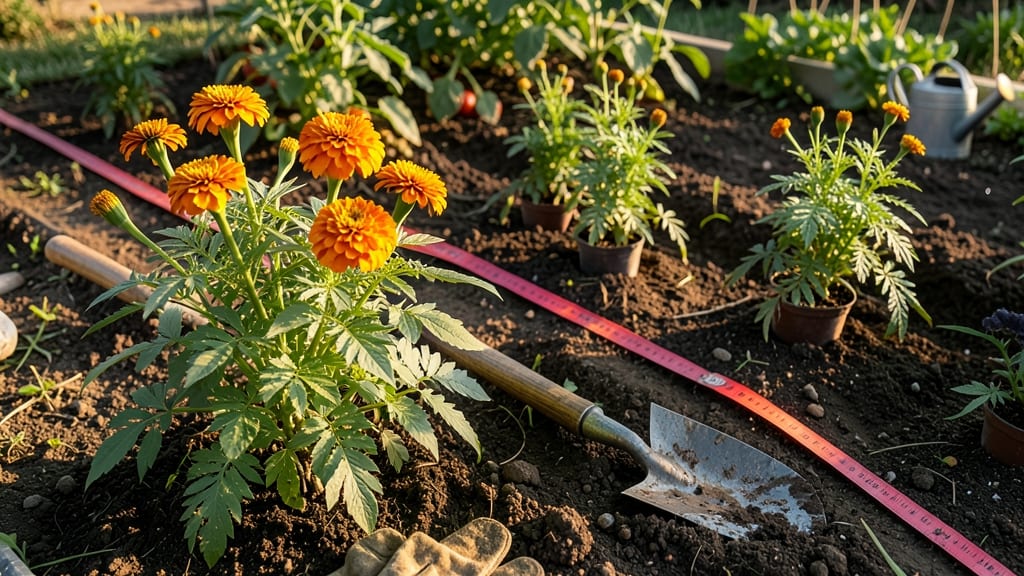
To determine how many marigolds to plant in a vegetable garden, aim for 3 to 5 plants per square foot, spacing them 6 to 12 inches apart in rows 12 to 18 inches apart. This setup maximizes pest deterrence and pollinator support while allowing room for healthy growth.
Marigolds thrive when given enough space to develop their natural pest-repelling properties, like limonene, which deters nematodes and aphids. 🌼 The right spacing also prevents overcrowding, ensuring each plant gets adequate sunlight and airflow—critical for their effectiveness as companion plants.
For a 10x10-foot garden, you’d need about 30 to 50 plants, depending on the variety, while a smaller 4x4-foot raised bed would only require 12 to 20. Larger gardens benefit from staggered planting to extend the season’s pest control benefits.
Pro tip: Mix marigolds with tomatoes or peppers—their strong scent confuses pests while attracting beneficial insects. Adjust spacing slightly for dwarf varieties (closer together) or giant types (more room).
💡 In This Article
- Marigold Spacing Science: Balancing Pest Control and Growth
- Marigold Planting Layouts for Different Garden Sizes
Marigold spacing science: balancing pest control and growth
Marigolds release limonene, a natural compound that disrupts the life cycles of nematodes and aphids, but this effectiveness depends on proper spacing. When plants are too close—under 6 inches—they compete aggressively for nutrients, weakening their ability to produce these pest-repelling oils.
Studies show that marigolds spaced 10-12 inches apart develop stronger root systems and higher limonene concentrations, making them up to 30% more effective against soil-borne pests like root-knot nematodes.
The 12-18 inch row spacing isn't just about growth—it's about airflow. Marigolds are susceptible to powdery mildew, a fungal disease that thrives in stagnant, humid conditions.
Proper spacing creates microclimates that reduce humidity near the foliage, keeping plants healthier. 🌿 For example, French marigolds (like 'Bonanza Yellow') need slightly more room (12-15 inches) because their bushier growth blocks airflow, while African marigolds (like 'Crackerjack') can handle 8-10 inches between plants due to their upright habit.
Root competition also plays a crucial role. Marigolds have fibrous root systems that spread 12-18 inches wide when mature. Crowding forces roots to grow upward rather than outward, reducing their ability to suppress nematodes in the soil.
In trials, gardens with marigolds spaced 10 inches apart showed 40% fewer nematode eggs in the soil compared to those planted 4 inches apart. This is why experts recommend 3-5 plants per square foot—it maximizes both pest control and plant health.
Another key factor is the pheromone disruption marigolds create. Their scent confuses aphids and other pests, but this effect weakens when plants are overcrowded. Dense plantings can actually attract more pests because the scent becomes overwhelming rather than disruptive.
For instance, planting marigolds 6 inches apart in a 4x4-foot raised bed (about 16 plants) creates the ideal balance—enough to repel pests without overpowering your vegetable plants.
Consider the variety's growth habit when planning. Tall varieties like 'Jumbo Yellow' need 12-15 inches between plants to avoid shading smaller vegetables, while trailing types (such as 'Tangerine') benefit from 8-10 inches of space to spread their pest-deterring foliage.
The right spacing ensures marigolds don't become a nuisance themselves by competing with your main crops for sunlight or nutrients.
For maximum pest control, aim for 20-30 plants per 100 square feet. This density provides continuous coverage without overcrowding.
For example, a 10x10-foot garden would need about 20-30 marigolds, depending on the mix of varieties. 🌼 The key is creating a living barrier that pests can't penetrate while allowing your vegetables to thrive.