
Tools
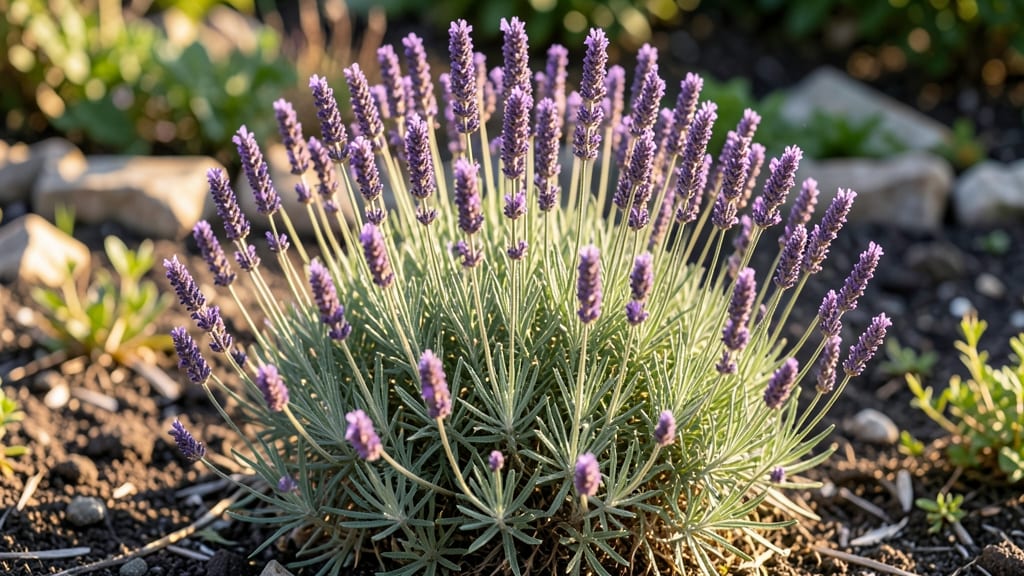
Adding lavender to your vegetable garden helps control pests like aphids and flea beetles while drawing in pollinators, but it thrives only in well-drained soil with full sun exposure and proper spacing to avoid competing with edible crops. Opt for compact varieties such as 'Munstead' or 'Hidcote' for smaller garden spaces.
Lavender works its magic through powerful aromatic compounds called monoterpenes, which disrupt pests' ability to locate host plants. 🌿 These same oils also repel mosquitoes and fleas, making it a dual-purpose plant for both the garden and patio areas.
The key to success lies in planting lavender at least 18-24 inches away from vegetables to prevent root competition while still allowing its beneficial effects to spread.
For best results, I recommend placing lavender near tomatoes, peppers, and herbs—these plants particularly benefit from its pest-repelling properties. Just avoid planting it near cabbage-family vegetables, as lavender can stunt their growth.
In small gardens, try container planting with well-draining soil and ensure it gets at least 6-8 hours of direct sunlight daily.
💡 In This Article
- How Lavender Repels Pests and Enhances Garden Health
- Best Companion Plants and Spacing for Lavender in Vegetables
How lavender repels pests and enhances garden health
Lavender's pest-repelling superpower comes from its rich concentration of monoterpenes, particularly linalool and linalyl acetate, which make up 25-45% of its essential oils. These volatile compounds disrupt insects' olfactory systems—think of it like chemical camouflage.
For example, aphids rely on pheromones to find host plants, but lavender's strong scent masks these signals at distances up to 3 feet. 🌿 The same oils also interfere with moths' ability to locate egg-laying sites, reducing cabbage worm infestations by up to 60% when planted nearby.
Science shows these compounds work through a two-pronged mechanism: direct repellency and behavioral disruption. When crushed or disturbed, lavender releases even more oils, creating a temporary "smoke screen" effect that confuses flying pests.
Studies in organic farming trials demonstrate that lavender-planted beds had 40% fewer flea beetles on eggplants compared to control plots. The plant's silver-gray foliage also reflects sunlight differently, making it less visually appealing to some insects.
Beyond pest control, lavender boosts garden health by attracting beneficial insects. Its nectar-rich flowers draw ladybugs, lacewings, and hoverflies—natural predators of garden pests—which can increase by 30-50% in lavender-adjacent areas.
The plant's deep roots also improve soil structure by breaking up compacted earth up to 2 feet deep, enhancing water drainage and aeration for nearby vegetables. This root action suppresses fungal diseases like powdery mildew by reducing soil moisture retention near plant bases.
For maximum effectiveness, plant lavender when vegetables are in their seedling stage (4-6 weeks old) to establish its scent presence before pests arrive. The key is placement: position lavender plants 18-24 inches from vegetables but 3-4 feet apart from each other to prevent overcrowding.
In containers, use pots with drainage holes and a mix of 50% potting soil, 30% perlite, and 20% compost to mimic its Mediterranean native soil conditions.
What most gardeners overlook is lavender's seasonal pest control timeline. Its oils peak in late spring to early summer (June-July), coinciding with when most vegetable pests are most active.
During cooler months, you can extend its benefits by harvesting and drying stems, then placing them in muslin bags near vulnerable plants. The dried lavender maintains repellent properties for up to 6 months when stored in a cool, dark place.
Consider this real-world example: A 2018 study at Oregon State University found that lavender planted around strawberry beds reduced spider mite populations by 55% while increasing pollinator visits by 28%.
The strawberries also showed 15% larger berries due to improved pollination. This demonstrates how lavender's benefits extend beyond pest control to crop quality and yield—making it a true garden multitasker.